Story code: ST-000092
Part 1: The Plate on the Pedestal
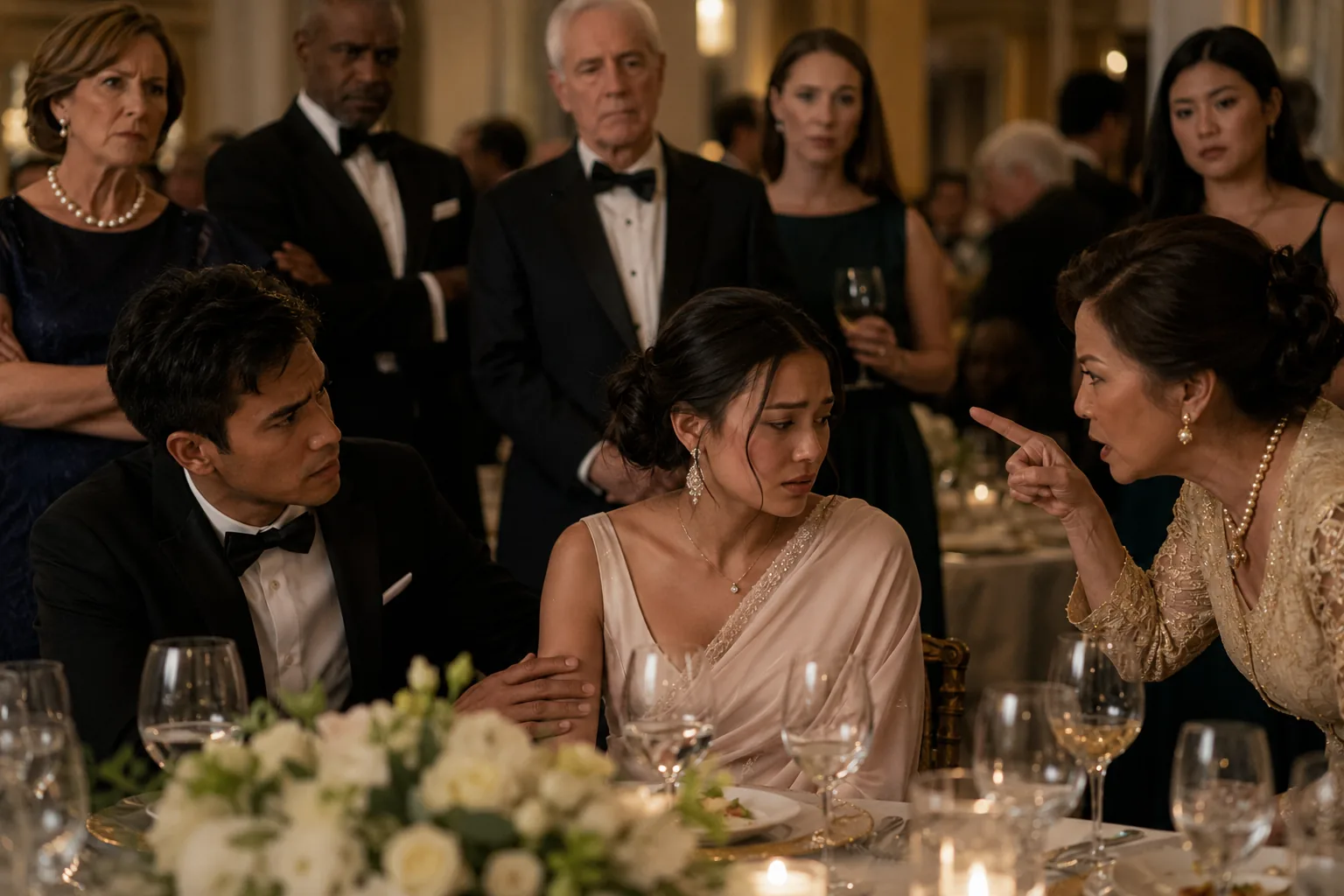
My mother-in-law put my family’s ceremonial plate under a spotlight before the first salad was served, then told me to stand beside it and “look proud” while donors took pictures. I was at the Bennett Family Foundation fundraiser, balancing champagne flutes near the front of the ballroom, and Diane Bennett was using me like part of the centerpiece. The worst part was that she kept calling it a tribute to my culture while correcting every word that came out of my mouth about my own family.
The plate sat on a tall serving stand near the small ceremony area at the front of the dining room, angled toward the tables with the sponsor cards and the phones already lifted for photos. It belonged to my side of the family. My aunt Naomi had wrapped it in soft cloth and handed it to me two nights before with both hands, the way she always handled anything tied to our family rituals.
“If they are going to present it publicly,” she had said, “stay near it.”
I understood why the second I got there.
Diane had built an entire donor-friendly display around it. There were printed program cards on every table explaining that the evening would include “a family unity plate ceremony honoring the joining of traditions.” It sounded polished and harmless if you didn’t know what had been sanded off to make it sound that way.
The plate was not a generic symbol of togetherness. It had a specific meaning in my family, and a specific way it was handled. Diane had turned it into a glossy paragraph.
When I arrived, she air-kissed my cheek and reached for my elbow before I even set down my coat.
“Elena, perfect,” she said. “Wear the jade earrings, not the silver ones. The green photographs better next to the plate.”
Not hello. Not thank you for bringing something from my family.
Just wardrobe direction.
I looked at Marcus. My husband was checking place cards with Jordan, the volunteer emcee, and gave me the quick distracted smile he used whenever he wanted me to accept something for now and discuss it later.
“Small thing,” he said under his breath when he passed me. “Tonight’s already moving fast.”
That phrase had become its own kind of warning.
All through cocktail hour, Diane kept performing kindness with one hand while steering me with the other. She introduced me to donors as “our beautiful bridge between families.” She told one woman, “Elena has been so generous about sharing these customs with us,” while squeezing my forearm hard enough that I looked down.
When I tried to explain to a guest that the plate was usually presented differently, Diane laughed lightly over me.
“Elena is so modest,” she said. “In their family, they don’t like to make a fuss, but she’s been guiding us through every step.”
That was the first lie she told with me standing right there.
I hadn’t guided her through every step. I had corrected her twice, been ignored twice, and then been told I was making the explanation “too detailed for a fundraising audience.”
Naomi arrived just before dinner in a navy dress and a short pearl jacket. She stopped when she saw the plate on the stand. Her eyes moved from the uplighting to the printed cards to me. She didn’t make a scene. She just stepped closer and asked quietly, “Who decided to raise it that high?”
“Diane’s event team,” I said.
Naomi touched the cloth at the base, not the plate itself. “It should not be displayed like an auction item,” she said.
Diane appeared beside us with the smile she used when people were watching.
“Naomi, we’re so honored you’re here,” she said. “Isn’t this lovely? Elena helped us make sure it was authentic.”
Naomi looked at me. I said nothing. Diane kept smiling.
“Well,” Naomi said after a second, “it is certainly visible.”
That was all. But I heard the correction inside it.
Dinner started. Waiters moved between tables. Glasses chimed. Jordan checked the run sheet near the side curtain and tested the wireless microphone. On the screen near the stage, the foundation logo looped beside photos of past events and a slide that read CELEBRATING COMMUNITY THROUGH TRADITION.
By the time the entree plates were being cleared, I had already been told three more times where to stand, when to smile, and how long to pause if Jordan asked me a question onstage.
“Just keep it warm and short,” Diane said. “People are here to give, not to attend a lecture.”
I asked her what exactly she expected me to say.
She smiled at a donor over my shoulder and answered without looking at me. “We’ll go over it in a moment.”
A little later, I went into the service corridor beside the ballroom because one of the caterers said Marcus was looking for me. The hallway was narrow, bright, and lined with stacked trays and extra floral boxes. I could hear the ballroom through the door: silverware, laughter, Jordan’s microphone check.
Marcus wasn’t there.
But Diane was, just around the corner, speaking in a low voice to Jordan.
I stopped when I heard my name.
“No open-ended questions,” Diane said. “She tends to add context, and we do not need that tonight. Just hand her the mic after I introduce the plate, and if she starts drifting, take it back and move to the paddle raise.”
Jordan said something I couldn’t make out.
Diane answered, clear as crystal. “She doesn’t have to mean it. She just has to smile and say her family was touched that we chose to honor their tradition this way.”
I stayed very still with one hand against the wall and the other curled around the folded program card I was holding.
Then Diane said the part that made the whole night lock into place.
“The plate matters because it makes our family look like what we say we are. Elena’s job is to stand there and prove it.”
A second later the ballroom door opened, and I had to decide whether to walk in like I hadn’t heard my own role explained for me.
My mother-in-law put my family’s ceremonial plate under a spotlight before the first salad was served, then told me to stand beside it and “look proud” while donors took pictures. I was at the Bennett Family Foundation fundraiser, balancing champagne flutes near the front of the ballroom, and Diane Bennett was using me like part of the centerpiece. The worst part was that she kept calling it a tribute to my culture while correcting every word that came out of my mouth about my own family.
The plate sat on a tall serving stand near the small ceremony area at the front of the dining room, angled toward the tables with the sponsor cards and the phones already lifted for photos. It belonged to my side of the family. My aunt Naomi had wrapped it in soft cloth and handed it to me two nights before with both hands, the way she always handled anything tied to our family rituals.
“If they are going to present it publicly,” she had said, “stay near it.”
I understood why the second I got there.
Diane had built an entire donor-friendly display around it. There were printed program cards on every table explaining that the evening would include “a family unity plate ceremony honoring the joining of traditions.” It sounded polished and harmless if you didn’t know what had been sanded off to make it sound that way.
The plate was not a generic symbol of togetherness. It had a specific meaning in my family, and a specific way it was handled. Diane had turned it into a glossy paragraph.
When I arrived, she air-kissed my cheek and reached for my elbow before I even set down my coat.
“Elena, perfect,” she said. “Wear the jade earrings, not the silver ones. The green photographs better next to the plate.”
Not hello. Not thank you for bringing something from my family.
Just wardrobe direction.
I looked at Marcus. My husband was checking place cards with Jordan, the volunteer emcee, and gave me the quick distracted smile he used whenever he wanted me to accept something for now and discuss it later.
“Small thing,” he said under his breath when he passed me. “Tonight’s already moving fast.”
That phrase had become its own kind of warning.
All through cocktail hour, Diane kept performing kindness with one hand while steering me with the other. She introduced me to donors as “our beautiful bridge between families.” She told one woman, “Elena has been so generous about sharing these customs with us,” while squeezing my forearm hard enough that I looked down.
When I tried to explain to a guest that the plate was usually presented differently, Diane laughed lightly over me.
“Elena is so modest,” she said. “In their family, they don’t like to make a fuss, but she’s been guiding us through every step.”
That was the first lie she told with me standing right there.
I hadn’t guided her through every step. I had corrected her twice, been ignored twice, and then been told I was making the explanation “too detailed for a fundraising audience.”
Naomi arrived just before dinner in a navy dress and a short pearl jacket. She stopped when she saw the plate on the stand. Her eyes moved from the uplighting to the printed cards to me. She didn’t make a scene. She just stepped closer and asked quietly, “Who decided to raise it that high?”
“Diane’s event team,” I said.
Naomi touched the cloth at the base, not the plate itself. “It should not be displayed like an auction item,” she said.
Diane appeared beside us with the smile she used when people were watching.
“Naomi, we’re so honored you’re here,” she said. “Isn’t this lovely? Elena helped us make sure it was authentic.”
Naomi looked at me. I said nothing. Diane kept smiling.
“Well,” Naomi said after a second, “it is certainly visible.”
That was all. But I heard the correction inside it.
Dinner started. Waiters moved between tables. Glasses chimed. Jordan checked the run sheet near the side curtain and tested the wireless microphone. On the screen near the stage, the foundation logo looped beside photos of past events and a slide that read CELEBRATING COMMUNITY THROUGH TRADITION.
By the time the entree plates were being cleared, I had already been told three more times where to stand, when to smile, and how long to pause if Jordan asked me a question onstage.
“Just keep it warm and short,” Diane said. “People are here to give, not to attend a lecture.”
I asked her what exactly she expected me to say.
She smiled at a donor over my shoulder and answered without looking at me. “We’ll go over it in a moment.”
A little later, I went into the service corridor beside the ballroom because one of the caterers said Marcus was looking for me. The hallway was narrow, bright, and lined with stacked trays and extra floral boxes. I could hear the ballroom through the door: silverware, laughter, Jordan’s microphone check.
Marcus wasn’t there.
But Diane was, just around the corner, speaking in a low voice to Jordan.
I stopped when I heard my name.
“No open-ended questions,” Diane said. “She tends to add context, and we do not need that tonight. Just hand her the mic after I introduce the plate, and if she starts drifting, take it back and move to the paddle raise.”
Jordan said something I couldn’t make out.
Diane answered, clear as crystal. “She doesn’t have to mean it. She just has to smile and say her family was touched that we chose to honor their tradition this way.”
I stayed very still with one hand against the wall and the other curled around the folded program card I was holding.
Then Diane said the part that made the whole night lock into place.
“The plate matters because it makes our family look like what we say we are. Elena’s job is to stand there and prove it.”
A second later the ballroom door opened, and I had to decide whether to walk in like I hadn’t heard my own role explained for me.