Story code: ST-000956
Part 1: She Couldn’t Do It Until It Needed Ruining
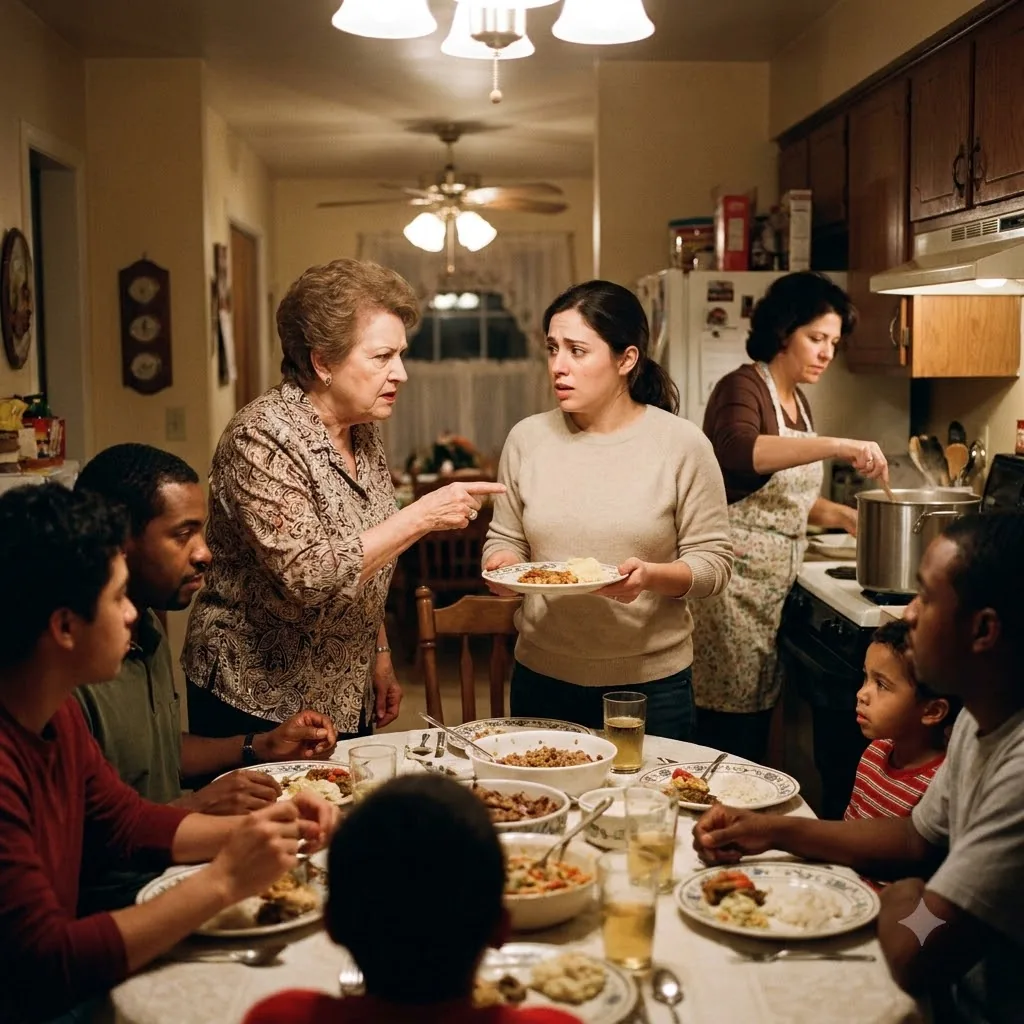
Diane Mercer ruined the ceremony plate three times in forty minutes, and every time she said she just did not know the custom well enough, Nadia had to leave the stove, rebuild it, and get blamed for the delay while guests watched from the dining room threshold. We were in the kitchen pass with steam rising off the rice and platters crowding the sideboard, and Diane kept using tradition like a gavel even while she claimed her own hands could not manage one plate.
I was moving between the warming dishes and the tray stack when the first one happened. Nadia had the components lined up on the prep counter exactly the way she had kept them all evening: folded serving cloth, greens, the sauce bowl, the small arranged pieces that had to sit in a clean ring, and the ceremony plate waiting in the middle. Diane stepped in before Nadia could lift the first piece.
“No, no, not like that,” Diane said, though Nadia had not touched anything yet. “I’m trying to learn this correctly. Your side does it differently.”
She took the plate herself, tilted it too far, and one of the arranged pieces slid into the sauce bowl. The ring broke. Sauce streaked the edge.
Then she made a soft sound through her nose and held the damaged plate away from her body. “See? I said I can’t do it. Nadia, please fix this before anyone sees.”
Nadia set down the spoon she was using at the stove and crossed back without answering right away. She wiped the rim, changed the plate, rebuilt the ring, and asked me for a fresh cloth. While she worked, Diane stood close enough to cast a shadow over the counter.
“The left side needs more height,” Diane said. “And don’t crowd the border. It looks careless when the border is crowded.”
Nadia’s jaw tightened once. “I know.”
Diane answered in a mild voice, “I’m only trying to protect the custom.”
The second time came ten minutes later, with Omar carrying water glasses past us and two of the older guests already seated where they could see into the kitchen. Diane announced, louder this time, “I wish someone had taught me how to present this properly.” Then she reached for the cloth under the plate and pulled it unevenly so the whole thing shifted.
One of the small pieces tipped onto the tray.
Omar stopped. “Are we good?”
Before Nadia could speak, Diane said, “We would be if the plate were stable. I told Nadia this setup was rushed.”
Nadia looked at the tray, then at the stove where something was sputtering. She turned off the burner with one hand, picked up the fallen piece with the other, and said, “Elena, backup plate.”
I pulled one from the lower shelf and set it beside her. Diane had already stepped back, palms slightly raised, as if the whole thing had happened around her.
Nadia rebuilt it again. Omar drifted toward the dining room, but not before looking at Diane, then at Nadia, then down at the tray in his hands.
Guests were asking when service would start. I could hear forks touching appetizer plates. Aunt Marisol had moved into the kitchen doorway under the excuse of helping with napkins, but she did not touch the napkins much. She watched Diane’s hands.
The third time was the one that made the room change.
Diane stood at the sideboard and said, “Show me one more time. I want to respect this the right way.” Her tone was patient enough to sound generous. Nadia was checking a roasting pan and did not turn fast enough.
Diane lifted the ceremony plate again.
“I can’t keep being blamed for not knowing,” she said.
Then she placed two pieces down in the wrong order, not messily, but wrong in a way that made the whole arrangement useless. The shape looked almost right from a few feet away. Up close, it was a break in the sequence everyone serving could see.
“Nadia,” Diane called, “this is exactly why I need help. I never know where anything belongs.”
Aunt Marisol repeated from the doorway, very evenly, “You never know where anything belongs.”
Nadia came over from the oven, took one look, and closed her eyes for one beat before reaching for the plate. “Please move.”
Diane did move. But not before tapping one empty spot on the rim with her index finger.
“Not there,” she said. “That piece goes here.”
It was fast. A tiny motion. Just one tap.
Nadia’s hand stopped in midair. Mine did too. Aunt Marisol’s napkin stayed folded in her fingers.
Because Diane had just pointed to the exact correct position without looking twice, without guessing, without asking, the way somebody does when they already knows the pattern by hand.
Then Nadia rebuilt the plate in silence, carried the tray toward the dining room, and Diane said to the room behind her, “I told you I’m still learning.”
But all I could see was that one clean tap to the right spot, and I could not stop watching Diane’s hands after that.
Diane Mercer ruined the ceremony plate three times in forty minutes, and every time she said she just did not know the custom well enough, Nadia had to leave the stove, rebuild it, and get blamed for the delay while guests watched from the dining room threshold. We were in the kitchen pass with steam rising off the rice and platters crowding the sideboard, and Diane kept using tradition like a gavel even while she claimed her own hands could not manage one plate.
I was moving between the warming dishes and the tray stack when the first one happened. Nadia had the components lined up on the prep counter exactly the way she had kept them all evening: folded serving cloth, greens, the sauce bowl, the small arranged pieces that had to sit in a clean ring, and the ceremony plate waiting in the middle. Diane stepped in before Nadia could lift the first piece.
“No, no, not like that,” Diane said, though Nadia had not touched anything yet. “I’m trying to learn this correctly. Your side does it differently.”
She took the plate herself, tilted it too far, and one of the arranged pieces slid into the sauce bowl. The ring broke. Sauce streaked the edge.
Then she made a soft sound through her nose and held the damaged plate away from her body. “See? I said I can’t do it. Nadia, please fix this before anyone sees.”
Nadia set down the spoon she was using at the stove and crossed back without answering right away. She wiped the rim, changed the plate, rebuilt the ring, and asked me for a fresh cloth. While she worked, Diane stood close enough to cast a shadow over the counter.
“The left side needs more height,” Diane said. “And don’t crowd the border. It looks careless when the border is crowded.”
Nadia’s jaw tightened once. “I know.”
Diane answered in a mild voice, “I’m only trying to protect the custom.”
The second time came ten minutes later, with Omar carrying water glasses past us and two of the older guests already seated where they could see into the kitchen. Diane announced, louder this time, “I wish someone had taught me how to present this properly.” Then she reached for the cloth under the plate and pulled it unevenly so the whole thing shifted.
One of the small pieces tipped onto the tray.
Omar stopped. “Are we good?”
Before Nadia could speak, Diane said, “We would be if the plate were stable. I told Nadia this setup was rushed.”
Nadia looked at the tray, then at the stove where something was sputtering. She turned off the burner with one hand, picked up the fallen piece with the other, and said, “Elena, backup plate.”
I pulled one from the lower shelf and set it beside her. Diane had already stepped back, palms slightly raised, as if the whole thing had happened around her.
Nadia rebuilt it again. Omar drifted toward the dining room, but not before looking at Diane, then at Nadia, then down at the tray in his hands.
Guests were asking when service would start. I could hear forks touching appetizer plates. Aunt Marisol had moved into the kitchen doorway under the excuse of helping with napkins, but she did not touch the napkins much. She watched Diane’s hands.
The third time was the one that made the room change.
Diane stood at the sideboard and said, “Show me one more time. I want to respect this the right way.” Her tone was patient enough to sound generous. Nadia was checking a roasting pan and did not turn fast enough.
Diane lifted the ceremony plate again.
“I can’t keep being blamed for not knowing,” she said.
Then she placed two pieces down in the wrong order, not messily, but wrong in a way that made the whole arrangement useless. The shape looked almost right from a few feet away. Up close, it was a break in the sequence everyone serving could see.
“Nadia,” Diane called, “this is exactly why I need help. I never know where anything belongs.”
Aunt Marisol repeated from the doorway, very evenly, “You never know where anything belongs.”
Nadia came over from the oven, took one look, and closed her eyes for one beat before reaching for the plate. “Please move.”
Diane did move. But not before tapping one empty spot on the rim with her index finger.
“Not there,” she said. “That piece goes here.”
It was fast. A tiny motion. Just one tap.
Nadia’s hand stopped in midair. Mine did too. Aunt Marisol’s napkin stayed folded in her fingers.
Because Diane had just pointed to the exact correct position without looking twice, without guessing, without asking, the way somebody does when they already knows the pattern by hand.
Then Nadia rebuilt the plate in silence, carried the tray toward the dining room, and Diane said to the room behind her, “I told you I’m still learning.”
But all I could see was that one clean tap to the right spot, and I could not stop watching Diane’s hands after that.