Story code: ST-001220
Part 1: The Imposed Debt
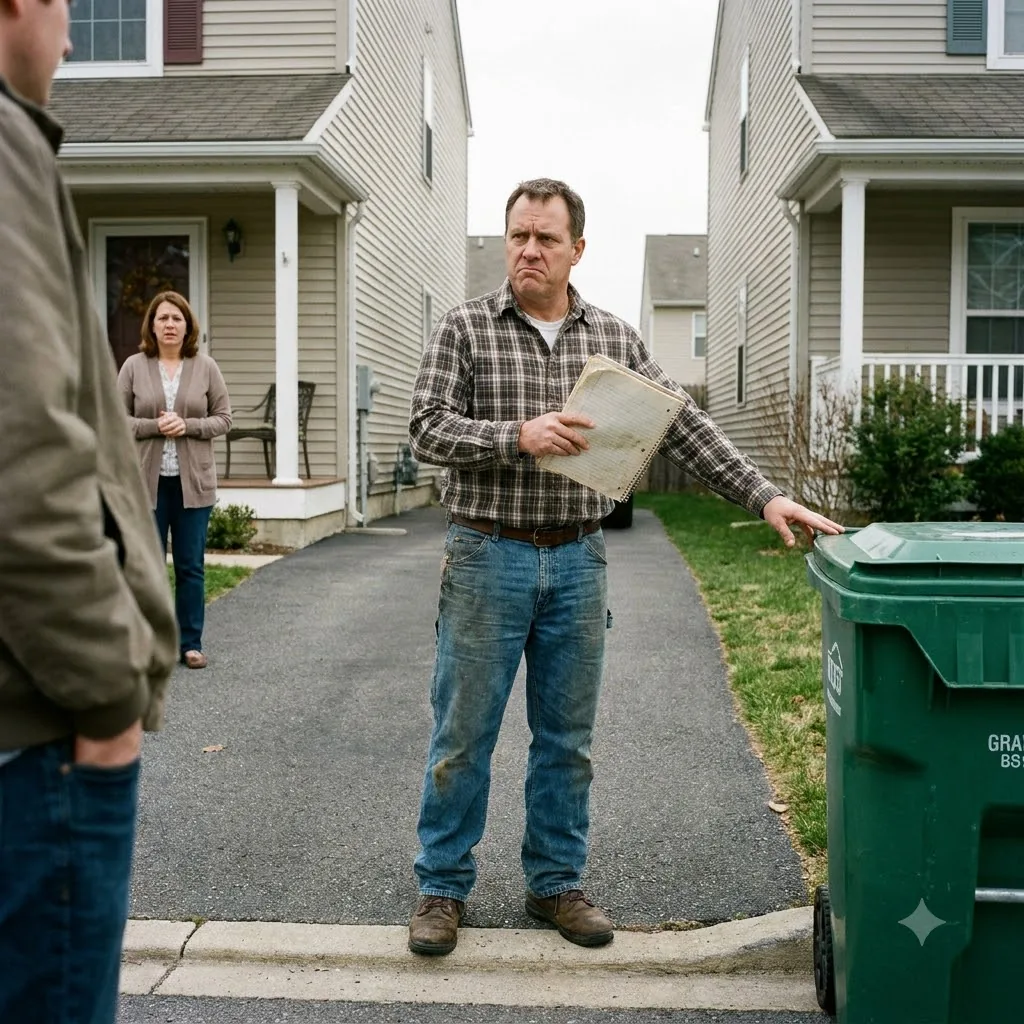
My next-door neighbor Greg Miller stood in the middle of our shared asphalt driveway, holding a hand-written ledger and demanding I pay him $450 for moving my green plastic trash bin. Every Tuesday morning for the past year, I had assumed he was just being a friendly neighbor, but now he was weaponizing that unsolicited favor to claim a massive debt that would lock down our parking space. “I’ve kept track of every single week, Mark,” Greg said, his voice flat as he pointed a finger at the property line separating our driveways. “I don’t work for free, and I don’t appreciate people taking advantage of my good nature.”
When my wife, Sarah Vance, and I first bought the house, Greg seemed like the ideal neighbor. He was retired, spent hours puttering around his garage, and when the waste management truck came early on Tuesdays, he would wheel our green plastic bin back up the driveway alongside his own. I had thanked him multiple times over the fence. I even bought him a six-pack of craft beer around the holidays to show our appreciation. He had accepted it with a nod, never mentioning any kind of formal agreement. But today, the friendly facade was completely gone, replaced by a calculated coldness.
The morning sun beat down on the shared asphalt, highlighting the grease stains and the faint chalk line Greg had drawn to divide our parking spaces. Greg tapped the ledger page with a blunt fingernail. The pages were yellowed, filled with neat rows of dates, times, and a recurring charge: “Trash Service – $9.00.”
“I don’t understand, Greg,” I said, keeping my hands at my sides to keep from showing my anger. “You said you were just helping out because you were already down at the curb. We never asked you to touch our bins. We both work from home; we can easily walk down the driveway.”
“You didn’t ask, but you accepted the service,” Greg replied, squinting in the bright light. “That’s an implied contract, Mark. You reaped the benefits of my labor for fifty-two weeks. If I hadn’t moved those bins, they would have sat out blocking the common area, or worse, gotten knocked over by the wind. I saved you the hassle. Now I’m collecting what’s fair.”
Sarah stood on the front porch, her arms crossed tightly. She didn’t say anything, but her eyes were fixed on Greg’s ledger. The neighborhood was quiet, save for the hum of a distant lawnmower. Greg’s voice carried clearly in the morning air, deliberate and steady.
“Four hundred and fifty dollars,” Greg repeated, holding out the paper. “Nine dollars a trip. I’ve even discounted it for the weeks I was out of town. I expect it by Friday.”
“And if I don’t pay?” I asked, the absurdity of the situation hardening into frustration.
Greg looked past me toward our garage, then shifted his gaze back to his own large commercial van parked on his side. “Well, this driveway is shared. Cooperation is what keeps it working. If we don’t have mutual cooperation, it becomes very difficult to guarantee that my commercial van won’t need to take up more of the turning radius. It would be a shame if you couldn’t get your car out of the garage in the mornings because of a lack of neighborly goodwill.”
It was a direct threat, masked in the language of etiquette. He was using a fabricated debt to establish physical control over the shared space. If I refused, he would make our lives miserable by parking his massive commercial vehicle in a way that would trap us. I looked at the ledger, realizing I was trapped by a debt I had never chosen, with no obvious way to break his leverage.
My next-door neighbor Greg Miller stood in the middle of our shared asphalt driveway, holding a hand-written ledger and demanding I pay him $450 for moving my green plastic trash bin. Every Tuesday morning for the past year, I had assumed he was just being a friendly neighbor, but now he was weaponizing that unsolicited favor to claim a massive debt that would lock down our parking space. “I’ve kept track of every single week, Mark,” Greg said, his voice flat as he pointed a finger at the property line separating our driveways. “I don’t work for free, and I don’t appreciate people taking advantage of my good nature.”
When my wife, Sarah Vance, and I first bought the house, Greg seemed like the ideal neighbor. He was retired, spent hours puttering around his garage, and when the waste management truck came early on Tuesdays, he would wheel our green plastic bin back up the driveway alongside his own. I had thanked him multiple times over the fence. I even bought him a six-pack of craft beer around the holidays to show our appreciation. He had accepted it with a nod, never mentioning any kind of formal agreement. But today, the friendly facade was completely gone, replaced by a calculated coldness.
The morning sun beat down on the shared asphalt, highlighting the grease stains and the faint chalk line Greg had drawn to divide our parking spaces. Greg tapped the ledger page with a blunt fingernail. The pages were yellowed, filled with neat rows of dates, times, and a recurring charge: “Trash Service – $9.00.”
“I don’t understand, Greg,” I said, keeping my hands at my sides to keep from showing my anger. “You said you were just helping out because you were already down at the curb. We never asked you to touch our bins. We both work from home; we can easily walk down the driveway.”
“You didn’t ask, but you accepted the service,” Greg replied, squinting in the bright light. “That’s an implied contract, Mark. You reaped the benefits of my labor for fifty-two weeks. If I hadn’t moved those bins, they would have sat out blocking the common area, or worse, gotten knocked over by the wind. I saved you the hassle. Now I’m collecting what’s fair.”
Sarah stood on the front porch, her arms crossed tightly. She didn’t say anything, but her eyes were fixed on Greg’s ledger. The neighborhood was quiet, save for the hum of a distant lawnmower. Greg’s voice carried clearly in the morning air, deliberate and steady.
“Four hundred and fifty dollars,” Greg repeated, holding out the paper. “Nine dollars a trip. I’ve even discounted it for the weeks I was out of town. I expect it by Friday.”
“And if I don’t pay?” I asked, the absurdity of the situation hardening into frustration.
Greg looked past me toward our garage, then shifted his gaze back to his own large commercial van parked on his side. “Well, this driveway is shared. Cooperation is what keeps it working. If we don’t have mutual cooperation, it becomes very difficult to guarantee that my commercial van won’t need to take up more of the turning radius. It would be a shame if you couldn’t get your car out of the garage in the mornings because of a lack of neighborly goodwill.”
It was a direct threat, masked in the language of etiquette. He was using a fabricated debt to establish physical control over the shared space. If I refused, he would make our lives miserable by parking his massive commercial vehicle in a way that would trap us. I looked at the ledger, realizing I was trapped by a debt I had never chosen, with no obvious way to break his leverage.