Story code: ST-000551
Part 1: He Used the Bins Like a Gate
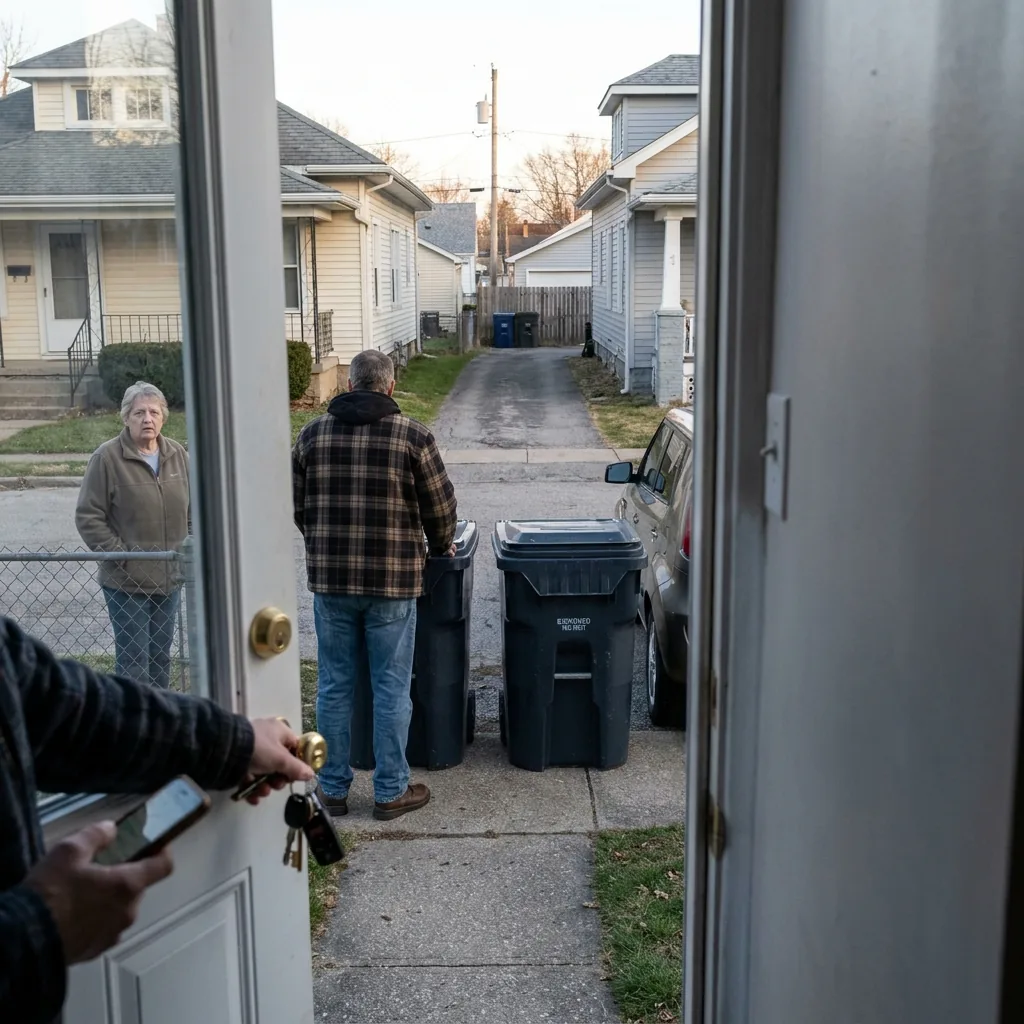
I opened my front door at 6:42 with my keys in one hand, my phone in the other, and saw Dale Mercer’s trash bins locked across the mouth of our shared driveway like he had built himself a little checkpoint overnight. My car was boxed in behind them, I had to be at work by seven-thirty, and he was already standing on his side of the concrete in house shoes, coffee mug in hand, like my being stuck there was the point. The worst part was how ordinary it looked from the street: just two black bins, lids shut, sitting in the one place they could keep me from getting out without scraping paint or backing into his fence.
We share one of those narrow side-by-side driveway setups that only works if both people act like adults. My side leads back to my garage, but the turn at the street is so tight that if anything sits at the mouth of the driveway, you do not just swing around it and leave. You inch, stop, correct, and pray. Dale knew that because he used the same space every single week.
I walked down in my work flats and stopped beside the first bin. Both had their wheels turned inward. One was tilted just enough that if I tried to push it from the front, it would drag and spill. The second one was jammed close to the retaining wall, leaving a gap too narrow for my car mirror.
I looked over at Dale and said, “Can you move your bins so I can leave?”
He took a sip of coffee first. Then he said, “Not until you quit putting your car so far forward.”
I said, “My car is in my space.”
He shrugged with one shoulder. “Your space affects mine.”
That was the whole thing with him lately. Nothing could ever just be a driveway. If my bumper sat where it always sat, that was disrespect. If I put my trash out after dark, that was inconsiderate. If I came home late, that was somehow a message. He never said any of this in one clean sentence. He saved it up in pieces and dropped it into ordinary moments like gravel.
I set my keys on my palm and tried again. “I have to go to work.”
He pointed with the mug toward the bins. “Then fix the parking issue and we won’t keep doing this.”
Not we. Him. He had rolled those bins into place after pickup, and he had done it early enough to catch me before I left. There was nothing accidental about the angle.
I stepped over to the edge and tested the first bin anyway. It moved an inch and stuck. Dale said, “Don’t touch my stuff.”
I looked at him. “You put your stuff across the driveway.”
His voice stayed even, almost bored. “Shared driveway means shared rules.”
There was no rule. There was just him standing there making me late in slow motion.
I got into my car and tried to see if I could ease around the bins. I turned the wheel hard, backed up, pulled forward, then stopped when my passenger mirror came too close to the plastic lid. If I clipped one of them, he would make that the story. I could already hear him talking over me from ten feet away.
When I got back out, he was still in the same spot.
I said, “Move them for thirty seconds.”
He said, “Move your car tonight.”
That was when I understood he was not trying to solve anything before work. He was setting terms.
I checked the time. 6:51.
Across the street and two houses down, Renee Alvarez was dragging her recycling tote toward the curb. She looked over once, then looked again when she saw me standing by my car with two trash bins blocking the exit. She did not call out or come running over dramatic like people do in fake stories. She just stayed where she was and watched long enough to understand what she was looking at.
Dale noticed that too. He shifted his mug from one hand to the other and stepped closer to the bins, not enough to help, just enough to be part of the frame.
I took my phone out and snapped one photo from inside the driveway, showing both bins across the opening and my hood behind them. Dale said, “Go ahead. Photograph your own parking job.”
I said, “That’s not what’s in the picture.”
He gave me a thin smile and looked toward the street.
Renee crossed over then, not onto the driveway, just near enough to speak without shouting. “You need a ride?” she asked.
Dale turned his head so fast the coffee in his mug sloshed over the rim.
I looked at her, then back at the bins, then at my car. “Maybe,” I said.
It was a simple word, but it changed the air. Dale lowered the mug and said, “This is between neighbors.”
Renee answered before I could. “I asked if she needed a ride to work.”
Nobody raised a voice. A garbage truck rattled somewhere at the next block over. One of the bin lids clicked in the breeze.
I looked at the driveway opening again and realized something I had not needed to think about before: if I stopped treating our routine like a favor I owed the system, the system might stop working for him too.
I picked up my bag from the passenger seat, locked my car back up, and told Renee, “Give me thirty seconds.”
Dale took one step forward. “What are you doing?”
I left the bins exactly where he had put them and went back inside to get my lunch, because suddenly the question was not how I was getting out.
The question was what Dale had just trapped on his side of that shared driveway without realizing it yet.
I opened my front door at 6:42 with my keys in one hand, my phone in the other, and saw Dale Mercer’s trash bins locked across the mouth of our shared driveway like he had built himself a little checkpoint overnight. My car was boxed in behind them, I had to be at work by seven-thirty, and he was already standing on his side of the concrete in house shoes, coffee mug in hand, like my being stuck there was the point. The worst part was how ordinary it looked from the street: just two black bins, lids shut, sitting in the one place they could keep me from getting out without scraping paint or backing into his fence.
We share one of those narrow side-by-side driveway setups that only works if both people act like adults. My side leads back to my garage, but the turn at the street is so tight that if anything sits at the mouth of the driveway, you do not just swing around it and leave. You inch, stop, correct, and pray. Dale knew that because he used the same space every single week.
I walked down in my work flats and stopped beside the first bin. Both had their wheels turned inward. One was tilted just enough that if I tried to push it from the front, it would drag and spill. The second one was jammed close to the retaining wall, leaving a gap too narrow for my car mirror.
I looked over at Dale and said, “Can you move your bins so I can leave?”
He took a sip of coffee first. Then he said, “Not until you quit putting your car so far forward.”
I said, “My car is in my space.”
He shrugged with one shoulder. “Your space affects mine.”
That was the whole thing with him lately. Nothing could ever just be a driveway. If my bumper sat where it always sat, that was disrespect. If I put my trash out after dark, that was inconsiderate. If I came home late, that was somehow a message. He never said any of this in one clean sentence. He saved it up in pieces and dropped it into ordinary moments like gravel.
I set my keys on my palm and tried again. “I have to go to work.”
He pointed with the mug toward the bins. “Then fix the parking issue and we won’t keep doing this.”
Not we. Him. He had rolled those bins into place after pickup, and he had done it early enough to catch me before I left. There was nothing accidental about the angle.
I stepped over to the edge and tested the first bin anyway. It moved an inch and stuck. Dale said, “Don’t touch my stuff.”
I looked at him. “You put your stuff across the driveway.”
His voice stayed even, almost bored. “Shared driveway means shared rules.”
There was no rule. There was just him standing there making me late in slow motion.
I got into my car and tried to see if I could ease around the bins. I turned the wheel hard, backed up, pulled forward, then stopped when my passenger mirror came too close to the plastic lid. If I clipped one of them, he would make that the story. I could already hear him talking over me from ten feet away.
When I got back out, he was still in the same spot.
I said, “Move them for thirty seconds.”
He said, “Move your car tonight.”
That was when I understood he was not trying to solve anything before work. He was setting terms.
I checked the time. 6:51.
Across the street and two houses down, Renee Alvarez was dragging her recycling tote toward the curb. She looked over once, then looked again when she saw me standing by my car with two trash bins blocking the exit. She did not call out or come running over dramatic like people do in fake stories. She just stayed where she was and watched long enough to understand what she was looking at.
Dale noticed that too. He shifted his mug from one hand to the other and stepped closer to the bins, not enough to help, just enough to be part of the frame.
I took my phone out and snapped one photo from inside the driveway, showing both bins across the opening and my hood behind them. Dale said, “Go ahead. Photograph your own parking job.”
I said, “That’s not what’s in the picture.”
He gave me a thin smile and looked toward the street.
Renee crossed over then, not onto the driveway, just near enough to speak without shouting. “You need a ride?” she asked.
Dale turned his head so fast the coffee in his mug sloshed over the rim.
I looked at her, then back at the bins, then at my car. “Maybe,” I said.
It was a simple word, but it changed the air. Dale lowered the mug and said, “This is between neighbors.”
Renee answered before I could. “I asked if she needed a ride to work.”
Nobody raised a voice. A garbage truck rattled somewhere at the next block over. One of the bin lids clicked in the breeze.
I looked at the driveway opening again and realized something I had not needed to think about before: if I stopped treating our routine like a favor I owed the system, the system might stop working for him too.
I picked up my bag from the passenger seat, locked my car back up, and told Renee, “Give me thirty seconds.”
Dale took one step forward. “What are you doing?”
I left the bins exactly where he had put them and went back inside to get my lunch, because suddenly the question was not how I was getting out.
The question was what Dale had just trapped on his side of that shared driveway without realizing it yet.