Story code: ST-000933
Part 1: She Said No Promise Was Ever Made
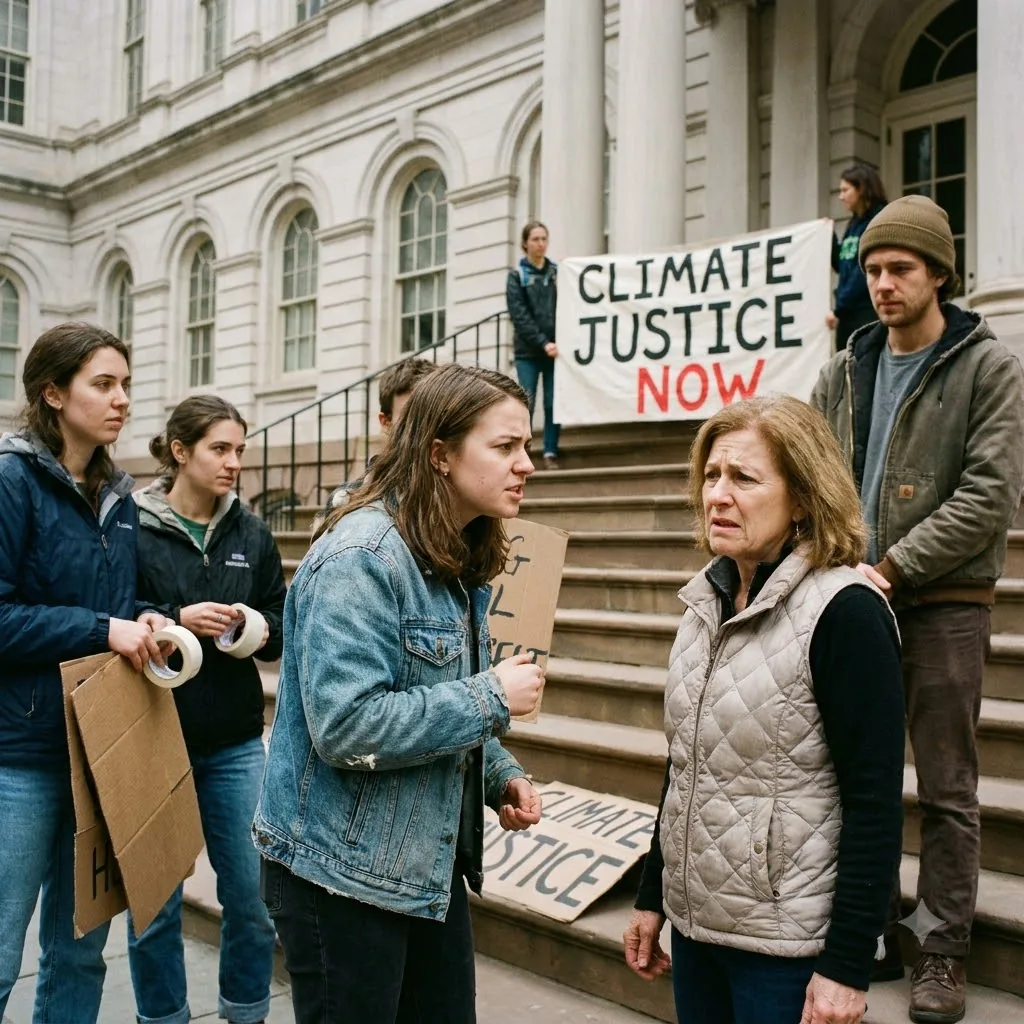
Kayla Mercer said it on the city council steps loud enough for the volunteers with tape and folded signs to hear: “I never promised you a place on the banner, Diane.” Her aunt was already standing there with the water crate at her feet and a roll of painter’s tape looped over one wrist, and the damage landed so fast it made Diane look like she had shown up confused to a rally she did not understand. The banner was still half folded near the center of the steps, handholds showing through the canvas, and suddenly the fight was not private family friction anymore. It was whether Diane had invented the whole thing in front of strangers.
Mara was two steps down, near the lower landing where cardboard placards leaned against a tote bag. People had been doing ordinary setup work a second earlier: stripping tape, sorting markers, checking phones, calling out names. After Kayla’s sentence, the movement did not stop, but it changed shape. Heads lifted. A college-aged volunteer holding one corner of the climate banner looked from Kayla to Diane and stayed still.
Diane did not raise her voice. She said, “You told me yesterday to come early because you wanted me on the front line, left side of the banner.” She kept one hand on the water crate handle as if she needed something solid to stay attached to.
Kayla answered in the clipped, flat tone she had been using all morning with volunteers. “No. I said come early if you wanted to help. That’s different. Please don’t do this right now. We need to keep the walkway clear and get into position.”
That last sentence pulled a few eyes toward the side path where Council Officer Ben Hall was already motioning a couple of passersby around the cluster on the steps. Kayla used the public-space language cleanly, like Diane had become a logistics problem.
Diane set the crate down. “I brought the extra water because you said I’d be standing there through the speeches. You told me what side. You said left side.”
Kayla gave a short shake of her head and glanced toward the banner team. “I did not assign you a spot. We don’t do reserved family places. That’s not what this is.”
The sentence did two things at once. It denied the promise and made Diane’s version sound selfish. One volunteer near Mara put his phone halfway down from where he had been checking the event page. Another bent over a sign again too quickly, with the posture people use when they want not to be involved but still want to hear every word.
Diane’s mouth tightened. She did not move closer. “This isn’t about family privilege. You asked me to be there.”
Kayla held up one hand, not dramatic, just managerial. “You’re mixing up helping with leading. Please stop saying I promised something I didn’t promise.”
That was the first moment Diane looked stranded. Not because she had no words, but because every concrete detail she offered came back sounding like evidence that she had built a story in her own head. She kept naming practical things: what time Kayla told her to arrive, which side of the steps, what to wear because the cameras usually framed the center. Kayla answered each point with public calm.
“You assumed that.”
“That’s your interpretation.”
“I need everyone focused.”
The more specific Diane got, the more a few people began to look at her the way people look at someone who will not let go of a misunderstanding.
Mara saw Evan Ruiz near the banner tote, zip ties hooked over two fingers. He did not step in. He watched the exchange and then looked at the folded banner itself, as if checking whether something there could settle it. Marisol Vega, the college-aged volunteer, had one hand under the rolled edge of the canvas. She kept shifting her grip but did not unroll it all the way.
Officer Hall’s voice came from the side path. “Folks, if you’re staging here, I need the center lane clear in about two minutes.”
Kayla answered without looking away from Diane. “We’re moving now.”
Then Diane said the part that made several heads turn back. “If there was no place for me, why did you tell me not to bring a sign because both my hands would be busy?”
Kayla’s jaw set for a beat. “I said if you wanted to carry supplies, your hands would be busy. Not the same thing.”
No one spoke after that. A volunteer crouched to gather fallen placards. A strip of tape stuck to someone’s shoe and snapped free. The half-folded banner remained between them like the object neither side could stop pointing at without touching.
Diane looked at the banner, not at Kayla. “Then unroll it,” she said. “Show them how I made up a spot on a thing I was never supposed to touch.”
Kayla did not unroll it. She told Marisol, “Hold one minute,” and told Evan to move the tote closer to the center line. She was still in charge. That much stayed visible. But if Diane had imagined everything, Mara could not see why the banner team suddenly needed to wait before opening the one object that would make the answer obvious.
By the time Officer Hall reminded them again to either form up or move aside, the question had changed. It was no longer just whether Diane remembered wrong. It was why Kayla, who said no promise had ever existed, would not let the banner open until she figured out where everyone was going to stand.
Kayla Mercer said it on the city council steps loud enough for the volunteers with tape and folded signs to hear: “I never promised you a place on the banner, Diane.” Her aunt was already standing there with the water crate at her feet and a roll of painter’s tape looped over one wrist, and the damage landed so fast it made Diane look like she had shown up confused to a rally she did not understand. The banner was still half folded near the center of the steps, handholds showing through the canvas, and suddenly the fight was not private family friction anymore. It was whether Diane had invented the whole thing in front of strangers.
Mara was two steps down, near the lower landing where cardboard placards leaned against a tote bag. People had been doing ordinary setup work a second earlier: stripping tape, sorting markers, checking phones, calling out names. After Kayla’s sentence, the movement did not stop, but it changed shape. Heads lifted. A college-aged volunteer holding one corner of the climate banner looked from Kayla to Diane and stayed still.
Diane did not raise her voice. She said, “You told me yesterday to come early because you wanted me on the front line, left side of the banner.” She kept one hand on the water crate handle as if she needed something solid to stay attached to.
Kayla answered in the clipped, flat tone she had been using all morning with volunteers. “No. I said come early if you wanted to help. That’s different. Please don’t do this right now. We need to keep the walkway clear and get into position.”
That last sentence pulled a few eyes toward the side path where Council Officer Ben Hall was already motioning a couple of passersby around the cluster on the steps. Kayla used the public-space language cleanly, like Diane had become a logistics problem.
Diane set the crate down. “I brought the extra water because you said I’d be standing there through the speeches. You told me what side. You said left side.”
Kayla gave a short shake of her head and glanced toward the banner team. “I did not assign you a spot. We don’t do reserved family places. That’s not what this is.”
The sentence did two things at once. It denied the promise and made Diane’s version sound selfish. One volunteer near Mara put his phone halfway down from where he had been checking the event page. Another bent over a sign again too quickly, with the posture people use when they want not to be involved but still want to hear every word.
Diane’s mouth tightened. She did not move closer. “This isn’t about family privilege. You asked me to be there.”
Kayla held up one hand, not dramatic, just managerial. “You’re mixing up helping with leading. Please stop saying I promised something I didn’t promise.”
That was the first moment Diane looked stranded. Not because she had no words, but because every concrete detail she offered came back sounding like evidence that she had built a story in her own head. She kept naming practical things: what time Kayla told her to arrive, which side of the steps, what to wear because the cameras usually framed the center. Kayla answered each point with public calm.
“You assumed that.”
“That’s your interpretation.”
“I need everyone focused.”
The more specific Diane got, the more a few people began to look at her the way people look at someone who will not let go of a misunderstanding.
Mara saw Evan Ruiz near the banner tote, zip ties hooked over two fingers. He did not step in. He watched the exchange and then looked at the folded banner itself, as if checking whether something there could settle it. Marisol Vega, the college-aged volunteer, had one hand under the rolled edge of the canvas. She kept shifting her grip but did not unroll it all the way.
Officer Hall’s voice came from the side path. “Folks, if you’re staging here, I need the center lane clear in about two minutes.”
Kayla answered without looking away from Diane. “We’re moving now.”
Then Diane said the part that made several heads turn back. “If there was no place for me, why did you tell me not to bring a sign because both my hands would be busy?”
Kayla’s jaw set for a beat. “I said if you wanted to carry supplies, your hands would be busy. Not the same thing.”
No one spoke after that. A volunteer crouched to gather fallen placards. A strip of tape stuck to someone’s shoe and snapped free. The half-folded banner remained between them like the object neither side could stop pointing at without touching.
Diane looked at the banner, not at Kayla. “Then unroll it,” she said. “Show them how I made up a spot on a thing I was never supposed to touch.”
Kayla did not unroll it. She told Marisol, “Hold one minute,” and told Evan to move the tote closer to the center line. She was still in charge. That much stayed visible. But if Diane had imagined everything, Mara could not see why the banner team suddenly needed to wait before opening the one object that would make the answer obvious.
By the time Officer Hall reminded them again to either form up or move aside, the question had changed. It was no longer just whether Diane remembered wrong. It was why Kayla, who said no promise had ever existed, would not let the banner open until she figured out where everyone was going to stand.