Story code: ST-001061
Part 1: The Accusation on the Steps
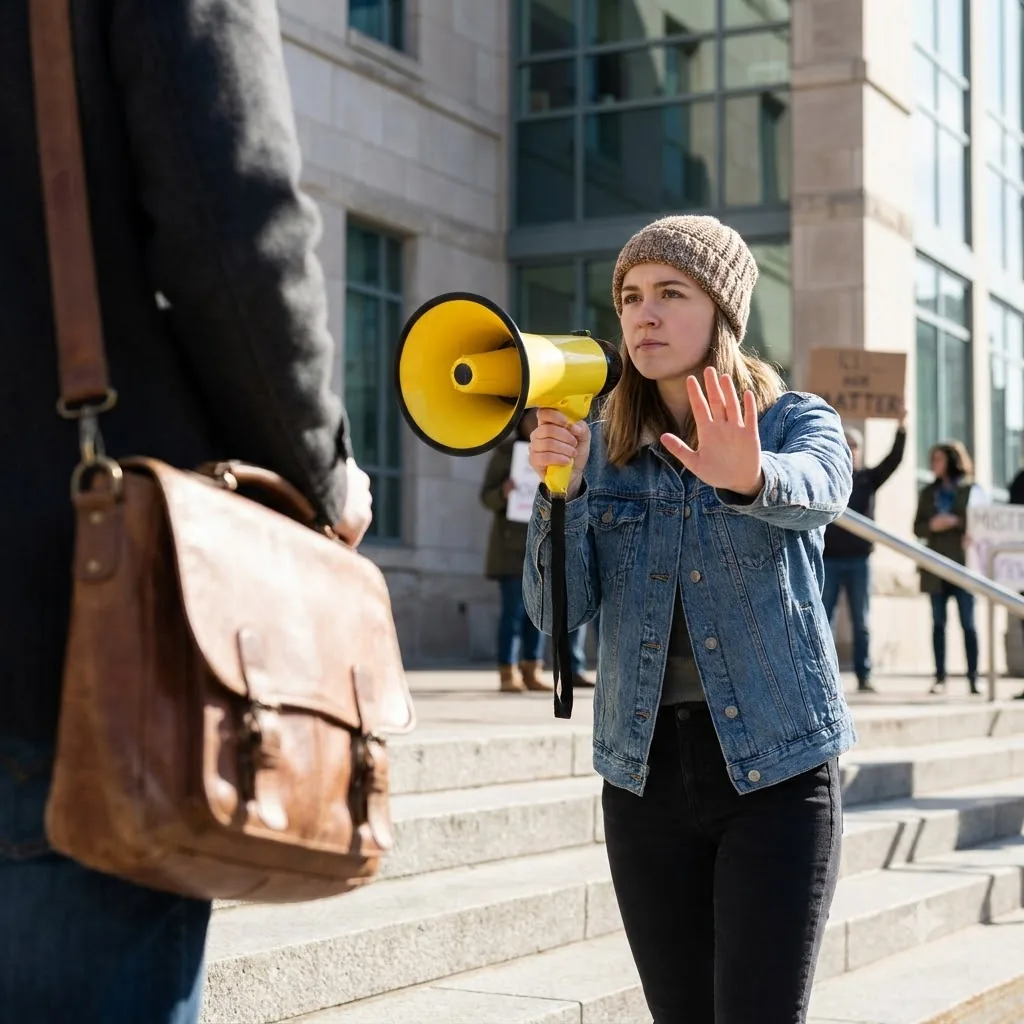
I adjusted my grip on my leather satchel and stepped onto the sunlit city council steps, prepared to deliver a routine municipal zoning report, when my niece Maya blocked my path and raised a yellow megaphone. Before I could speak, two of her fellow activists unfurled a massive, stiff canvas protest banner behind her, publicly accusing me of taking bribes for corporate environmental collusion. The crowd of local residents and municipal employees climbing the steps instantly stopped, their murmurs hardening into hostile stares as they read the bold letters naming me as a corrupt official.
“Thomas Vance!” Maya’s voice boomed through the megaphone, the static scraping against the concrete walls of the plaza. “For months, you’ve hid behind your desk, signing away our city’s wetlands to developers! We have the timeline of your corruption right here for everyone to see!”
I stood frozen on the third step, the weight of my leather satchel pulling at my shoulder. Around me, people were already pulling out their phones, capturing the confrontation. I recognized several of my colleagues from the planning department standing near the glass doors of the municipal lobby, their expressions turning from confusion to disapproval. The damage to my reputation was immediate and visible; I could see it in the way my coworkers stepped back, separating themselves from the target of the protest.
The banner itself was a heavy, off-white canvas, smelling strongly of fresh latex paint. In bold red and black lettering, it laid out a detailed chronology of my alleged secret meetings with Apex Development. According to the timeline, I had met with their executives to iron out the wetland variance and accept financial compensation.
“This is a public forum,” Maya shouted, directing her gaze to the gathering crowd rather than to me. “We demand accountability! No more backroom deals!”
I looked at my niece. Her green utility coat was zipped to the collar, her eyes wide and unblinking. She did not look at me with the familiarity of a family member; she looked at me as an adversary to be dismantled. The crowd murmured in agreement, a few people shouting prompts of support for her. They accepted her claims instantly, swept up in the theatricality of the banner and the authority of her confidence.
I stepped closer, ignoring the megaphone pointed at my face, and looked directly at the center of the canvas. My eyes scanned down the painted dates. October 12th. October 13th. And then, painted in thick, dripping red acrylic, October 14th: Thomas Vance signs the secret variance at the Apex corporate lodge.
A sudden stillness settled over me. I stared at the numbers, verifying them against my own memory. The accusation was absolute, detailed, and completely public. But as I stared at that specific date, I realized Maya had made a critical, undeniable error that completely refuted the timeline she had displayed to the city.
I adjusted my grip on my leather satchel and stepped onto the sunlit city council steps, prepared to deliver a routine municipal zoning report, when my niece Maya blocked my path and raised a yellow megaphone. Before I could speak, two of her fellow activists unfurled a massive, stiff canvas protest banner behind her, publicly accusing me of taking bribes for corporate environmental collusion. The crowd of local residents and municipal employees climbing the steps instantly stopped, their murmurs hardening into hostile stares as they read the bold letters naming me as a corrupt official.
“Thomas Vance!” Maya’s voice boomed through the megaphone, the static scraping against the concrete walls of the plaza. “For months, you’ve hid behind your desk, signing away our city’s wetlands to developers! We have the timeline of your corruption right here for everyone to see!”
I stood frozen on the third step, the weight of my leather satchel pulling at my shoulder. Around me, people were already pulling out their phones, capturing the confrontation. I recognized several of my colleagues from the planning department standing near the glass doors of the municipal lobby, their expressions turning from confusion to disapproval. The damage to my reputation was immediate and visible; I could see it in the way my coworkers stepped back, separating themselves from the target of the protest.
The banner itself was a heavy, off-white canvas, smelling strongly of fresh latex paint. In bold red and black lettering, it laid out a detailed chronology of my alleged secret meetings with Apex Development. According to the timeline, I had met with their executives to iron out the wetland variance and accept financial compensation.
“This is a public forum,” Maya shouted, directing her gaze to the gathering crowd rather than to me. “We demand accountability! No more backroom deals!”
I looked at my niece. Her green utility coat was zipped to the collar, her eyes wide and unblinking. She did not look at me with the familiarity of a family member; she looked at me as an adversary to be dismantled. The crowd murmured in agreement, a few people shouting prompts of support for her. They accepted her claims instantly, swept up in the theatricality of the banner and the authority of her confidence.
I stepped closer, ignoring the megaphone pointed at my face, and looked directly at the center of the canvas. My eyes scanned down the painted dates. October 12th. October 13th. And then, painted in thick, dripping red acrylic, October 14th: Thomas Vance signs the secret variance at the Apex corporate lodge.
A sudden stillness settled over me. I stared at the numbers, verifying them against my own memory. The accusation was absolute, detailed, and completely public. But as I stared at that specific date, I realized Maya had made a critical, undeniable error that completely refuted the timeline she had displayed to the city.