Story code: ST-000151
Part 1: He Chose the Hallway
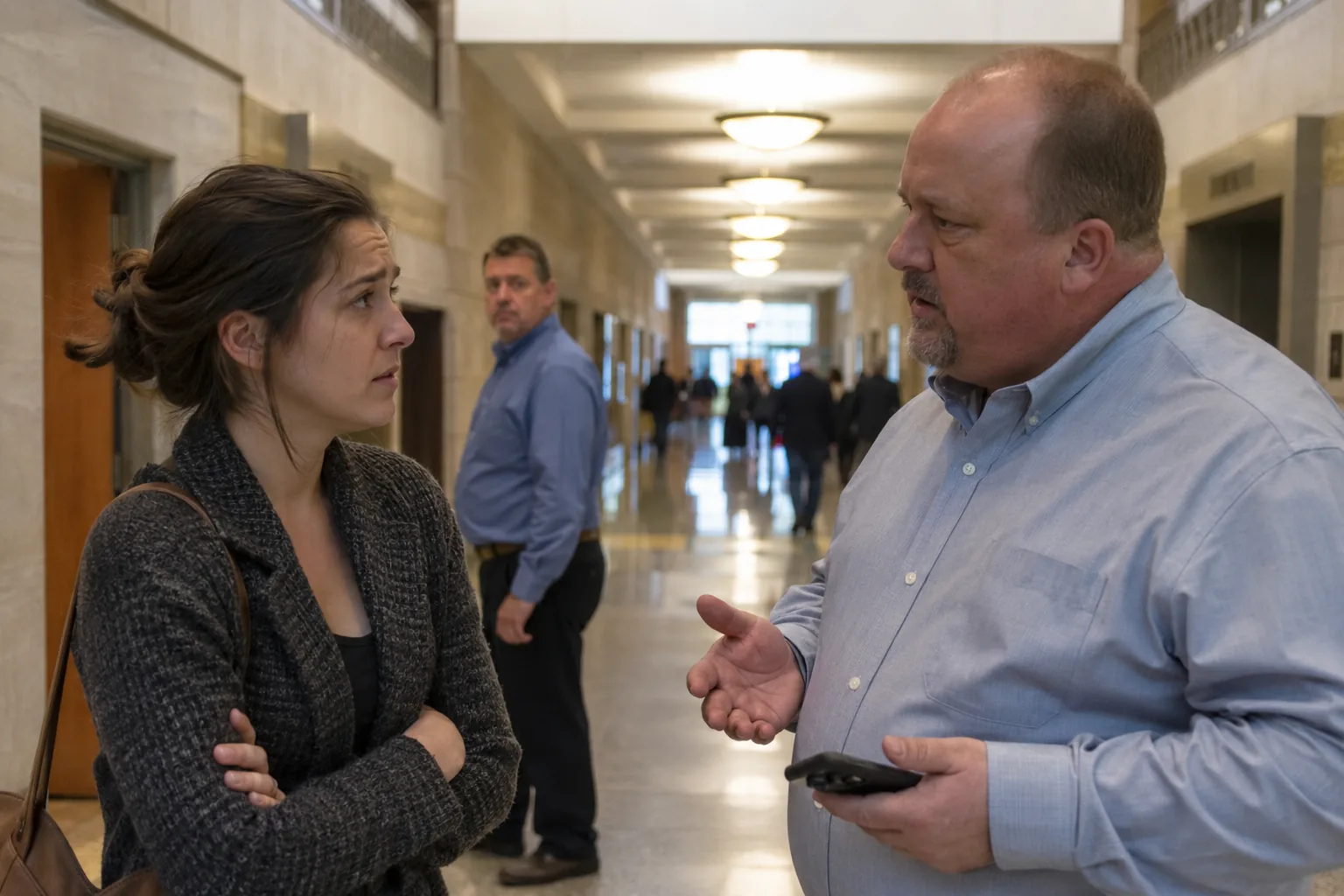
My property manager shut off my garage remote while I was standing in a county building hallway with people walking past me and offices getting ready to close, then told me he would turn it back on when I did what he wanted. I had gone there to drop off one routine form and get back to work, and instead I was suddenly stuck forty minutes from home with my car locked behind the apartment garage gate and the one person controlling that access acting like obedience was part of the lease. I was at the end of the second-floor hallway outside the tax office, holding a stamped receipt in one hand and my phone in the other. A copier was running somewhere behind a closed door. Two people in lanyards passed me arguing quietly about whether the front doors locked at five or five-thirty. It was that ordinary late-afternoon county-building shuffle where everybody is already halfway gone. That was when my phone buzzed. The text was from Brent Keller, the property manager at my apartment complex. Your garage remote has been deactivated pending compliance. Let me know when you are ready to cooperate. I read it twice because it was written like something official, except nothing about it made sense. I had used the remote that morning. Nobody had called me. Nobody had emailed me. There was no notice on my door. Just that text landing while I was out, away from my building, away from my car, right when getting home fast actually mattered. I called him right there in the hallway. He answered on the second ring with that smooth voice people use when they want to sound relaxed before they say something ugly. I said, “Why did you deactivate my remote?” He said, “We’ve been trying to get access to your unit for the garage-side inspection.” “That is not true,” I said. “You texted me yesterday asking for a time next week. I said I could do Thursday after work.” He paused just long enough for me to hear shoes squeak past me on the waxed floor. Then he said, “This would all be easier if you stopped making things difficult.” I looked down at the stamped county receipt in my hand like it might somehow explain why he had picked that exact hour. “My car is in the garage. You know I’m not home.” “You can resolve that today,” he said. “By doing what?” “By cooperating with management.” I asked him what that actually meant. He never said it straight. He kept using words like access, cooperation, and policy, but every version came back to the same thing: if I wanted my remote turned back on right away, I needed to stop insisting on notice and let his maintenance guy into my apartment that evening. There were still people moving around me. A woman with a rolling cart stopped near the wall and checked a room number. Somewhere behind me a door latch clicked, then another. It made the whole conversation feel more exposed, not less. I said, “You can’t strand me to force this.” He lowered his voice instead of raising it. “No one is stranding you. I’m offering you a solution.” That line was so polished it almost made me miss what he had just admitted. My remote did not fail. He had it turned off. And the solution was me giving him what he wanted. I asked if he was saying this was policy. He said, “I’m saying if you want access restored immediately, there’s a simple way to get there.” I told him to put that in writing. He said, “I already texted you.” Then he hung up. I stood there with my phone against my ear for a second after the call ended. A county employee in a blue cardigan, later I learned her name was Denise Harper, was locking a side office and glanced at me the way people do when they are deciding whether somebody needs directions or just needs a minute. I stepped out of the middle of the hallway and leaned against the wall near a bulletin board covered in faded public notices. I texted Brent: Are you refusing to restore my garage remote unless I allow unit access tonight without notice? He did not answer that question. Instead he sent: Your choice determines how quickly this gets fixed. I screenshotted everything. Then I called the garage line for the complex. No answer. I called the front office. Voicemail. I tried my spare login for the resident portal, thinking maybe there was some posted update I had missed, but there was nothing about remotes, inspections, or emergencies. Denise came back past me with a stack of folders and said, “Ma’am, do you need the public desk before they close?” I said, “No, thank you. My apartment manager just shut off my garage remote while I’m here.” She stopped for half a beat, looked at the phone in my hand, then at the hallway clock. “That’s rough timing.” It was such a plain sentence that it made the whole thing feel even uglier. I called Marcus Lee, a friend from work who had once helped me jump my battery in that same garage. He answered with, “I’ve got six minutes before I’m driving into a meeting. What happened?” I told him the short version. He said, “Can somebody let you in manually?” “Maybe, if I can get there. My car is trapped inside, and I’m still at the county building.” There was a pause, then I heard his turn signal clicking through the phone. “Send me the address,” he said. “If I can break away after this, I can at least get you home or to the garage.” That was the first moment Brent’s setup stopped feeling airtight. It would still cost me. I could still miss work time. I could still end up paying for a rideshare or owing favors. But if I stopped arguing with.
My property manager shut off my garage remote while I was standing in a county building hallway with people walking past me and offices getting ready to close, then told me he would turn it back on when I did what he wanted. I had gone there to drop off one routine form and get back to work, and instead I was suddenly stuck forty minutes from home with my car locked behind the apartment garage gate and the one person controlling that access acting like obedience was part of the lease. I was at the end of the second-floor hallway outside the tax office, holding a stamped receipt in one hand and my phone in the other. A copier was running somewhere behind a closed door. Two people in lanyards passed me arguing quietly about whether the front doors locked at five or five-thirty. It was that ordinary late-afternoon county-building shuffle where everybody is already halfway gone. That was when my phone buzzed. The text was from Brent Keller, the property manager at my apartment complex. Your garage remote has been deactivated pending compliance. Let me know when you are ready to cooperate. I read it twice because it was written like something official, except nothing about it made sense. I had used the remote that morning. Nobody had called me. Nobody had emailed me. There was no notice on my door. Just that text landing while I was out, away from my building, away from my car, right when getting home fast actually mattered. I called him right there in the hallway. He answered on the second ring with that smooth voice people use when they want to sound relaxed before they say something ugly. I said, “Why did you deactivate my remote?” He said, “We’ve been trying to get access to your unit for the garage-side inspection.” “That is not true,” I said. “You texted me yesterday asking for a time next week. I said I could do Thursday after work.” He paused just long enough for me to hear shoes squeak past me on the waxed floor. Then he said, “This would all be easier if you stopped making things difficult.” I looked down at the stamped county receipt in my hand like it might somehow explain why he had picked that exact hour. “My car is in the garage. You know I’m not home.” “You can resolve that today,” he said. “By doing what?” “By cooperating with management.” I asked him what that actually meant. He never said it straight. He kept using words like access, cooperation, and policy, but every version came back to the same thing: if I wanted my remote turned back on right away, I needed to stop insisting on notice and let his maintenance guy into my apartment that evening. There were still people moving around me. A woman with a rolling cart stopped near the wall and checked a room number. Somewhere behind me a door latch clicked, then another. It made the whole conversation feel more exposed, not less. I said, “You can’t strand me to force this.” He lowered his voice instead of raising it. “No one is stranding you. I’m offering you a solution.” That line was so polished it almost made me miss what he had just admitted. My remote did not fail. He had it turned off. And the solution was me giving him what he wanted. I asked if he was saying this was policy. He said, “I’m saying if you want access restored immediately, there’s a simple way to get there.” I told him to put that in writing. He said, “I already texted you.” Then he hung up. I stood there with my phone against my ear for a second after the call ended. A county employee in a blue cardigan, later I learned her name was Denise Harper, was locking a side office and glanced at me the way people do when they are deciding whether somebody needs directions or just needs a minute. I stepped out of the middle of the hallway and leaned against the wall near a bulletin board covered in faded public notices. I texted Brent: Are you refusing to restore my garage remote unless I allow unit access tonight without notice? He did not answer that question. Instead he sent: Your choice determines how quickly this gets fixed. I screenshotted everything. Then I called the garage line for the complex. No answer. I called the front office. Voicemail. I tried my spare login for the resident portal, thinking maybe there was some posted update I had missed, but there was nothing about remotes, inspections, or emergencies. Denise came back past me with a stack of folders and said, “Ma’am, do you need the public desk before they close?” I said, “No, thank you. My apartment manager just shut off my garage remote while I’m here.” She stopped for half a beat, looked at the phone in my hand, then at the hallway clock. “That’s rough timing.” It was such a plain sentence that it made the whole thing feel even uglier. I called Marcus Lee, a friend from work who had once helped me jump my battery in that same garage. He answered with, “I’ve got six minutes before I’m driving into a meeting. What happened?” I told him the short version. He said, “Can somebody let you in manually?” “Maybe, if I can get there. My car is trapped inside, and I’m still at the county building.” There was a pause, then I heard his turn signal clicking through the phone. “Send me the address,” he said. “If I can break away after this, I can at least get you home or to the garage.” That was the first moment Brent’s setup stopped feeling airtight. It would still cost me. I could still miss work time. I could still end up paying for a rideshare or owing favors. But if I stopped arguing with.