Story code: ST-000853
Part 2: What the Board Could Not Explain Away
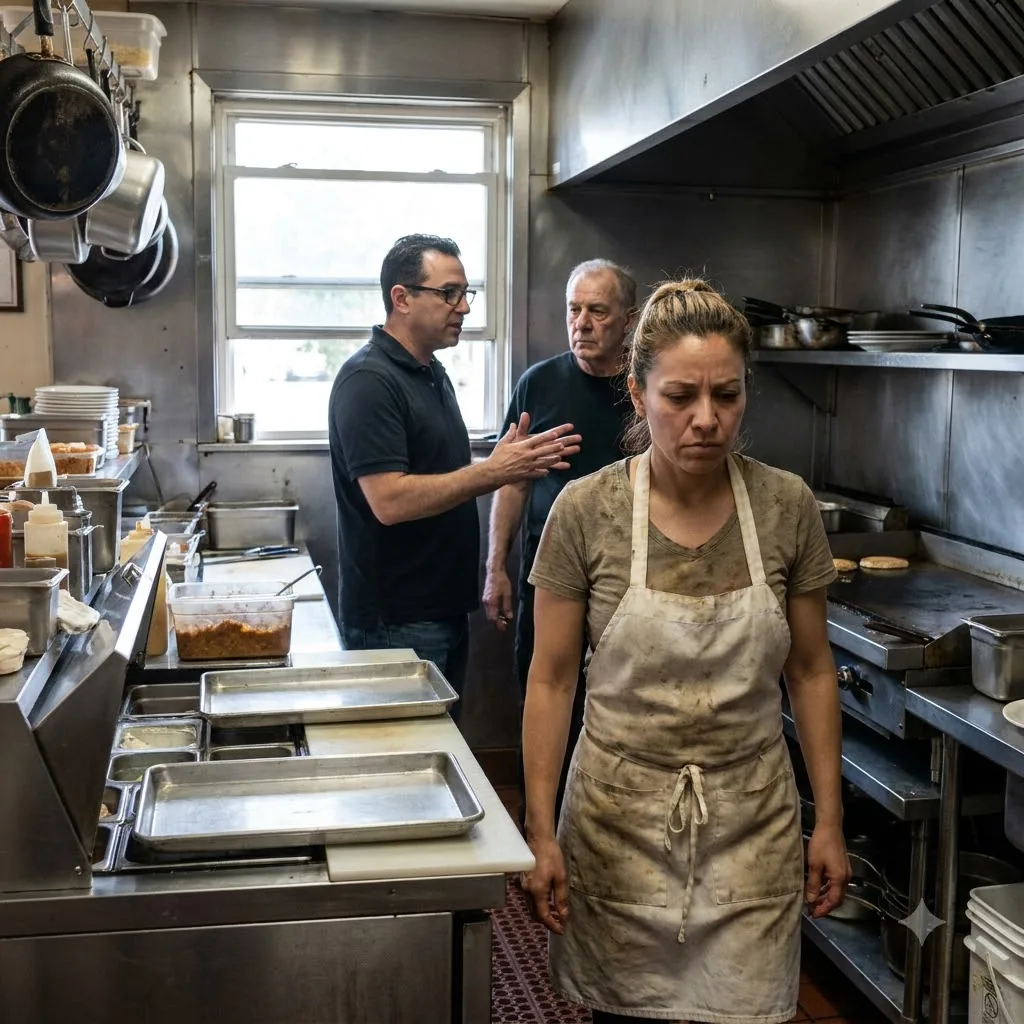
Marlene watched Grant read the prep board like he had never seen it before, though he was standing close enough to leave a clean fingertip streak through the grease pencil dust. Tessa did not fill the silence for him. She stepped aside from the board, giving him room in a way that made the board itself look larger than either of them.
Dana broke first. “I need words, not suspense. What line?”
Tessa pointed with the pencil. “Extra pancake batter. Not for today’s breakfast push. Weekend backup. We don’t mix that unless the cold line and soup base are getting built with it, because it ties up Eli for an hour and a half before open.”
Grant answered before Eli could. “Or because somebody wrote it down as a reminder and never cleared it.”
“Then say who it was reminding,” Tessa said.
Grant adjusted the clipboard against his hip. “You. Him. Anybody doing prep.”
Eli looked at the board and spoke carefully, like he was reading from a rule nobody had posted. “If it’s written in your hand with a slash, I treat it as active unless somebody scratches it out.”
Grant turned to him, still calm. “That is exactly why written approval matters. So there’s no confusion.”
It sounded reasonable on top. Marlene could hear that much. But the kitchen around it kept refusing the shape of it. If there had been no weekend load at all, the board should have looked cleaner. The marks on it were sequenced in station order, not scattered like reminders. Soup first, cold line second, grill support third. Tessa had not written it like a wish list. She had written it like a run.
Dana came farther in from the door, ticket paper in her hand. “So what’s the damage if this all gets built now?”
Tessa checked the clock over the pass. “If Eli starts from nothing, we lose breakfast crossover and part of lunch setup. If I pull Marlene off grill to help, tickets back up in fifteen minutes. If I leave it alone, tomorrow’s brunch starts hollow.”
Grant nodded as if the answer supported him. “Then you make a management call and stop pretending somebody else caused a timing issue.”
Marlene set down her spatula. “That’s not a timing issue.”
Nobody looked at her for a beat because Marlene rarely stepped into ownership talk at all. She pointed the spatula toward the speed rack. “Onions, pickles, slaw are already staged in the order that board calls for. Not random. Staged. If there was no weekend run, why’d the foundation start?”
Grant turned his face toward the rack. “Those are standard.”
“Not in backup volume,” Marlene said.
Eli swallowed and went to the shelf, lifting one container after another. “She’s right. Two full slaw tubs. Extra pickle quart. Double onions.” He set them down in a straight line. “That’s not standard weekday.”
Grant’s hand moved to flatten the top sheet on the clipboard again. “Or somebody over-prepped before checking with me.”
There it was again. Every answer leaving Tessa with a worse option than before. If she pushed, she looked desperate. If she explained each item, it sounded like she was building the case backward from the missing food. The lie did not have to prove anything. It only had to keep her proving more than the room could hold in one morning.
The first ticket rail slips were beginning to gather. Dana tore one free and read it off toward the grill, but her eyes kept cutting back to the board. “Two club, one tuna melt, one burger. And if tuna isn’t mixed, I’m about to start having very annoying conversations.”
Tessa took the ticket, clipped it under the rail, and spoke without looking at Grant. “Eli, mix one emergency batch. Half size. Marlene, hold sausage counts tight. Dana, don’t sell chowder till I say.”
Then she faced Grant again. “You want written clarity so bad? Fine. Let’s use the writing already on the wall.”
She tapped each item in order. “Soup base before batter, because batter can wait if stock is short. Tomatoes before tuna, because lunch burns through cut tomatoes first. Sausage before backup slaw, because grill failures hit before garnish. That sequence is how this kitchen loads for a weekend. Always.”
Grant said, “That’s your system.”
“Yes,” Tessa said. “The diner’s system.”
“Not mine.”
Marlene watched Dana stop writing. Eli stopped with the whisk halfway into the bowl. The distinction had landed badly. Grant seemed to hear it a second late, because he added, “Operationally, I mean.”
Tessa did not pounce. She only held out the grease pencil. “Then fix the board. Right now. If there was no settled weekend prep, mark off what should never have been posted and what should have been posted instead. Show them the correct version.”
Grant did not take the pencil.
The printer spat out three more tickets. Grease popped at the grill. Dana said a table was asking whether chowder would be ready by lunch. No one answered her.
Grant finally took one step toward the board. His free hand lifted, then lowered. He scanned the lines again: soup base, tomato, tuna, sausage, batter, slaw, pickles. The staged containers on the rack matched the early lines too neatly. The empty hotel pans under the cold line waited beneath the items that should have followed. The board was not just a list anymore. It was a half-built machine with the missing parts outlined in plain sight.
“Go ahead,” Tessa said.
Grant reached for the grease pencil at last, but instead of marking the first line, he asked Eli, very quietly, “When did you set the backup slaw?”
Eli looked from the pencil to the board. “After you told me to start with the weekend base.”
No one in the kitchen spoke after that. Grant was still holding the pencil, and now the only question was what he could possibly write next.