Story code: ST-000567
Part 1: She Said the Quiet Sister Was the Selfish One
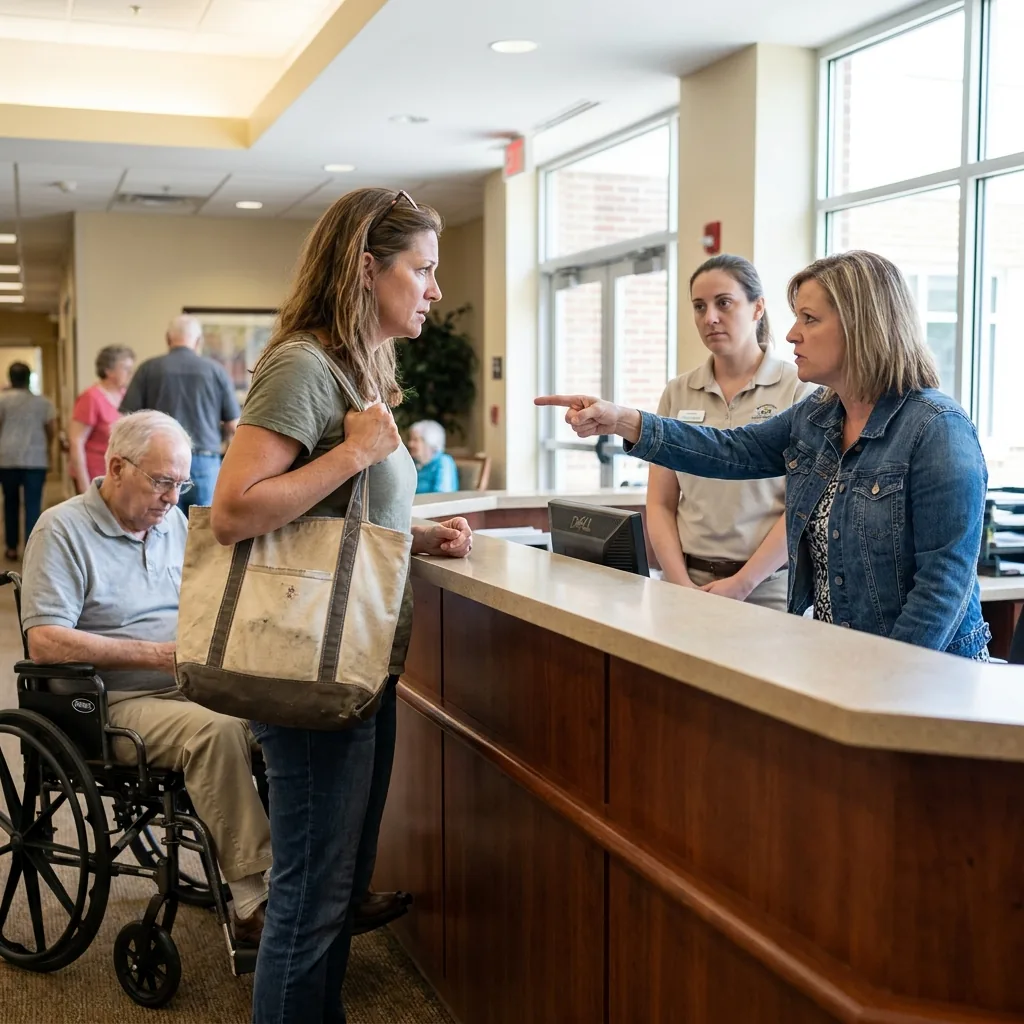
Dana Mercer had one hand on a tote full of pill notes and clean socks when her sister pointed across the assisted living desk and said, loud enough for the whole lobby, “There she is. The selfish one.” The front desk printer was spitting visitor bracelets, a resident in a cardigan was being guided past the check-in counter, and care coordinator Marisol Vega chose that exact moment to back Leah up in public. The ugly part was that the plastic bracelet band on the desk looked like it could prove who actually came here, but nobody was looking at it yet.
Ruth Kaplan had been waiting to sign in for ten minutes with a flowered gift bag against her knee. She was close enough to hear the desk phone ringing, hear the buzz of the locked resident wing door, and hear Dana say, very evenly, “I’m here to bring my mother her updated medication list and the nonslip shoes she asked for.”
Leah gave a short laugh that carried. “You’re here to control everything. Again.”
Marisol stood behind the counter, one hand near the monitor, chin lifted in that official way people use when they want the room to accept something before it gets checked. “Dana, we’ve already discussed that your constant interference is creating stress for your mother,” she said. “At this point, showing up with bags and lists every day is not helping.”
A man at the coffee station turned. Two visitors sitting under the television looked over. Noah Price, the receptionist, had been sorting bracelet strips beside the check-in log. He stopped moving for a beat, then glanced toward Marisol before looking back down.
Dana did not raise her voice. That made the scene sharper, not softer. “Every day?” she said. “You mean I’m here every day because somebody has to bring the things she needs.”
Leah stepped closer to the counter and pointed at the tote. “No. You do this so nobody else gets a say. You make yourself look important and call it caregiving.”
Ruth watched Dana set the tote down slowly on the ledge, like she knew one fast move would be used against her. A folded paper stuck out from the top next to a labeled pill organizer sleeve. Dana kept her shoulders square to the desk.
“My mother called this morning because she didn’t have the right shoes for physical therapy,” Dana said. “I brought the shoes.”
Marisol’s voice came out clipped and public. “And instead of coordinating through staff, you bring items directly and create confusion about routines. That is exactly the problem.”
The word selfish came back around from Leah again, louder this time, as if repetition could turn it into a facility rule. “She wants everyone to see her carrying bags so she looks like the only daughter doing anything.”
That got a reaction from the people waiting. Not words yet, just faces turning more fully toward the counter. A woman in a red vest paused with a rolling walker beside a resident and stayed paused. The resident wing door opened, then shut again behind an aide with towels.
Dana’s mouth tightened, but her tone stayed flat. “If I’m not supposed to bring my mother what she asked for, who did?”
Leah crossed her arms. “That’s not the point.”
Dana answered right away. “It is exactly the point.”
Noah cleared his throat softly, then slid a fresh bracelet strip off the printer. He did not hand it over. The thin band hung between his fingers, white and glossy under the lobby lights, with the day’s date printed in black.
Marisol leaned into the desk edge. “We need family members who support care, not family members who disrupt it. If you keep pushing your own agenda, we may need to reconsider how visits are handled.”
That sentence changed the air. Ruth saw it happen in the way two people near the magazine rack stopped pretending not to listen. Dana had come in carrying shoes and notes, and now the care coordinator was talking about her access in front of strangers.
Dana looked at Noah instead of Leah. “Am I checked in here more than my sister is?”
Leah cut in before he answered. “This isn’t about a contest.”
“It became one when you called me selfish at the desk,” Dana said.
Noah’s hand stayed on the bracelet strip. His eyes flicked to Marisol, then to the monitor. “I handle the sign-ins,” he said carefully.
Marisol snapped, “We are not reviewing desk records in the middle of a family outburst.”
Dana gave a small nod, almost like she had expected that. “Convenient,” she said.
Leah pushed harder. “You show up, you hover, you make staff miserable, and then you want credit for basic family duty.”
Ruth noticed that Dana did not deny the showing up part. She only rested her palm on the tote and said, “Basic family duty still has to be done by an actual person.”
Noah finally looked fully at the screen. His fingers touched the keyboard once, then stopped. Beside him sat the check-in log, the bracelet roll, and a clipboard with visitor initials from earlier that week. They were ordinary desk things until that moment. Then they looked like they belonged to the argument more than any of the voices did.
Marisol told Dana, “If you cared about your mother’s peace, you would step back.”
Dana’s answer came low and sharp. “If stepping back is so caring, why does your desk have me on record here so often?”
Noah did not speak, but he did not deny it either. He stared at the monitor long enough for Leah to turn toward him and say, too quickly, “There’s no need to pull logs over this.”
That was the first time the room got quiet enough for the printer to be heard again, feeding out another bracelet no one reached for.
Dana Mercer had one hand on a tote full of pill notes and clean socks when her sister pointed across the assisted living desk and said, loud enough for the whole lobby, “There she is. The selfish one.” The front desk printer was spitting visitor bracelets, a resident in a cardigan was being guided past the check-in counter, and care coordinator Marisol Vega chose that exact moment to back Leah up in public. The ugly part was that the plastic bracelet band on the desk looked like it could prove who actually came here, but nobody was looking at it yet.
Ruth Kaplan had been waiting to sign in for ten minutes with a flowered gift bag against her knee. She was close enough to hear the desk phone ringing, hear the buzz of the locked resident wing door, and hear Dana say, very evenly, “I’m here to bring my mother her updated medication list and the nonslip shoes she asked for.”
Leah gave a short laugh that carried. “You’re here to control everything. Again.”
Marisol stood behind the counter, one hand near the monitor, chin lifted in that official way people use when they want the room to accept something before it gets checked. “Dana, we’ve already discussed that your constant interference is creating stress for your mother,” she said. “At this point, showing up with bags and lists every day is not helping.”
A man at the coffee station turned. Two visitors sitting under the television looked over. Noah Price, the receptionist, had been sorting bracelet strips beside the check-in log. He stopped moving for a beat, then glanced toward Marisol before looking back down.
Dana did not raise her voice. That made the scene sharper, not softer. “Every day?” she said. “You mean I’m here every day because somebody has to bring the things she needs.”
Leah stepped closer to the counter and pointed at the tote. “No. You do this so nobody else gets a say. You make yourself look important and call it caregiving.”
Ruth watched Dana set the tote down slowly on the ledge, like she knew one fast move would be used against her. A folded paper stuck out from the top next to a labeled pill organizer sleeve. Dana kept her shoulders square to the desk.
“My mother called this morning because she didn’t have the right shoes for physical therapy,” Dana said. “I brought the shoes.”
Marisol’s voice came out clipped and public. “And instead of coordinating through staff, you bring items directly and create confusion about routines. That is exactly the problem.”
The word selfish came back around from Leah again, louder this time, as if repetition could turn it into a facility rule. “She wants everyone to see her carrying bags so she looks like the only daughter doing anything.”
That got a reaction from the people waiting. Not words yet, just faces turning more fully toward the counter. A woman in a red vest paused with a rolling walker beside a resident and stayed paused. The resident wing door opened, then shut again behind an aide with towels.
Dana’s mouth tightened, but her tone stayed flat. “If I’m not supposed to bring my mother what she asked for, who did?”
Leah crossed her arms. “That’s not the point.”
Dana answered right away. “It is exactly the point.”
Noah cleared his throat softly, then slid a fresh bracelet strip off the printer. He did not hand it over. The thin band hung between his fingers, white and glossy under the lobby lights, with the day’s date printed in black.
Marisol leaned into the desk edge. “We need family members who support care, not family members who disrupt it. If you keep pushing your own agenda, we may need to reconsider how visits are handled.”
That sentence changed the air. Ruth saw it happen in the way two people near the magazine rack stopped pretending not to listen. Dana had come in carrying shoes and notes, and now the care coordinator was talking about her access in front of strangers.
Dana looked at Noah instead of Leah. “Am I checked in here more than my sister is?”
Leah cut in before he answered. “This isn’t about a contest.”
“It became one when you called me selfish at the desk,” Dana said.
Noah’s hand stayed on the bracelet strip. His eyes flicked to Marisol, then to the monitor. “I handle the sign-ins,” he said carefully.
Marisol snapped, “We are not reviewing desk records in the middle of a family outburst.”
Dana gave a small nod, almost like she had expected that. “Convenient,” she said.
Leah pushed harder. “You show up, you hover, you make staff miserable, and then you want credit for basic family duty.”
Ruth noticed that Dana did not deny the showing up part. She only rested her palm on the tote and said, “Basic family duty still has to be done by an actual person.”
Noah finally looked fully at the screen. His fingers touched the keyboard once, then stopped. Beside him sat the check-in log, the bracelet roll, and a clipboard with visitor initials from earlier that week. They were ordinary desk things until that moment. Then they looked like they belonged to the argument more than any of the voices did.
Marisol told Dana, “If you cared about your mother’s peace, you would step back.”
Dana’s answer came low and sharp. “If stepping back is so caring, why does your desk have me on record here so often?”
Noah did not speak, but he did not deny it either. He stared at the monitor long enough for Leah to turn toward him and say, too quickly, “There’s no need to pull logs over this.”
That was the first time the room got quiet enough for the printer to be heard again, feeding out another bracelet no one reached for.