Story code: ST-000971
Part 1: She Took the Keys in the Transplant Waiting Room
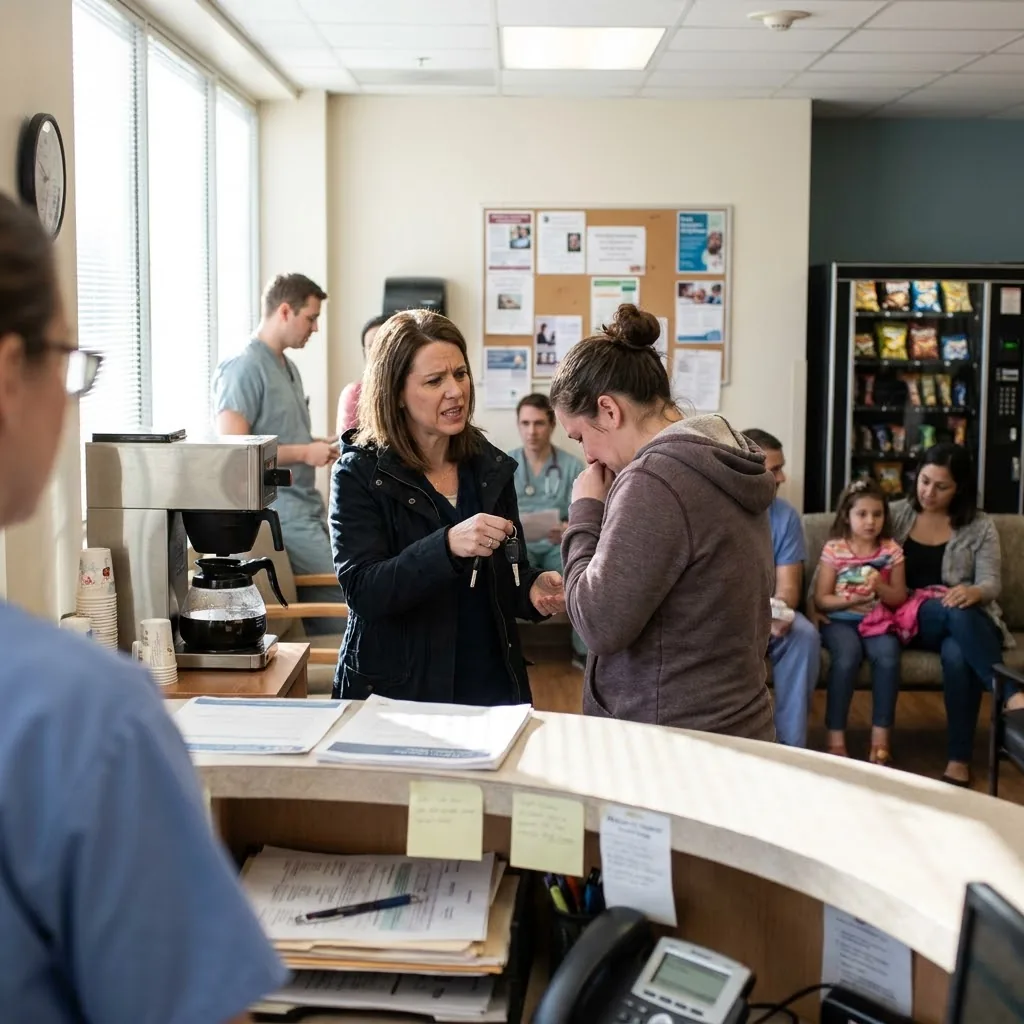
Dana Ruiz took her sister’s car keys right there beside the coffee station in our transplant waiting room and said, in the same voice people use to ask for more creamer, “You can have them back when you stop fighting me.” Elena stood there with a yellow donor bracelet showing under her sleeve, her tote bag half open, checking the same empty pocket twice while the TV muttered daytime news over the row of vinyl chairs. It was the worst minute to cut off somebody’s ride, and the bracelet on Elena’s wrist made it clear this was not some ordinary family spat I could brush past from my desk. I manage family flow on that floor, so I spend half my shift looking at the wall clock, the patient board, and whoever is gripping a phone too hard. That afternoon the room was full without being loud. One man was snoring softly near the window. A little girl was eating crackers one at a time. The coffee machine kept giving that short grinding cough it makes when the grounds are low. Dana stood near the waiting room doors as if she had assigned herself traffic control. Her phone was face down in one hand. The keys hung from two fingers on the other. Elena stayed by the chairs, one shoulder still in her coat, tote bag pressed to her side. Every few seconds she touched the plastic bracelet on her wrist with her thumb, then looked toward the double doors that led back to the transplant unit. I had already checked them in that morning, so I knew the names. Luis Ruiz was the patient family name on the board. Dana and Elena had both been in and out since before noon. Nothing in my job lets me step into a family argument and settle it for them, but I can hear a lot from ten feet away while pretending to straighten clipboards. “Elena,” Dana said, calm enough that the people across from them had to stop pretending not to listen, “I’m not doing this again. You either handle it my way today, or you find your own ride, your own place tonight, and your own way back here tomorrow.” Elena kept her voice low. “Give me my keys.” “No.” Dana turned the key ring once around her finger. “Not until you answer me clearly.” A nurse pushed through the unit doors and called for one of the other families. Everybody in the room looked up at once, then back down. Elena looked too, quick and sharp, then at the clock. Dana watched Elena look at the clock. I stepped out from behind the desk because there are neutral questions that sometimes cut through a scene without making it worse. “Do you need me to call transport for anyone?” I asked. Elena answered first. “I need to get to the pickup curb in about twenty minutes.” Dana said, without looking at me, “She’s not going anywhere until we finish this conversation.” That was enough to freeze the air around them. Even the cracker-eating child looked over. I kept my voice flat. “If somebody needs a ride arrangement, I can call the desk downstairs.” “We had a ride,” Elena said. Dana lifted the keys a little. “Had.” Elena shut her tote bag with more force than she meant to. Papers bent inside it. A charger cord hung out for a second before she stuffed it back in. When she reached for the keys, Dana moved her hand just out of range, not dramatic, just practiced. “Dana,” Elena said, “don’t do this here.” “Then stop making me do everything,” Dana said. I have heard plenty of families say ugly things on my floor. Fear comes out sideways when people are waiting on transplant news. But this had a different shape. Dana was not losing control. She was using it. She stayed planted by the exit, phone down, keys visible, voice measured. Elena was not performing either. She kept checking her pockets, then the doors, then her bracelet, as if each one ought to solve the same problem and none of them did. When the unit phone rang at my desk, I picked it up, took a quick update for another family, and looked back in time to see Dana lean in a little. “You want me to keep covering for you?” she said. Elena looked at her. “Not like this.” “Then say yes.” Elena didn’t answer. She pulled her own phone from the tote bag, stared at the screen, and stopped moving for one beat too long. Then she looked at Dana. “You changed it?” she said. Dana did not answer that directly. “You don’t need that if you’d just listen.” That got my attention more than the keys had. Ride, keys, and now some kind of phone access. Elena’s independence was being cut off piece by piece right in front of me. A volunteer came through with a cart of wrapped sandwiches. Dana stepped aside for exactly one second, then took her place by the doors again. Elena breathed out through her nose, touched the donor bracelet, and dialed somebody anyway. She turned slightly away, but I could still hear enough. “Tasha,” she said, “if you’re still close, I need you to come to transplant waiting. Now. Dana took the keys, and I can’t get into the account.” Dana’s chin lifted for the first time all afternoon. Elena listened, then said, quieter, “No, don’t call her. Just come.” When she hung up, Dana gave a short laugh with no smile in it. “Tasha can’t fix this,” she said. Elena slid the phone back into her bag and looked at the unit doors instead of her sister. “Maybe not,” she said. “But she can pick up what you can’t.” Dana’s fingers tightened around the keys. That was the first time she looked at the donor bracelet instead of Elena’s face, and I still didn’t know why that bracelet seemed to matter to.
Dana Ruiz took her sister’s car keys right there beside the coffee station in our transplant waiting room and said, in the same voice people use to ask for more creamer, “You can have them back when you stop fighting me.” Elena stood there with a yellow donor bracelet showing under her sleeve, her tote bag half open, checking the same empty pocket twice while the TV muttered daytime news over the row of vinyl chairs. It was the worst minute to cut off somebody’s ride, and the bracelet on Elena’s wrist made it clear this was not some ordinary family spat I could brush past from my desk. I manage family flow on that floor, so I spend half my shift looking at the wall clock, the patient board, and whoever is gripping a phone too hard. That afternoon the room was full without being loud. One man was snoring softly near the window. A little girl was eating crackers one at a time. The coffee machine kept giving that short grinding cough it makes when the grounds are low. Dana stood near the waiting room doors as if she had assigned herself traffic control. Her phone was face down in one hand. The keys hung from two fingers on the other. Elena stayed by the chairs, one shoulder still in her coat, tote bag pressed to her side. Every few seconds she touched the plastic bracelet on her wrist with her thumb, then looked toward the double doors that led back to the transplant unit. I had already checked them in that morning, so I knew the names. Luis Ruiz was the patient family name on the board. Dana and Elena had both been in and out since before noon. Nothing in my job lets me step into a family argument and settle it for them, but I can hear a lot from ten feet away while pretending to straighten clipboards. “Elena,” Dana said, calm enough that the people across from them had to stop pretending not to listen, “I’m not doing this again. You either handle it my way today, or you find your own ride, your own place tonight, and your own way back here tomorrow.” Elena kept her voice low. “Give me my keys.” “No.” Dana turned the key ring once around her finger. “Not until you answer me clearly.” A nurse pushed through the unit doors and called for one of the other families. Everybody in the room looked up at once, then back down. Elena looked too, quick and sharp, then at the clock. Dana watched Elena look at the clock. I stepped out from behind the desk because there are neutral questions that sometimes cut through a scene without making it worse. “Do you need me to call transport for anyone?” I asked. Elena answered first. “I need to get to the pickup curb in about twenty minutes.” Dana said, without looking at me, “She’s not going anywhere until we finish this conversation.” That was enough to freeze the air around them. Even the cracker-eating child looked over. I kept my voice flat. “If somebody needs a ride arrangement, I can call the desk downstairs.” “We had a ride,” Elena said. Dana lifted the keys a little. “Had.” Elena shut her tote bag with more force than she meant to. Papers bent inside it. A charger cord hung out for a second before she stuffed it back in. When she reached for the keys, Dana moved her hand just out of range, not dramatic, just practiced. “Dana,” Elena said, “don’t do this here.” “Then stop making me do everything,” Dana said. I have heard plenty of families say ugly things on my floor. Fear comes out sideways when people are waiting on transplant news. But this had a different shape. Dana was not losing control. She was using it. She stayed planted by the exit, phone down, keys visible, voice measured. Elena was not performing either. She kept checking her pockets, then the doors, then her bracelet, as if each one ought to solve the same problem and none of them did. When the unit phone rang at my desk, I picked it up, took a quick update for another family, and looked back in time to see Dana lean in a little. “You want me to keep covering for you?” she said. Elena looked at her. “Not like this.” “Then say yes.” Elena didn’t answer. She pulled her own phone from the tote bag, stared at the screen, and stopped moving for one beat too long. Then she looked at Dana. “You changed it?” she said. Dana did not answer that directly. “You don’t need that if you’d just listen.” That got my attention more than the keys had. Ride, keys, and now some kind of phone access. Elena’s independence was being cut off piece by piece right in front of me. A volunteer came through with a cart of wrapped sandwiches. Dana stepped aside for exactly one second, then took her place by the doors again. Elena breathed out through her nose, touched the donor bracelet, and dialed somebody anyway. She turned slightly away, but I could still hear enough. “Tasha,” she said, “if you’re still close, I need you to come to transplant waiting. Now. Dana took the keys, and I can’t get into the account.” Dana’s chin lifted for the first time all afternoon. Elena listened, then said, quieter, “No, don’t call her. Just come.” When she hung up, Dana gave a short laugh with no smile in it. “Tasha can’t fix this,” she said. Elena slid the phone back into her bag and looked at the unit doors instead of her sister. “Maybe not,” she said. “But she can pick up what you can’t.” Dana’s fingers tightened around the keys. That was the first time she looked at the donor bracelet instead of Elena’s face, and I still didn’t know why that bracelet seemed to matter to.