Story code: ST-001194
Part 1: The Price of a Legacy
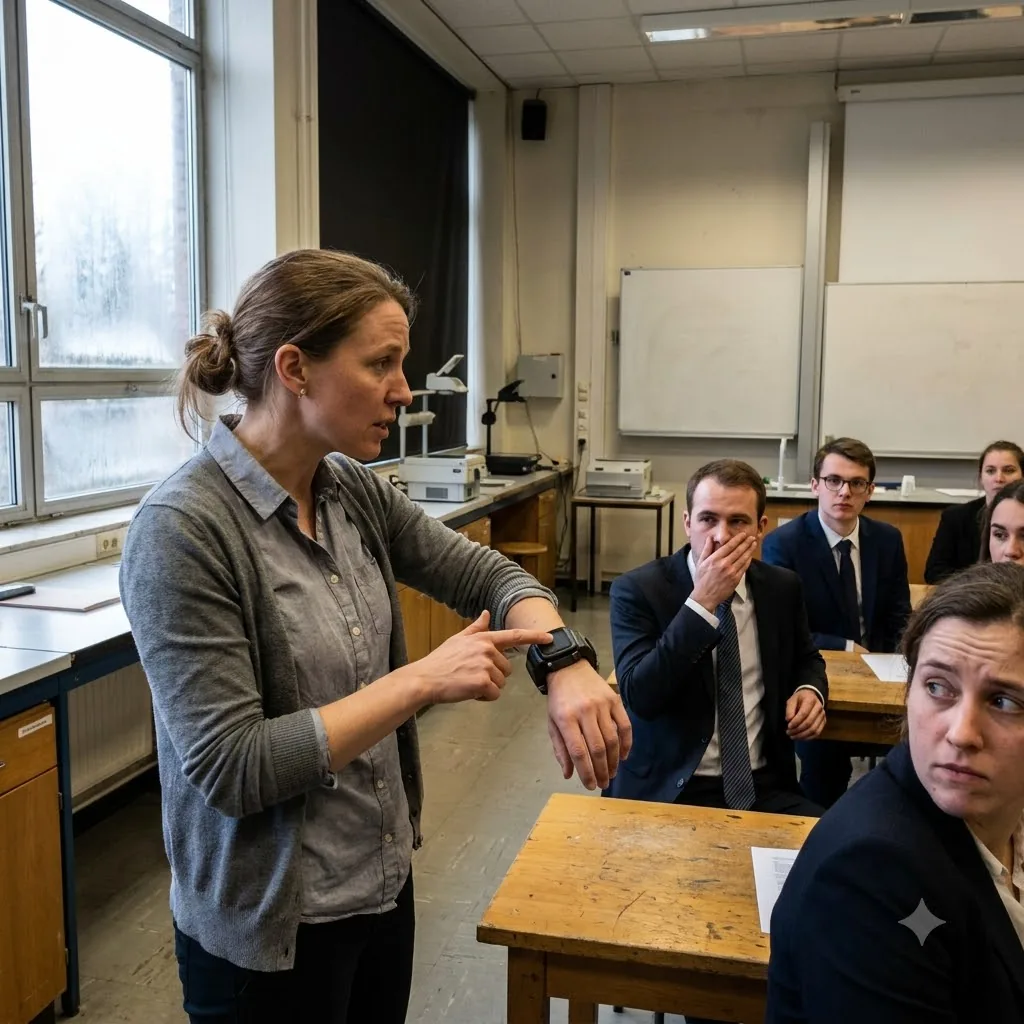
Standing in the Northwest Physics Lab during our quarterly grant presentation, my sister Claire pointed directly at the heavy, dark polymer biometric sensor bracelet on her wrist and told the university donors that she had ruined her own career to save my first quantum entanglement experiment from a core containment spike. She demanded I hand over the primary investigator role on our new entanglement project right there on the presentation slide, twisting my years of gratitude into public submission. It was the same sacrifice story she had used to dominate my research for ten years, but today she was doing it in front of the entire department board.
“Sarah would not be standing here today, nor would this project exist, if I hadn’t stepped into the cleanroom to manually vent the chamber during the 2014 calibration failure,” Claire said, her voice echoing through the acoustic panels of the presentation hall. She adjusted the strap of the old biometric sensor bracelet, ensuring the green led indicator was visible to the front row. “My thyroid took the brunt of the ionization spike. Because of that, I stepped back to let my sister run the main trials. It is only fair that the patent rights and lead investigator credit for this next phase reflect that initial cost.”
Dr. Aris, the department head, nodded slowly, looking between us. The donors whispered, their pens hovering over their notebooks. I sat at the presenter’s table, my fingers pressed hard against the cool wood of the podium. For a decade, Claire’s alleged sacrifice had been the unwritten law of our partnership. Every time I questioned her decisions, her lack of technical contributions, or her demands for equal co-authorship on papers she barely read, she would touch the sensor bracelet and remind me of the day she saved my career.
“The slides have already been updated to list Claire as the lead PI,” I said, keeping my voice level and controlled. I did not look at her. I looked at the projection screen where my name had been moved to the second line. “We can proceed with the timeline slides.”
After the donors left, we walked back to the Quantum Entanglement Cleanroom to monitor the afternoon calibration cycle. The ambient hum of the vacuum pumps filled the narrow corridor as we prepped the optical benches.
“You didn’t need to look so resentful in there,” Claire said, pulling off her lab coat and tossing it onto the prep bench. “You know what I gave up for you. This project belongs to both of us, but I am the one who carried the physical cost of it.”
“The sensor bracelet you wear,” I said, pointing to the scuffed black band on her left wrist. “If the legacy telemetry is causing those recurring errors in our current entanglement alignment, we should run a diagnostic on it. The department just upgraded the database protocols. I can extract the old calibration log and clear the buffer for you.”
Claire immediately pulled her sleeve down, covering the bracelet. Her jaw tightened, and she stepped back toward the door. “Absolutely not. The sensor memory is locked. It’s the only physical record of the exposure event that altered my health. I don’t want you touching the device or the archive files, Sarah. You don’t get to erase what happened just because it makes you feel guilty.”
She turned and left the cleanroom, the heavy door clicking shut behind her. I stood alone by the optical bench, staring at the closed door, the unresolved weight of her refusal hanging in the silent room.
Standing in the Northwest Physics Lab during our quarterly grant presentation, my sister Claire pointed directly at the heavy, dark polymer biometric sensor bracelet on her wrist and told the university donors that she had ruined her own career to save my first quantum entanglement experiment from a core containment spike. She demanded I hand over the primary investigator role on our new entanglement project right there on the presentation slide, twisting my years of gratitude into public submission. It was the same sacrifice story she had used to dominate my research for ten years, but today she was doing it in front of the entire department board.
“Sarah would not be standing here today, nor would this project exist, if I hadn’t stepped into the cleanroom to manually vent the chamber during the 2014 calibration failure,” Claire said, her voice echoing through the acoustic panels of the presentation hall. She adjusted the strap of the old biometric sensor bracelet, ensuring the green led indicator was visible to the front row. “My thyroid took the brunt of the ionization spike. Because of that, I stepped back to let my sister run the main trials. It is only fair that the patent rights and lead investigator credit for this next phase reflect that initial cost.”
Dr. Aris, the department head, nodded slowly, looking between us. The donors whispered, their pens hovering over their notebooks. I sat at the presenter’s table, my fingers pressed hard against the cool wood of the podium. For a decade, Claire’s alleged sacrifice had been the unwritten law of our partnership. Every time I questioned her decisions, her lack of technical contributions, or her demands for equal co-authorship on papers she barely read, she would touch the sensor bracelet and remind me of the day she saved my career.
“The slides have already been updated to list Claire as the lead PI,” I said, keeping my voice level and controlled. I did not look at her. I looked at the projection screen where my name had been moved to the second line. “We can proceed with the timeline slides.”
After the donors left, we walked back to the Quantum Entanglement Cleanroom to monitor the afternoon calibration cycle. The ambient hum of the vacuum pumps filled the narrow corridor as we prepped the optical benches.
“You didn’t need to look so resentful in there,” Claire said, pulling off her lab coat and tossing it onto the prep bench. “You know what I gave up for you. This project belongs to both of us, but I am the one who carried the physical cost of it.”
“The sensor bracelet you wear,” I said, pointing to the scuffed black band on her left wrist. “If the legacy telemetry is causing those recurring errors in our current entanglement alignment, we should run a diagnostic on it. The department just upgraded the database protocols. I can extract the old calibration log and clear the buffer for you.”
Claire immediately pulled her sleeve down, covering the bracelet. Her jaw tightened, and she stepped back toward the door. “Absolutely not. The sensor memory is locked. It’s the only physical record of the exposure event that altered my health. I don’t want you touching the device or the archive files, Sarah. You don’t get to erase what happened just because it makes you feel guilty.”
She turned and left the cleanroom, the heavy door clicking shut behind her. I stood alone by the optical bench, staring at the closed door, the unresolved weight of her refusal hanging in the silent room.