Story code: ST-001050
Part 1: She Put It On The Main Screen
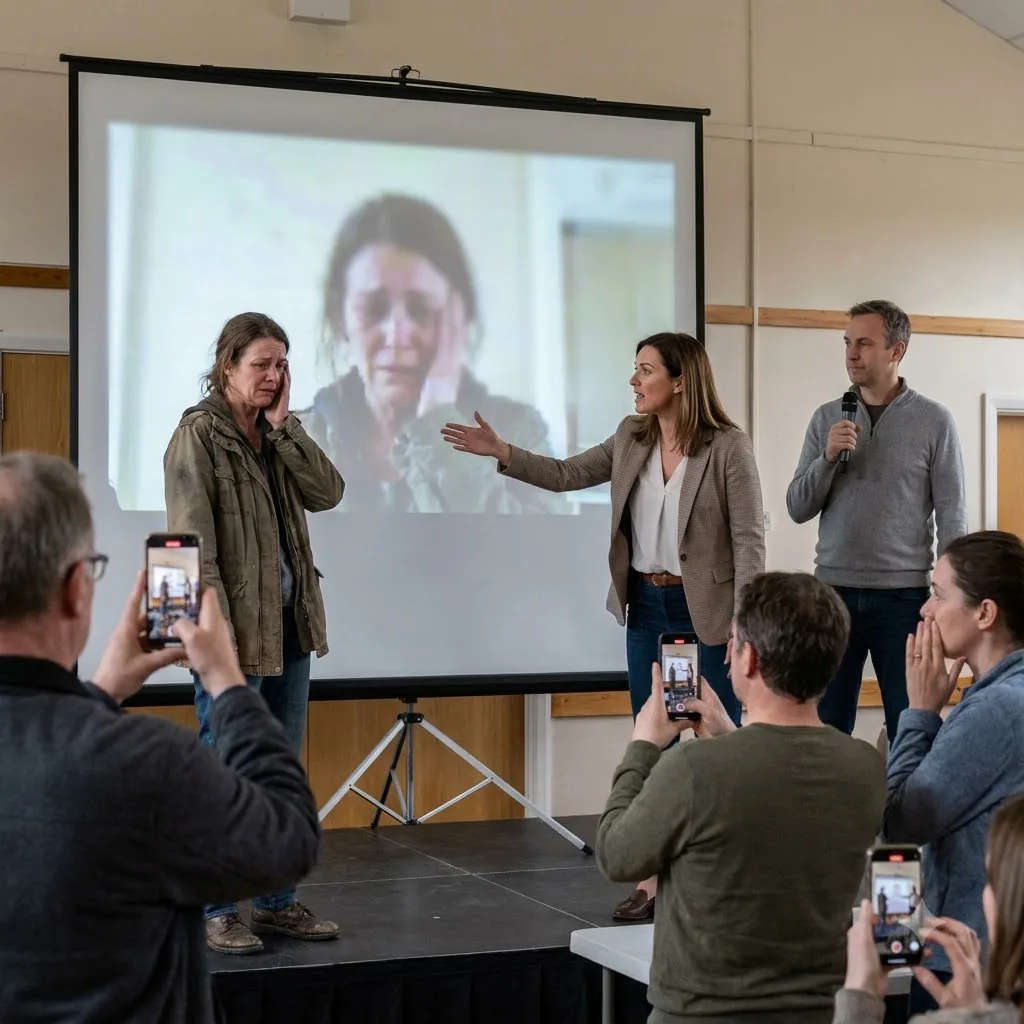
My sister put a private sync-band clip of me on the demo room screen and told a crowd it proved I was lying. One second people were shifting in folding chairs and balancing paper coffee cups while a neural-link rep warmed up the room, and the next Alyssa had my band feed mirrored beside the product slides like it was part of the show. The worst part was how fast everybody treated my private moment like entertainment before I could even say it was cropped.
I had gone with my family because Alyssa had been pushing this event for weeks. She loved this kind of room-clean white display walls, polished presenters, family-package testimonials, little stations where people could try on sync bands and watch paired heartbeat and mood data scroll across a tablet. She kept saying if we all just used the system the way it was designed, there would be less confusion, less guessing, less drama.
That was still ringing in my ears when the chatter around me dropped out in a weird wave.
I looked up at the big screen and saw my own wrist first. My sync band has a thin silver edge with one scratch near the clasp. Then I saw the rest of it: me in my kitchen two nights earlier, leaning against the counter with my hand over my mouth while the band’s emotional mirror overlay pulsed red and gold across the capture. It was a private sync moment from a family link session, one I had never agreed to share in a room full of strangers.
Alyssa stood two rows ahead of me with her phone raised shoulder-high. “There,” she said, not even looking back at me at first. “I told you she rewrote what happened. The band caught it.”
People turned. A woman near the aisle stopped halfway through opening a protein bar. Someone in the back gave a short laugh like they thought this was bonus content. The host, Marcus Hale, still had his mic in one hand and his brand smile on, but he was staring at the screen instead of the slide remote.
I heard my own voice from the clip, thin and distorted through room speakers. “Don’t put this on me.”
Alyssa tapped her phone again. The clip restarted from a second earlier and froze on me with my face tight and my band flaring hot colors around my pulse line.
“She said she never blamed anybody,” Alyssa said to the room. “That she was calm, clear, and completely misread. This is what actually happened when the band was still synced.”
I didn’t remember deciding to stand up. I was just on my feet with every head in that section angled toward me.
“That was private,” I said. My voice came out steady enough to surprise me. “And that is not the full clip.”
Alyssa finally turned and looked straight at me. “It’s enough of it.”
There’s a special kind of silence that only happens when a room thinks it’s watching somebody get exposed in real time. Not quiet. Interested. Hungry. I could hear chair legs scrape, the faint whine of the mirrored projector, somebody’s phone camera adjusting focus.
Marcus lowered his mic a little. “Is this a family media issue,” he said, “or is this demonstration content?”
Alyssa answered before I could. “It’s relevant. People keep acting like the sync band is invasive when really it prevents lying about emotional events. This is exactly what transparency looks like.”
That line got a couple nods, which made my stomach pull tight. She sounded practiced, smooth, like she’d found a way to turn me into her example.
I stepped into the aisle so I could see the screen without the row of shoulders in front of me. “You don’t get to call it transparency when you posted my private link data without my permission.”
Someone near the front said, “Posted where?”
Alyssa lifted the phone a little higher, too quick, like she regretted letting that question in. But I caught what was on her screen before she angled it back toward herself: not just the mirrored room feed. There was a vertical pane beside it with comments climbing. Hearts. View count. A livestream.
My mouth went dry.
“You put this on a live?” I asked.
She kept her chin up. “I shared what the band recorded. If context mattered that much, you should have said that before you started denying it.”
I heard Noah from somewhere behind me say, “Alyssa, come on.” It was too soft at first, almost swallowed by the room. Then louder: “Did she say you could stream that?”
Alyssa ignored him.
On the main display, the frozen frame of my face sat beside a bright product banner about trust through connection. A couple people were already looking down at their own phones instead of the screen, probably finding the stream. The laugh from the back was gone now, replaced by low talking that moved in clumps across the room.
I pointed at the image. “Start it ten seconds earlier.”
Alyssa gave a small shrug. “It doesn’t change what you said.”
“It changes why I said it.”
That landed differently. Marcus looked at Alyssa’s phone, then at the mirrored display, then back at me. He still hadn’t cut the screen, but the polished host voice was gone from his face.
Alyssa said, “You always do this. When the data doesn’t help you, suddenly privacy matters more than truth.”
I should have been focused on her, but my eyes kept catching the edge of her screen. There was a progress bar on the livestream replay window, and a thumbnail strip underneath it. The frozen clip on the big display was a narrow slice. In the tiny frame just before it, I could see another hand reaching into view.
Not mine.
And if that hand was in the uncropped version, then the room was watching a lie that had been edited down to fit on a screen.
My sister put a private sync-band clip of me on the demo room screen and told a crowd it proved I was lying. One second people were shifting in folding chairs and balancing paper coffee cups while a neural-link rep warmed up the room, and the next Alyssa had my band feed mirrored beside the product slides like it was part of the show. The worst part was how fast everybody treated my private moment like entertainment before I could even say it was cropped.
I had gone with my family because Alyssa had been pushing this event for weeks. She loved this kind of room-clean white display walls, polished presenters, family-package testimonials, little stations where people could try on sync bands and watch paired heartbeat and mood data scroll across a tablet. She kept saying if we all just used the system the way it was designed, there would be less confusion, less guessing, less drama.
That was still ringing in my ears when the chatter around me dropped out in a weird wave.
I looked up at the big screen and saw my own wrist first. My sync band has a thin silver edge with one scratch near the clasp. Then I saw the rest of it: me in my kitchen two nights earlier, leaning against the counter with my hand over my mouth while the band’s emotional mirror overlay pulsed red and gold across the capture. It was a private sync moment from a family link session, one I had never agreed to share in a room full of strangers.
Alyssa stood two rows ahead of me with her phone raised shoulder-high. “There,” she said, not even looking back at me at first. “I told you she rewrote what happened. The band caught it.”
People turned. A woman near the aisle stopped halfway through opening a protein bar. Someone in the back gave a short laugh like they thought this was bonus content. The host, Marcus Hale, still had his mic in one hand and his brand smile on, but he was staring at the screen instead of the slide remote.
I heard my own voice from the clip, thin and distorted through room speakers. “Don’t put this on me.”
Alyssa tapped her phone again. The clip restarted from a second earlier and froze on me with my face tight and my band flaring hot colors around my pulse line.
“She said she never blamed anybody,” Alyssa said to the room. “That she was calm, clear, and completely misread. This is what actually happened when the band was still synced.”
I didn’t remember deciding to stand up. I was just on my feet with every head in that section angled toward me.
“That was private,” I said. My voice came out steady enough to surprise me. “And that is not the full clip.”
Alyssa finally turned and looked straight at me. “It’s enough of it.”
There’s a special kind of silence that only happens when a room thinks it’s watching somebody get exposed in real time. Not quiet. Interested. Hungry. I could hear chair legs scrape, the faint whine of the mirrored projector, somebody’s phone camera adjusting focus.
Marcus lowered his mic a little. “Is this a family media issue,” he said, “or is this demonstration content?”
Alyssa answered before I could. “It’s relevant. People keep acting like the sync band is invasive when really it prevents lying about emotional events. This is exactly what transparency looks like.”
That line got a couple nods, which made my stomach pull tight. She sounded practiced, smooth, like she’d found a way to turn me into her example.
I stepped into the aisle so I could see the screen without the row of shoulders in front of me. “You don’t get to call it transparency when you posted my private link data without my permission.”
Someone near the front said, “Posted where?”
Alyssa lifted the phone a little higher, too quick, like she regretted letting that question in. But I caught what was on her screen before she angled it back toward herself: not just the mirrored room feed. There was a vertical pane beside it with comments climbing. Hearts. View count. A livestream.
My mouth went dry.
“You put this on a live?” I asked.
She kept her chin up. “I shared what the band recorded. If context mattered that much, you should have said that before you started denying it.”
I heard Noah from somewhere behind me say, “Alyssa, come on.” It was too soft at first, almost swallowed by the room. Then louder: “Did she say you could stream that?”
Alyssa ignored him.
On the main display, the frozen frame of my face sat beside a bright product banner about trust through connection. A couple people were already looking down at their own phones instead of the screen, probably finding the stream. The laugh from the back was gone now, replaced by low talking that moved in clumps across the room.
I pointed at the image. “Start it ten seconds earlier.”
Alyssa gave a small shrug. “It doesn’t change what you said.”
“It changes why I said it.”
That landed differently. Marcus looked at Alyssa’s phone, then at the mirrored display, then back at me. He still hadn’t cut the screen, but the polished host voice was gone from his face.
Alyssa said, “You always do this. When the data doesn’t help you, suddenly privacy matters more than truth.”
I should have been focused on her, but my eyes kept catching the edge of her screen. There was a progress bar on the livestream replay window, and a thumbnail strip underneath it. The frozen clip on the big display was a narrow slice. In the tiny frame just before it, I could see another hand reaching into view.
Not mine.
And if that hand was in the uncropped version, then the room was watching a lie that had been edited down to fit on a screen.