Story code: ST-000346
Part 1: The Mismatched Timeline
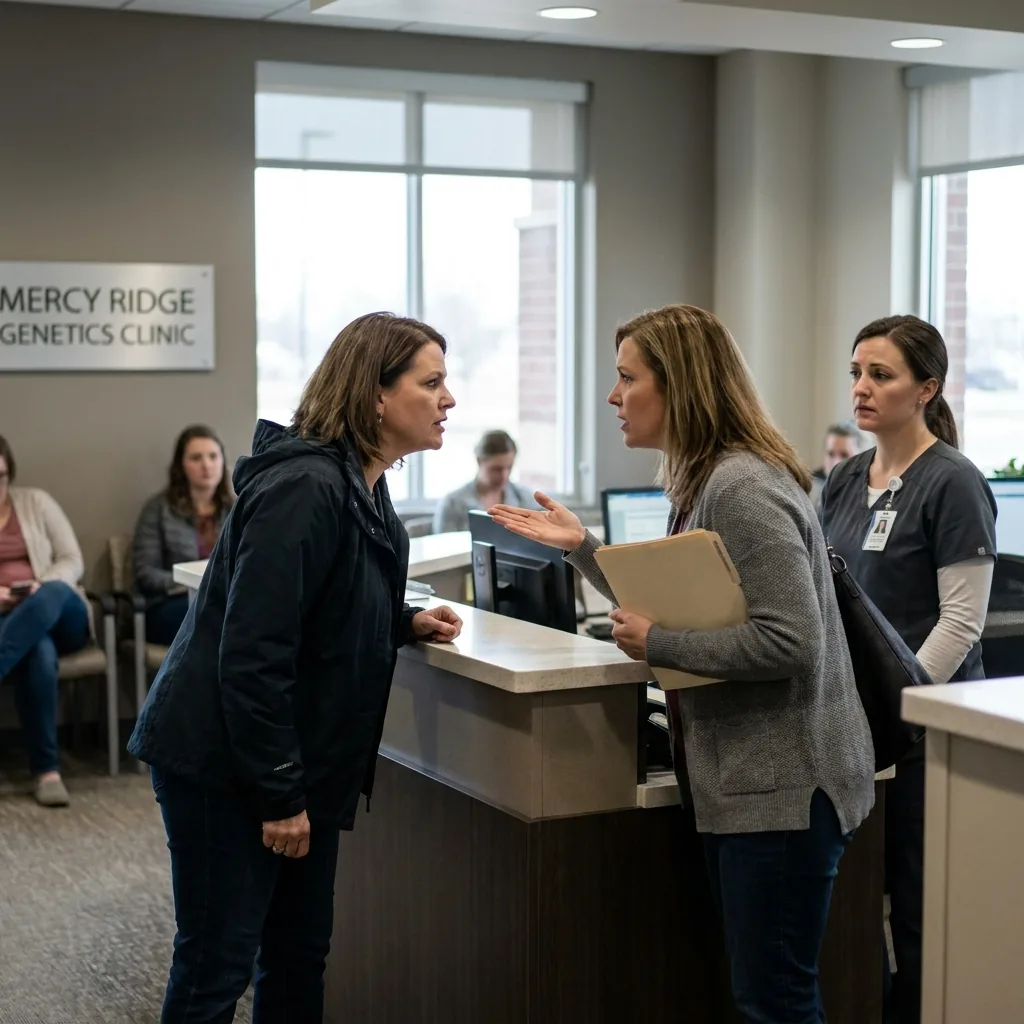
At the front intake counter of the Mercy Ridge Genetics Clinic, a routine lab report became a family battleground when Leah Mercer Pike used a clinic scheduling rule to block her sister Dana Mercer from updating her son’s gene-editing records. Dana held a printed report, pointing to the header, but Leah placed her hand flat over the intake clipboard, asserting that the file update window had closed. In the glass-walled waiting area, where the hum of white-noise machines and the clicking of intake keyboards filled the room, the tension between the two sisters drew the attention of those waiting.
From the third row of chairs, I watched Dana slide the worn paper folder forward. Her fingers pressed against the edges, keeping it aligned with the counter. Leah, wearing a silver badge from the neighboring biotech park, leaned over the counter to address Tessa Bell, the clinic clerk.
“Under standard clinic protocol, any amendment to an active gene-editing sequence log requires a formal clinical referral,” Leah said, her voice carrying a practiced, administrative cadence. “Dana doesn’t have the secondary signature from the lab liaison. We can’t log this today.”
Tessa Bell paused, looking from Leah to the paper folder. Her hand hovered over her keyboard. She checked her monitor, then her wristwatch, and finally the printed page Dana had laid out. “The system does require a verified chain of custody for sequence adjustments,” Tessa murmured, her voice falling into a rehearsed customer-service tone.
“This isn’t an amendment request,” Dana said. Her voice was quiet, but it did not waver. She pointed to a specific line on the paper. “This is a correction of a system entry. They told me the clinic mixed up Noah’s test with another patient’s sample because of a logging lag. But look at the official timeline.”
Leah stepped closer to Dana, her shoulder blocking the clerk’s view of the paper for a moment. “The clinic didn’t mix up anything, Dana. There was simply a batching delay. You’re misinterpreting the pipeline stages. The raw data always sits in the queue before the run is finalized.”
“I am looking at the times,” Dana said. She didn’t look at Leah. Instead, she pushed the paper closer to Tessa, tapping the bottom corner with a single fingernail.
Tessa leaned forward, adjusting her glasses. She looked at the printed timestamps, then back at her screen, then back to the paper. Her posture stiffened. She tapped a finger on her desk, then checked her watch again.
The paper, visible from where I sat near the counter, displayed two bold printouts. The top line of the official clinic record stated that the therapeutic sequence for Noah Mercer had been verified and approved by the lab director at 9:15 AM on Tuesday.
However, the machine-generated timestamp at the bottom of the raw sequencing report-the actual physical file representing the run-was marked 1:42 PM on the very same Tuesday.
Tessa stared at the discrepancy. If the raw sequence data was not generated until nearly two in the afternoon, the director could not have verified the edited sequence five hours earlier. The official claim was not just delayed; it was chronologically impossible.
At the front intake counter of the Mercy Ridge Genetics Clinic, a routine lab report became a family battleground when Leah Mercer Pike used a clinic scheduling rule to block her sister Dana Mercer from updating her son’s gene-editing records. Dana held a printed report, pointing to the header, but Leah placed her hand flat over the intake clipboard, asserting that the file update window had closed. In the glass-walled waiting area, where the hum of white-noise machines and the clicking of intake keyboards filled the room, the tension between the two sisters drew the attention of those waiting.
From the third row of chairs, I watched Dana slide the worn paper folder forward. Her fingers pressed against the edges, keeping it aligned with the counter. Leah, wearing a silver badge from the neighboring biotech park, leaned over the counter to address Tessa Bell, the clinic clerk.
“Under standard clinic protocol, any amendment to an active gene-editing sequence log requires a formal clinical referral,” Leah said, her voice carrying a practiced, administrative cadence. “Dana doesn’t have the secondary signature from the lab liaison. We can’t log this today.”
Tessa Bell paused, looking from Leah to the paper folder. Her hand hovered over her keyboard. She checked her monitor, then her wristwatch, and finally the printed page Dana had laid out. “The system does require a verified chain of custody for sequence adjustments,” Tessa murmured, her voice falling into a rehearsed customer-service tone.
“This isn’t an amendment request,” Dana said. Her voice was quiet, but it did not waver. She pointed to a specific line on the paper. “This is a correction of a system entry. They told me the clinic mixed up Noah’s test with another patient’s sample because of a logging lag. But look at the official timeline.”
Leah stepped closer to Dana, her shoulder blocking the clerk’s view of the paper for a moment. “The clinic didn’t mix up anything, Dana. There was simply a batching delay. You’re misinterpreting the pipeline stages. The raw data always sits in the queue before the run is finalized.”
“I am looking at the times,” Dana said. She didn’t look at Leah. Instead, she pushed the paper closer to Tessa, tapping the bottom corner with a single fingernail.
Tessa leaned forward, adjusting her glasses. She looked at the printed timestamps, then back at her screen, then back to the paper. Her posture stiffened. She tapped a finger on her desk, then checked her watch again.
The paper, visible from where I sat near the counter, displayed two bold printouts. The top line of the official clinic record stated that the therapeutic sequence for Noah Mercer had been verified and approved by the lab director at 9:15 AM on Tuesday.
However, the machine-generated timestamp at the bottom of the raw sequencing report-the actual physical file representing the run-was marked 1:42 PM on the very same Tuesday.
Tessa stared at the discrepancy. If the raw sequence data was not generated until nearly two in the afternoon, the director could not have verified the edited sequence five hours earlier. The official claim was not just delayed; it was chronologically impossible.