Story code: ST-000640
Part 1: She Said the Fee Meant I Owed Her
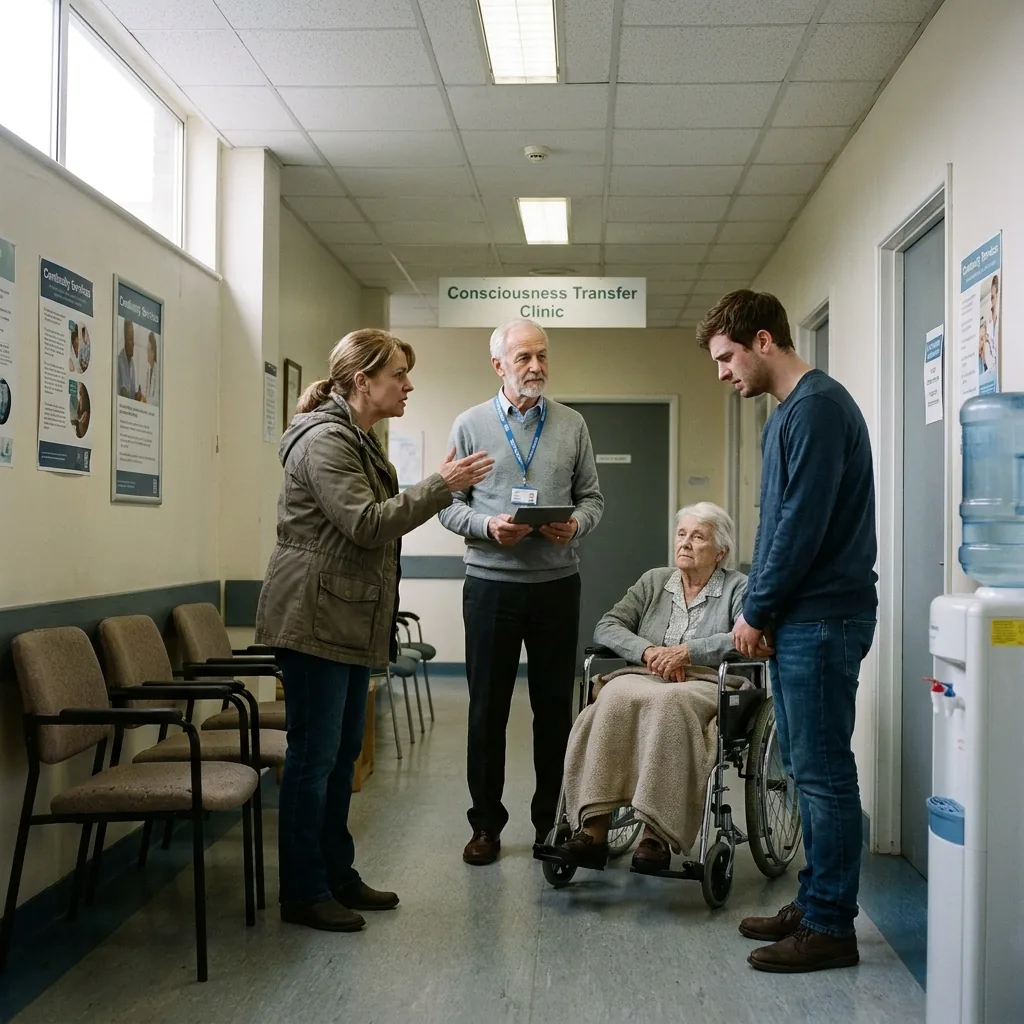
My sister said, out loud in the intake corridor, that because she had covered the upload fee for our mother, I did not get to act like this was still a family decision. She said it with Denise’s consciousness drive sitting in its padded case between us and a cooling cart humming past, like a paid invoice had turned into a hand around my throat. Then the clinic advocate nodded at the intake screen and started reciting the amount back to me like I was the one who had signed away something.
I had come in with my tote, my phone charger, Mom’s medication list, and a plan to ask basic questions about storage timing and next-step options. That was it. I was not there to fight with Leah in front of strangers carrying coffee and folded jackets and those little visitor badges clipped to sweaters.
But Ethan Voss, the advocate assigned to our consult, angled the screen glass toward me and said, in that smooth careful voice, “Since your family already initiated continuity stabilization, we do need to discuss the practical path forward.”
Leah stood close enough to the drive case that the heel of her shoe nearly touched it. “I paid forty-eight hundred dollars so her file wouldn’t lapse,” she said. “I did that when nobody else moved. So let’s not pretend we’re all starting from zero today.”
Nobody else moved. That landed exactly where she wanted it to. An older man across the hall looked down at his tablet. A little girl sitting with her aunt stopped swinging her feet.
I kept my voice flat. “I didn’t ask you to buy control.”
Leah gave one small shrug, like she was humoring me. “I bought time. You’re welcome.”
Ethan tapped the itemized line on the screen. I could see the charge labels from where I stood: emergency continuity hold, neural integrity monitoring, priority transfer queue retention. Under that sat Leah’s name in clean blue text with a payment timestamp from six days earlier.
“This wasn’t cosmetic,” he said. “Your sister stepped in at a critical moment. Given what’s already been done for your family, it would be irresponsible to ignore the established path.”
That phrase stuck. Done for your family. Not paid to the clinic. Not charged by the clinic. Done for your family, like I was supposed to confuse a bill with a blessing.
I looked at the screen again. “What established path? I scheduled an options consult.”
Ethan’s expression didn’t break. “An options consult inside an active continuity case. The drive has been flagged for cradle assessment, then recommendation review based on the stabilized record state.”
He said it as if I should have known. I had not known. Six days ago Mom was still awake enough to ask me, twice, not to let anybody rush her into becoming a product with our last name attached to it. I knew that because I had heard her say it from the side of her bed while she pushed the water cup away and asked me to charge her old tablet. I knew what she had said to me. I did not know Leah had already paid for something called priority queue retention.
I set my tote down on one of the molded plastic chairs because my hand had started aching around the strap. “Who authorized that?”
Leah answered before Ethan could. “Mom needed the window held open. I handled it.”
“Handled it how?”
She lifted her phone and flashed the payment confirmation like a badge. I saw her name, the clinic logo, a green paid mark. She lowered it before I could read the full service description.
“By being the one who showed up,” she said.
That was our old script. Leah the rescuer. Me the daughter who had to defend every delay, every question, every hesitation like carefulness itself was neglect. Only this time there was a physical object on the chair-side counter with cable ports and a clinic tag looped around the handle. Denise Bennett. Consciousness Drive Transfer Companion Unit. My mother’s name printed in a system font made me feel like the room had already started talking about her in past tense.
Ethan gestured toward a consult room with screen glass walls that turned opaque when occupied. “Why don’t we move somewhere private and discuss responsible next steps?”
Responsible. Another word doing extra work.
I picked up the drive case before either of them could. It was heavier than it looked, or maybe my arm had gone tight. Leah watched my hand settle on the handle.
“Mara,” she said, lower now, “you don’t get to take the benefit and reject the obligation.”
I stopped with the case half an inch off the counter.
Because that was the first time she said it plainly. Not help. Not timing. Not family. Obligation.
And Ethan didn’t correct her. He just opened the consult room door and said, “The payment changed what options remain easiest from here.”
Easiest for who was the question that hit me then, hard and cold, because the screen behind him didn’t look like a rescue at all. It looked like a path that had already been built, and I still didn’t know whether Leah had paid to help our mother or to lock us onto it.
My sister said, out loud in the intake corridor, that because she had covered the upload fee for our mother, I did not get to act like this was still a family decision. She said it with Denise’s consciousness drive sitting in its padded case between us and a cooling cart humming past, like a paid invoice had turned into a hand around my throat. Then the clinic advocate nodded at the intake screen and started reciting the amount back to me like I was the one who had signed away something.
I had come in with my tote, my phone charger, Mom’s medication list, and a plan to ask basic questions about storage timing and next-step options. That was it. I was not there to fight with Leah in front of strangers carrying coffee and folded jackets and those little visitor badges clipped to sweaters.
But Ethan Voss, the advocate assigned to our consult, angled the screen glass toward me and said, in that smooth careful voice, “Since your family already initiated continuity stabilization, we do need to discuss the practical path forward.”
Leah stood close enough to the drive case that the heel of her shoe nearly touched it. “I paid forty-eight hundred dollars so her file wouldn’t lapse,” she said. “I did that when nobody else moved. So let’s not pretend we’re all starting from zero today.”
Nobody else moved. That landed exactly where she wanted it to. An older man across the hall looked down at his tablet. A little girl sitting with her aunt stopped swinging her feet.
I kept my voice flat. “I didn’t ask you to buy control.”
Leah gave one small shrug, like she was humoring me. “I bought time. You’re welcome.”
Ethan tapped the itemized line on the screen. I could see the charge labels from where I stood: emergency continuity hold, neural integrity monitoring, priority transfer queue retention. Under that sat Leah’s name in clean blue text with a payment timestamp from six days earlier.
“This wasn’t cosmetic,” he said. “Your sister stepped in at a critical moment. Given what’s already been done for your family, it would be irresponsible to ignore the established path.”
That phrase stuck. Done for your family. Not paid to the clinic. Not charged by the clinic. Done for your family, like I was supposed to confuse a bill with a blessing.
I looked at the screen again. “What established path? I scheduled an options consult.”
Ethan’s expression didn’t break. “An options consult inside an active continuity case. The drive has been flagged for cradle assessment, then recommendation review based on the stabilized record state.”
He said it as if I should have known. I had not known. Six days ago Mom was still awake enough to ask me, twice, not to let anybody rush her into becoming a product with our last name attached to it. I knew that because I had heard her say it from the side of her bed while she pushed the water cup away and asked me to charge her old tablet. I knew what she had said to me. I did not know Leah had already paid for something called priority queue retention.
I set my tote down on one of the molded plastic chairs because my hand had started aching around the strap. “Who authorized that?”
Leah answered before Ethan could. “Mom needed the window held open. I handled it.”
“Handled it how?”
She lifted her phone and flashed the payment confirmation like a badge. I saw her name, the clinic logo, a green paid mark. She lowered it before I could read the full service description.
“By being the one who showed up,” she said.
That was our old script. Leah the rescuer. Me the daughter who had to defend every delay, every question, every hesitation like carefulness itself was neglect. Only this time there was a physical object on the chair-side counter with cable ports and a clinic tag looped around the handle. Denise Bennett. Consciousness Drive Transfer Companion Unit. My mother’s name printed in a system font made me feel like the room had already started talking about her in past tense.
Ethan gestured toward a consult room with screen glass walls that turned opaque when occupied. “Why don’t we move somewhere private and discuss responsible next steps?”
Responsible. Another word doing extra work.
I picked up the drive case before either of them could. It was heavier than it looked, or maybe my arm had gone tight. Leah watched my hand settle on the handle.
“Mara,” she said, lower now, “you don’t get to take the benefit and reject the obligation.”
I stopped with the case half an inch off the counter.
Because that was the first time she said it plainly. Not help. Not timing. Not family. Obligation.
And Ethan didn’t correct her. He just opened the consult room door and said, “The payment changed what options remain easiest from here.”
Easiest for who was the question that hit me then, hard and cold, because the screen behind him didn’t look like a rescue at all. It looked like a path that had already been built, and I still didn’t know whether Leah had paid to help our mother or to lock us onto it.