Story code: ST-000563
Part 4: The Report Locked Him Out in Real Time
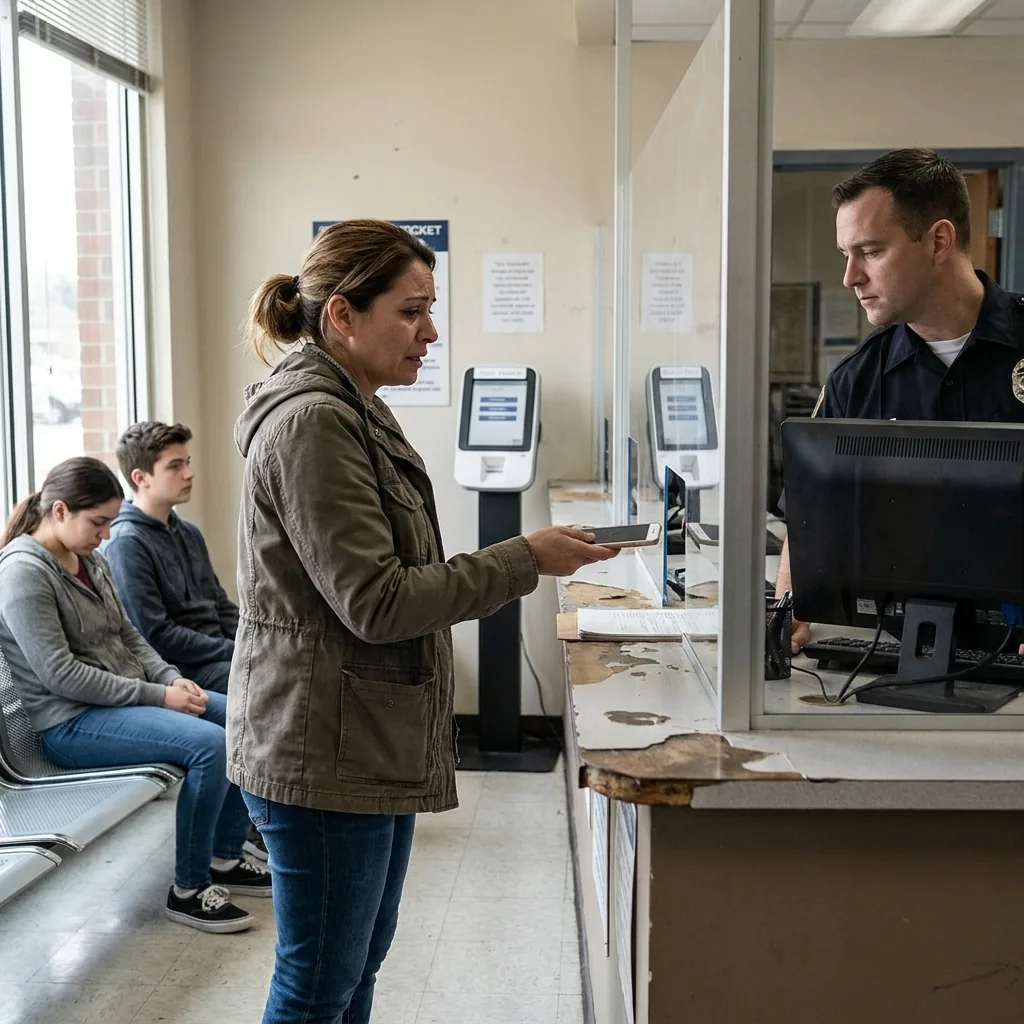
The top bar of Derek’s phone was plain enough for anyone at the counter to read.
A share icon sat lit beside the connected storage name. Under it was a small line of text showing auto-sync on and recipient access active. Officer Cole did not react to the content itself. She reacted to the procedure it required.
“Do not close that screen,” she said.
She turned to her terminal, entered three quick lines, and picked up the desk phone without breaking the visual chain between Derek’s display, Tessa’s restore screen, and the report already open in front of her. Her words into the receiver were spare.
“Evidence review station to intake. Digital preservation assist. Active linked image path visible on reporting and subject devices. Subject present. Shared access still enabled.”
She hung up and looked back at Derek. “Keep the device unlocked. Hands visible except when I instruct you to tap.”
That was the coldest part of it. No speeches. No burst of outrage. Just the desk changing him from a person arguing in public to a person being processed through the next step.
Marisol tried once more. “He already said old files can stay linked.”
Officer Cole answered without turning. “And now the phone says recipient access active. You may stop helping.”
That line ended her role more completely than any shouting would have.
A civilian evidence tech came through the side door with a badge clipped to a lanyard and a tablet tucked under one arm. Officer Cole pointed with her pen instead of retelling the whole scene. “Reporting party device shows restore path and shared destination history. Subject device shows same destination active with share status on. I need screenshots captured in process and a preservation note added before any settings change.”
The tech nodded once. “Understood.”
Officer Cole looked at Derek again. “You are going to complete one action on your own phone while we observe. Open the share details. I need the destination list visible in the same frame as the active status.”
That was the act he had spent the entire scene trying not to complete. He had hidden behind Marisol’s borrowed sentence, behind broad words like lying and retention, behind technical corrections offered only from the side. Now the report itself required his thumb.
He tapped.
The destination list opened. Two saved recipients appeared under the share path. One was an old address attached to Tessa. The other was a contact route Officer Cole immediately asked him to scroll to the end of.
He did.
The last activity entry sat there with a date and a forwarded count beside it.
Officer Cole read each item aloud for the report. The evidence tech captured the screen. Tessa did not speak until the count was entered.
“That’s after I removed my copies,” she said.
“I have that in your timeline,” Officer Cole replied.
Then, still in that same even rhythm, she gave Derek the instruction that finished the consequence.
“Now disable share access. In front of us.”
He looked up. “If I do that, it looks like an admission.”
“If you do not,” Officer Cole said, “I note that you kept an active share live after notice at intake while evidence was being preserved. I am giving you a direct order tied to immediate harm reduction. Disable it now.”
He hesitated just long enough for the evidence tech to capture the unchanged screen one more time.
Then Derek pressed the toggle.
The icon dimmed. The status line changed from recipient access active to access removed. A small confirmation banner slid across the top of his phone and disappeared.
Officer Cole entered that too.
“Time of deactivation logged,” she said. “Add that the subject completed the action in officer view after preservation capture.”
The evidence tech made one last image of the disabled state and stepped back. Officer Cole printed two pages, separated them, and slid one toward Tessa.
“This is your incident number and the preservation note,” she said. “Do not delete your restore records, screenshots, or transfer confirmations. If any new contact comes through, attach it to this number only. Do not negotiate it at home, by text, or through relatives.”
Then she took the second page, wrote a short line by hand, and placed it in front of Derek.
“This is a documented no-contact directive tied to the report while review starts. No calls, no messages, no third-party relays through family. Any contact about these images or this account goes through the number on that page. If your relatives carry another message to this desk, I log that as part of the same pattern.”
Marisol’s face changed at the third-party line. She looked at the paper, then at Derek, then away from both.
Tessa finally let out the breath she had been holding in short pieces all morning. Not dramatic. Just visible in the drop of her shoulders and the way her grip loosened around the charging phone. Eli unplugged the cable from the outlet and wrapped it neatly back around his hand.
The lobby had already moved on to other people’s problems. The stolen-bike man was back at the far end. Another number sounded from the speaker. A clerk waved someone toward a different window.
That made the ending land harder. The whole lie had broken in public, but the consequence arrived as paperwork, a preserved screen, a disabled share toggle, and a written restriction laid flat on a counter.
Officer Cole pushed Tessa’s copy one inch closer. “You can go through the side door with the tech if you want help verifying the transfer finished,” she said.
Tessa took the page, nodded once, and kept her eyes on the incident number before she turned away from Derek.
Control did not come back as an apology. It came back as access removed, contact cut off, and a report that finally had the right person attached to the right action.