Story code: ST-000114
Part 4: I Took My Family Out Of Her Hands
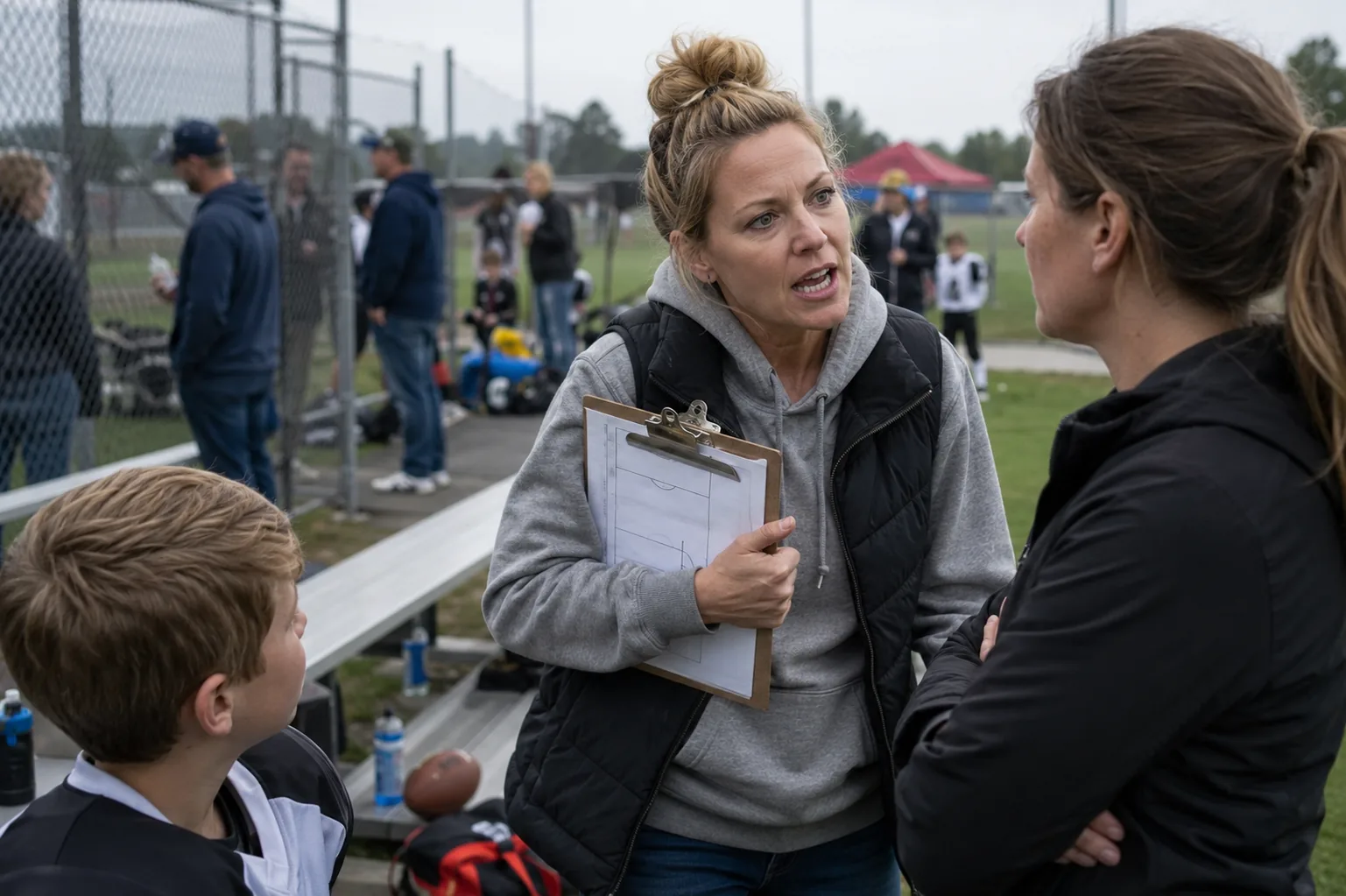
I waited until the end of practice because I was not going to turn a youth field into a showdown. Coach Raul Bennett blew the last whistle, the boys dragged themselves back toward the bench, and the whole sideline shifted into the usual chaos of water bottles, shin guards, and parents calling kids over by first and last name. Dana stayed near the foldout bench with the lineup clipboard under her arm, talking to another parent with that brisk, capable tone she always used when she wanted to look indispensable.
I got Eli’s bag packed, handed him his hoodie, and said, “Wait by the car for one minute.” He looked at my face, nodded, and headed toward the parking lot edge.
Then I walked back to Dana while people were still moving around us, but not standing still enough for an audience.
I said, “This is simple. From here on out, do not contact me privately about Eli, rides, lineups, scheduling, or anything else. If there is official team information, it goes through Coach Bennett or the team app. Nothing goes through you to my family.”
She turned fully toward me, clipboard against her side. “You’re making this bigger than it is.”
“No,” I said. “I’m making it narrower than you want it.”
That stopped her for a second.
I kept going before she could pull me back into one of her lists. “You said not to text you for schedule changes, late updates, or favors. Fine. We won’t. And you don’t text me either. No private reminders. No side comments at the bench. No telling me what you’ve done for us. If you choose to volunteer for the team, that’s between you and the team. My family is not part of that debt story anymore.”
She shifted the clipboard up higher. “I never said your family was a debt story.”
I looked right at the board in her hand, then back at her. “You said I should think about who people can count on. You tapped my son’s name while talking about cooperation. You rejected every chance I gave you to stop doing anything for us. I’m done with that.”
Her jaw set. “You are being incredibly unfair.”
Maybe I was done trying to make her admit what she had done. That was the part that finally felt clean. I didn’t need a confession. I didn’t need the parents near the parking lot to hear me recite a timeline. I had already seen enough.
So I said, “I’m not discussing fairness with you. I’m telling you the condition for access to my family. There isn’t any, outside regular team communication.”
A couple of players ran between us toward the trash can, laughing and shoving each other with towels. Dana stepped half a foot to the side to let them pass. When she looked back at me, her voice had dropped.
“Coach Raul is not going to want every small thing routed through him.”
“Then the team app can handle it,” I said. “Either way, not you.”
That was the visible consequence, and she heard it. No more private line into me. No more chance to turn a late text, a lineup note, or a claimed favor into another receipt I was supposed to carry. If she had something team-related to say, she could say it where it belonged, in the same channel as everyone else.
She pressed her thumb against the clip at the top of the board. “You know this makes things harder.”
“Only if somebody needs my family inside her workload,” I said.
She didn’t answer that. She stood there with the clipboard and the pen and all the same tools she had before, but the frame had changed. I wasn’t arguing over whether she had sacrificed enough to deserve obedience. I was done accepting the question.
I added one more thing, because vague boundaries are what people like Dana live on. “If you message me privately after this, I won’t respond. If you stop me at the bench to talk about what you do for us, I will walk away. If something is truly official, send it through the team channel. That’s it.”
She let out a breath through her nose and looked past me toward the field where Coach Raul was stacking cones. “Fine,” she said again.
This time I didn’t need the word to mean anything more than that the conversation was over.
I nodded once, turned, and walked toward the parking lot without waiting for her to have the last line. Halfway there, I took out my phone, opened the team app, and changed our family contact settings so all team communication stayed in the app thread only. Then I muted Dana’s direct number and archived the old private messages without replying to the last one she had sent two weeks earlier about being the only person keeping things together.
At the car, Eli was leaning against the door with his water bottle in both hands. He looked at me and said, “Are we good?”
I put his bag in the back seat and said, “Yeah. We’re good. Team stuff stays team stuff now.”
He nodded like that made immediate sense to him.
On the drive home, my chest still felt tight, but it wasn’t the trapped feeling I’d had at the bench for weeks. It felt sharp and clean, like finally cutting a string that had been sawing at my wrist the whole season. Dana could keep telling people what she gave up. She just couldn’t tell it through my family anymore.