Story code: ST-000739
Part 1: The Headshot on the Console
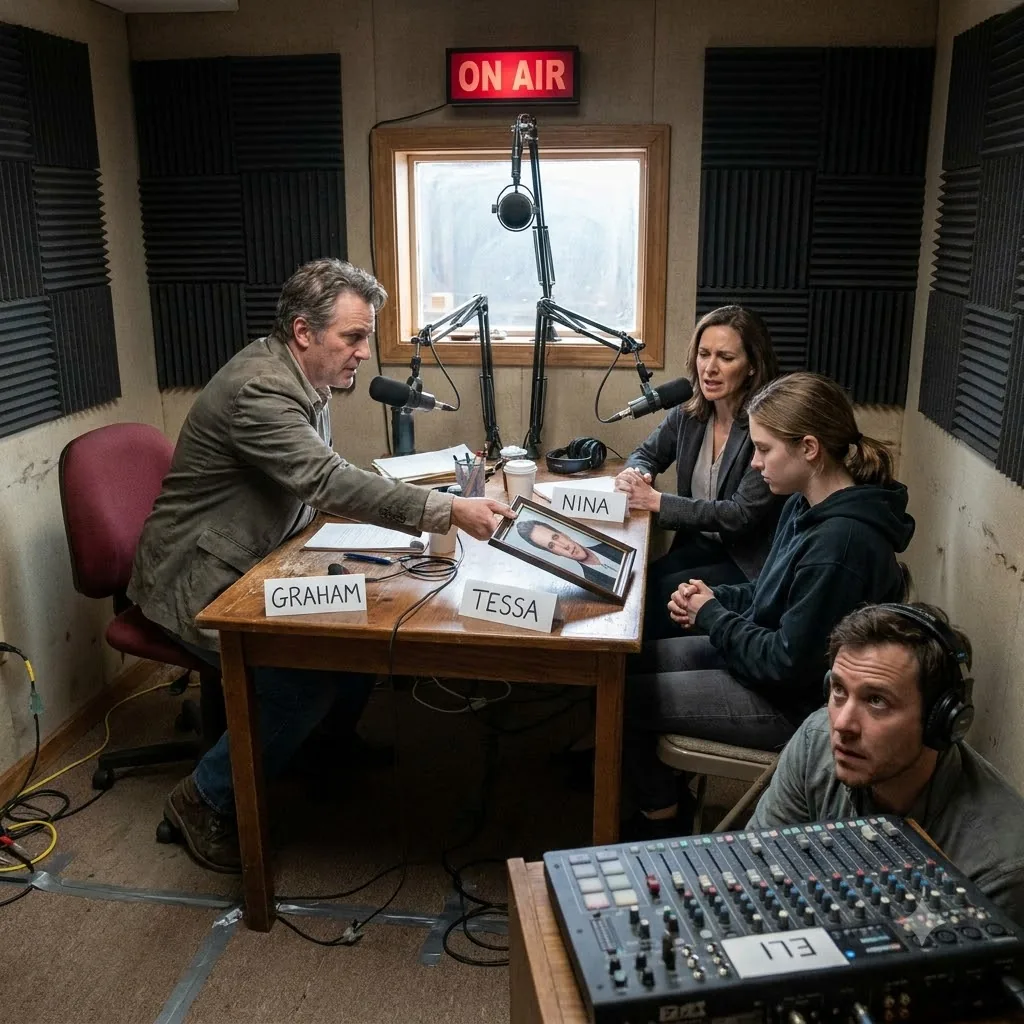
Graham Ward shoved an old headshot across the podcast studio desk and said Tessa should be punished for it, right there under the red mic light, while Nina Calder kept the show moving and Eli Park watched the levels jump at the board. The photo sat on top of a stack of cue cards in the celebrity-relative-exposure podcast studio hypocritical moral trap, a glossy picture with one corner bent, and Graham used it like it was proof of something ugly he had already decided. Tessa stood beside the cable tray in the ordinary studio mess of coiled cords and paper cups, one hand on a headset cord, looking from the photo to her uncle’s face while he talked over her in clipped, polished sentences.
The room had the easy, working rhythm of a recording space before he turned it. A producer note screen glowed beside the console. Nina held one hand over a channel fader and kept her eyes on the clock. Eli leaned in toward the meters, listening for clipping, not part of the family line but part of the room. Graham did not raise his voice at first. He did not need to. He pointed at the headshot and said it was the kind of image that made a person look dishonest, careless, and fake, and that if Tessa had any sense of standards, she would pull it down and apologize on mic.
Tessa did not step away from the desk. She reached for the corner of the photo, then stopped when Graham put two fingers on it first. He held it flat against the table and kept talking. He said people got to hide behind good lighting and a nice smile too long. He said a family could not let that kind of thing slide just because the person holding it was young. He said the room was live enough for accountability, even if the mics were only warm and not open yet. Nina glanced at the red light, then at Graham, then back to the console. Eli lifted one hand off the board and set it back down without touching a switch.
Tessa finally said, “That picture is from the archive.”
Graham tapped the paper with one finger. “Then the archive needs cleaning up. So do standards.”
He said it like a rule already agreed on by everyone in the room. He said the photo looked staged and embarrassing. He said a person who wanted respect did not keep a picture like that in circulation. Nina, still at the desk, looked from Graham to the open laptop showing the episode rundown, then to the photo lying under his hand. Nobody interrupted him. The studio stayed in its ordinary posture, but the air around the desk tightened anyway.
Tessa moved one stack of notes aside to make room for the photo. The corner of the image turned toward the console lights. It showed a younger Graham in the same direct pose he used now, chin up, suit jacket sharp, mouth set in the same clean line he brought to every segment. The face in the picture was not hidden or blurred. It was obvious enough that Eli looked up from the board and then back down, and Nina’s hand paused over the mute button. Graham saw the change in the room and reached for the photo at once, but Tessa put her palm on the edge of it before he could slide it away.
He told her to move her hand. She did not. He said the issue was not the picture itself but the message it sent. He said some things had to be answered publicly when they crossed a line. He said the same line had to apply to everyone, even family. The sentence landed hard because he said it with the tone of a man reciting policy, not arguing about taste. Tessa looked at the image again and then at his face. The photo and the man beside it matched too closely to ignore, but nobody in the room said that out loud yet.
Nina reached toward the board and stopped. Eli kept his eyes on the meters. Graham kept one hand on the desk and the other on the back of his chair, a posture that held the whole table in place. He repeated that the standard was simple: if the image was wrong, it had to come down. If a person used that image to sell a clean story, the person had to answer for it. He did not seem to notice how closely his own old headshot matched the very thing he was condemning.
Then Tessa turned the photo slightly and the studio light caught the printing date on the back, and Graham went still without touching it again. Why did he know the exact archive drawer that headshot came from if he was only seeing it now?
Graham Ward shoved an old headshot across the podcast studio desk and said Tessa should be punished for it, right there under the red mic light, while Nina Calder kept the show moving and Eli Park watched the levels jump at the board. The photo sat on top of a stack of cue cards in the celebrity-relative-exposure podcast studio hypocritical moral trap, a glossy picture with one corner bent, and Graham used it like it was proof of something ugly he had already decided. Tessa stood beside the cable tray in the ordinary studio mess of coiled cords and paper cups, one hand on a headset cord, looking from the photo to her uncle’s face while he talked over her in clipped, polished sentences.
The room had the easy, working rhythm of a recording space before he turned it. A producer note screen glowed beside the console. Nina held one hand over a channel fader and kept her eyes on the clock. Eli leaned in toward the meters, listening for clipping, not part of the family line but part of the room. Graham did not raise his voice at first. He did not need to. He pointed at the headshot and said it was the kind of image that made a person look dishonest, careless, and fake, and that if Tessa had any sense of standards, she would pull it down and apologize on mic.
Tessa did not step away from the desk. She reached for the corner of the photo, then stopped when Graham put two fingers on it first. He held it flat against the table and kept talking. He said people got to hide behind good lighting and a nice smile too long. He said a family could not let that kind of thing slide just because the person holding it was young. He said the room was live enough for accountability, even if the mics were only warm and not open yet. Nina glanced at the red light, then at Graham, then back to the console. Eli lifted one hand off the board and set it back down without touching a switch.
Tessa finally said, “That picture is from the archive.”
Graham tapped the paper with one finger. “Then the archive needs cleaning up. So do standards.”
He said it like a rule already agreed on by everyone in the room. He said the photo looked staged and embarrassing. He said a person who wanted respect did not keep a picture like that in circulation. Nina, still at the desk, looked from Graham to the open laptop showing the episode rundown, then to the photo lying under his hand. Nobody interrupted him. The studio stayed in its ordinary posture, but the air around the desk tightened anyway.
Tessa moved one stack of notes aside to make room for the photo. The corner of the image turned toward the console lights. It showed a younger Graham in the same direct pose he used now, chin up, suit jacket sharp, mouth set in the same clean line he brought to every segment. The face in the picture was not hidden or blurred. It was obvious enough that Eli looked up from the board and then back down, and Nina’s hand paused over the mute button. Graham saw the change in the room and reached for the photo at once, but Tessa put her palm on the edge of it before he could slide it away.
He told her to move her hand. She did not. He said the issue was not the picture itself but the message it sent. He said some things had to be answered publicly when they crossed a line. He said the same line had to apply to everyone, even family. The sentence landed hard because he said it with the tone of a man reciting policy, not arguing about taste. Tessa looked at the image again and then at his face. The photo and the man beside it matched too closely to ignore, but nobody in the room said that out loud yet.
Nina reached toward the board and stopped. Eli kept his eyes on the meters. Graham kept one hand on the desk and the other on the back of his chair, a posture that held the whole table in place. He repeated that the standard was simple: if the image was wrong, it had to come down. If a person used that image to sell a clean story, the person had to answer for it. He did not seem to notice how closely his own old headshot matched the very thing he was condemning.
Then Tessa turned the photo slightly and the studio light caught the printing date on the back, and Graham went still without touching it again. Why did he know the exact archive drawer that headshot came from if he was only seeing it now?