Story code: ST-000048
Part 1: She Put Me on Camera for a Bill That Wasn’t Mine
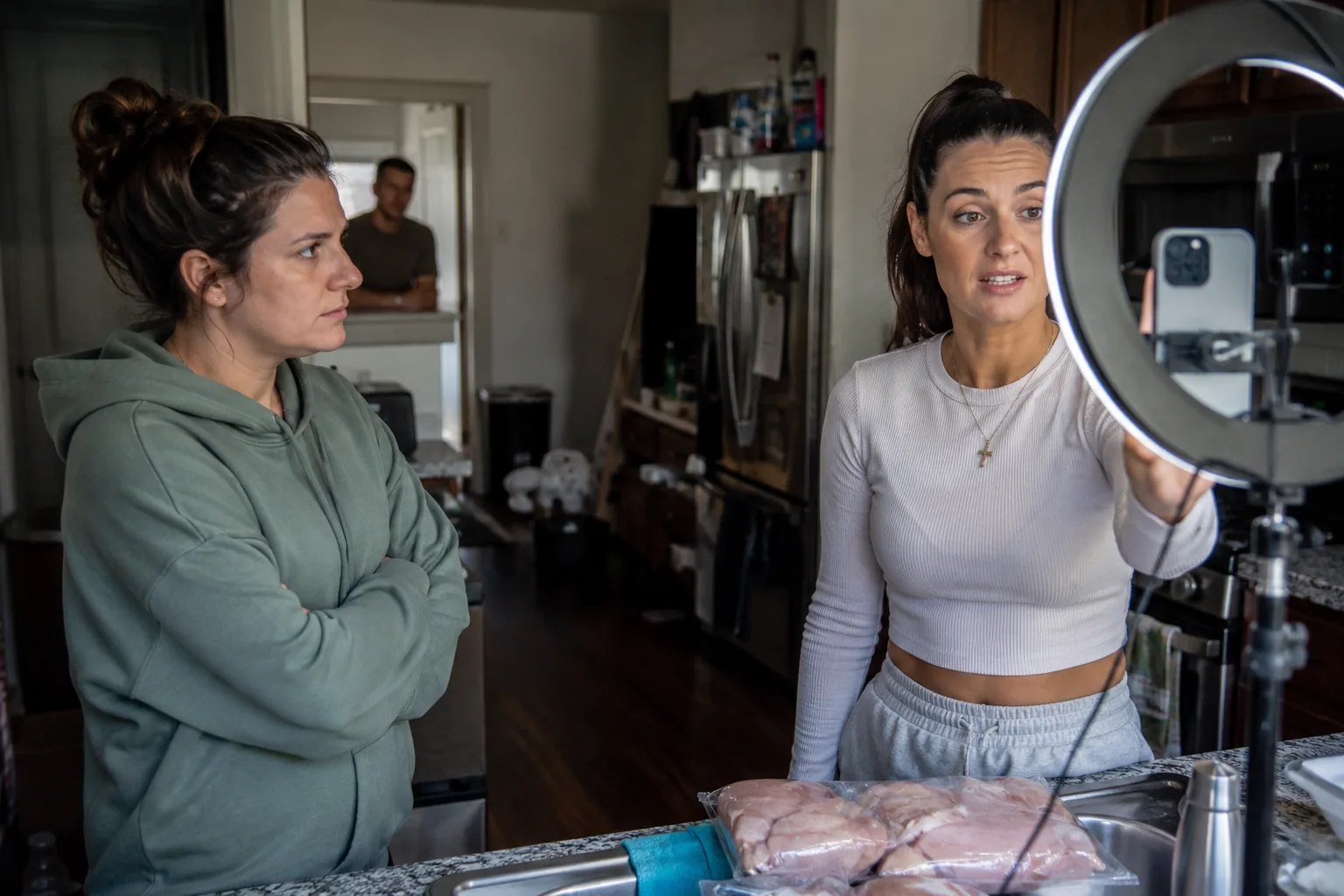
My sister pointed a ring light at the sink full of thawing chicken, looked straight past me into her phone, and told her viewers I was “making this harder than it has to be” because I would not send her money for the electric bill. When I said, right there in our livestream kitchen, that I wanted to see the amount first, she gave a short laugh, lifted one hand like I had embarrassed her, and said, “Imagine making your own family beg on live when the lights could get shut off.” That was the part that hit wrong, because the kitchen lights were on, her camera was running, and the story kept changing before I could even open my payment app.
I was standing at the counter with a dish towel over my shoulder, checking the grocery list on my phone between comments popping up on her screen. Tessa had the ring light angled to catch the stove, the fruit bowl, and half my face if I moved too far left. She likes a kitchen stream because it looks ordinary. Pan on the burner. Fridge humming. Somebody rinsing rice in the sink. Family in the background making everything sound true.
“It is one payment,” she said, still talking toward the camera. “One. And if your sister is struggling, you help. That’s what decent people do.”
I kept my voice level. “How much is it?”
She named a number without looking at me.
I asked, “Is that the full bill or the past-due amount?”
That got me a quick side glance, then she smiled into the phone again and started stirring a pot she had not turned on yet. “Does it matter? It needs to be handled today.”
That was the first clean gap I could point to. If it was a shutoff emergency, the amount should have been fixed. If it was the whole bill, she could show the utility app. Instead she moved the story one inch sideways and waited for the audience pressure to do the rest.
Comments were moving too fast to read all of them, but I caught enough. “Pay it, sis.” “Not in front of people.” “Family is family.” Tessa read the ones that helped her and skipped the rest. She tilted the phone so the viewers could see me measuring rice into a pot.
“She’s the budget one,” she told them. “She always has a spreadsheet for everybody else but somehow when I need help, it turns into a lecture.”
I said, “I’m asking for the bill, not a speech.”
Ben came through from the back hall with a grocery bag and stopped when he heard the amount. He did not say anything. He set the bag on the table slowly and looked from my phone to Tessa’s screen and back again.
Tessa heard the bag hit the table and used that, too. “See? Everybody in this house knows what today is. Nobody wants drama except Mara.”
She reached for a carton of eggs, then left it on the counter untouched. Her phone stayed trained in my direction. The ring light made the steel faucet flash white every time she shifted.
I opened my payment app anyway. I did not send anything. I asked for the company name. She gave it. I asked for the account screenshot. She said she had already logged out. I asked if she wanted me to pay the company directly. She wiped the counter with a paper towel and said that would take too long.
That changed the shape of the ask fast.
A minute earlier it was an electric bill. Then it was an urgent amount. Then it was family loyalty. Now it had to be sent to her, immediately, with no screenshot and no direct payment. Every answer narrowed the lane instead of clearing it.
“You are doing that thing again,” she said, still for the audience. “Where you act like helping me is some kind of investigation.”
“Because you keep changing the details,” I said.
She faced the camera more squarely. “No, what I’m changing is how much grace I have left. If my own sister can watch me ask for help and still hold her money like I’m a stranger, people can draw their own conclusions.”
That was the line she wanted clipped. Not the bill. Not the amount. Me, in frame, looking like the cold one.
I stepped sideways so I was out of the brightest part of the ring light. “Show me the bill and I’ll handle what needs handling.”
She shook her head once. “You know what? Forget it. I will figure it out like I always do.”
Then she said the part that made Ben stop unpacking entirely.
“Actually, if you’d sent it this morning when I asked, I wouldn’t have had to use the card at all.”
I looked up from my phone. “What card?”
She tapped the edge of the counter with one nail, glanced at her screen, and said, “Never mind.”
But she had already said too much, because this was the first time the story included a card, and if she had already used one, there was a charge somewhere that should have matched the emergency she kept naming. Instead, she turned the phone back toward the stove, asked her viewers whether people had “ever been shamed for asking family for help,” and kept cooking around a bill she still would not show me.
My sister pointed a ring light at the sink full of thawing chicken, looked straight past me into her phone, and told her viewers I was “making this harder than it has to be” because I would not send her money for the electric bill. When I said, right there in our livestream kitchen, that I wanted to see the amount first, she gave a short laugh, lifted one hand like I had embarrassed her, and said, “Imagine making your own family beg on live when the lights could get shut off.” That was the part that hit wrong, because the kitchen lights were on, her camera was running, and the story kept changing before I could even open my payment app.
I was standing at the counter with a dish towel over my shoulder, checking the grocery list on my phone between comments popping up on her screen. Tessa had the ring light angled to catch the stove, the fruit bowl, and half my face if I moved too far left. She likes a kitchen stream because it looks ordinary. Pan on the burner. Fridge humming. Somebody rinsing rice in the sink. Family in the background making everything sound true.
“It is one payment,” she said, still talking toward the camera. “One. And if your sister is struggling, you help. That’s what decent people do.”
I kept my voice level. “How much is it?”
She named a number without looking at me.
I asked, “Is that the full bill or the past-due amount?”
That got me a quick side glance, then she smiled into the phone again and started stirring a pot she had not turned on yet. “Does it matter? It needs to be handled today.”
That was the first clean gap I could point to. If it was a shutoff emergency, the amount should have been fixed. If it was the whole bill, she could show the utility app. Instead she moved the story one inch sideways and waited for the audience pressure to do the rest.
Comments were moving too fast to read all of them, but I caught enough. “Pay it, sis.” “Not in front of people.” “Family is family.” Tessa read the ones that helped her and skipped the rest. She tilted the phone so the viewers could see me measuring rice into a pot.
“She’s the budget one,” she told them. “She always has a spreadsheet for everybody else but somehow when I need help, it turns into a lecture.”
I said, “I’m asking for the bill, not a speech.”
Ben came through from the back hall with a grocery bag and stopped when he heard the amount. He did not say anything. He set the bag on the table slowly and looked from my phone to Tessa’s screen and back again.
Tessa heard the bag hit the table and used that, too. “See? Everybody in this house knows what today is. Nobody wants drama except Mara.”
She reached for a carton of eggs, then left it on the counter untouched. Her phone stayed trained in my direction. The ring light made the steel faucet flash white every time she shifted.
I opened my payment app anyway. I did not send anything. I asked for the company name. She gave it. I asked for the account screenshot. She said she had already logged out. I asked if she wanted me to pay the company directly. She wiped the counter with a paper towel and said that would take too long.
That changed the shape of the ask fast.
A minute earlier it was an electric bill. Then it was an urgent amount. Then it was family loyalty. Now it had to be sent to her, immediately, with no screenshot and no direct payment. Every answer narrowed the lane instead of clearing it.
“You are doing that thing again,” she said, still for the audience. “Where you act like helping me is some kind of investigation.”
“Because you keep changing the details,” I said.
She faced the camera more squarely. “No, what I’m changing is how much grace I have left. If my own sister can watch me ask for help and still hold her money like I’m a stranger, people can draw their own conclusions.”
That was the line she wanted clipped. Not the bill. Not the amount. Me, in frame, looking like the cold one.
I stepped sideways so I was out of the brightest part of the ring light. “Show me the bill and I’ll handle what needs handling.”
She shook her head once. “You know what? Forget it. I will figure it out like I always do.”
Then she said the part that made Ben stop unpacking entirely.
“Actually, if you’d sent it this morning when I asked, I wouldn’t have had to use the card at all.”
I looked up from my phone. “What card?”
She tapped the edge of the counter with one nail, glanced at her screen, and said, “Never mind.”
But she had already said too much, because this was the first time the story included a card, and if she had already used one, there was a charge somewhere that should have matched the emergency she kept naming. Instead, she turned the phone back toward the stove, asked her viewers whether people had “ever been shamed for asking family for help,” and kept cooking around a bill she still would not show me.