Story code: ST-001077
Part 3: The Diagnostic Key
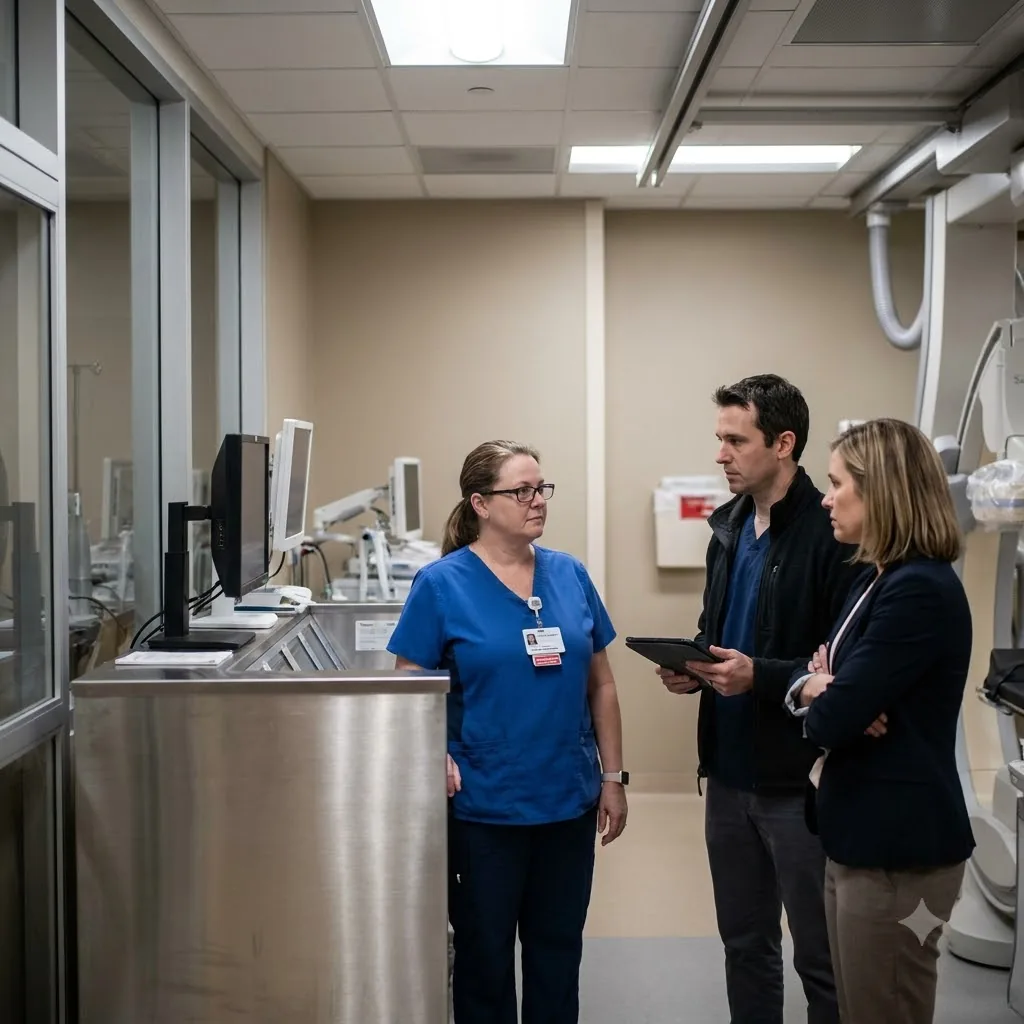
In my reconstruction of the security footage from 14:15, the camera captures Amanda Cruz, the clinic’s quality assurance auditor, walking into the frame behind the intake desk. Her arrival coincides with Vance’s continued refusal to touch the implant consent tablet. Cruz does not speak immediately; she stands behind Vance, her eyes directed at the workstation monitor and then down at the green status light on the tablet held by Leo Carver.
The ambient audio captures Carver turning slightly toward Cruz. ‘We have a discrepancy in the protocol application,’ Carver says, presenting the tablet. ‘Technician Vance is claiming a Protocol 9 automated block, but the registry shows no such limitation, and the tablet remains in active, green status.’
Cruz taps her handheld diagnostic unit, linking it to the local network. The system logs show her technician-level query executing at 14:16:02. According to the database records, Cruz queried the active rules database for any instance of ‘Protocol 9’. The return query, visible on her screen, shows zero entries matching that designation.
‘The local database does not list a Protocol 9 restriction,’ Cruz states. Her voice is level, matching the clinical tone recorded in her subsequent incident report. She looks at Vance. ‘Karen, please input your technician credentials to run the diagnostic test. If the software is blocking the procedure, the error code will populate my terminal.’
Vance’s hands remain folded in her lap. The footage shows her chest rising and falling in shallow breaths, but she does not reach for the tablet. ‘The block is localized to the active session,’ Vance says, her voice strained on the recording. ‘Running a diagnostic now will interrupt the queue for the entire afternoon. I cannot risk locking out the other procedure rooms.’
Carver points to the tablet’s screen. ‘The tablet’s interface indicates that diagnostic checks are isolated to the specific paired implant. It has no effect on the clinic-wide queue. That is standard training.’
Cruz does not interject to support or deny Carver’s statement. Instead, she pulls the physical implant consent tablet closer to her side of the counter. The audit log shows she initiates a manual port check. ‘We will verify the cross-application of the rule,’ Cruz says. She enters a query on her terminal, pulling the completed logs for the past twenty-four hours. ‘If this rule exists, it must have triggered on the three other extraction procedures completed this morning. I am checking the compliance signatures now.’
The network activity log confirms Cruz accessed the signature files for the morning sessions. As she scrolls through the data, the security camera catches Vance shifting her gaze toward the exit doors of the intake lobby. Her fingers tap a rapid, irregular rhythm against her knee.
Cruz looks up from her screen. ‘None of the morning sessions show a Protocol 9 flag, nor do they show any automated blocks, despite two of those patients having implants identical to this client’s model. If this rule applies to this patient, it would have blocked the others.’
‘It is a rolling update,’ Vance says. She does not look at Cruz. ‘It was deployed to my workstation first. The other technicians haven’t received the patch yet.’
Cruz plugs a physical authorization key into the diagnostic port on the side of the tablet. The screen blinks once, transitioning from green to a flashing blue sync pattern. ‘A rolling update requires a registered deployment package from the regional network,’ Cruz says. She taps the command line on the tablet. ‘I am pulling the local installation logs now to verify the deployment timestamp.’ The digital record shows the download query executing. The screen displays a single, blinking line of text: No packages installed in the last 48 hours.