Story code: ST-000731
Part 1: She Cut the Ride on the Courthouse Steps
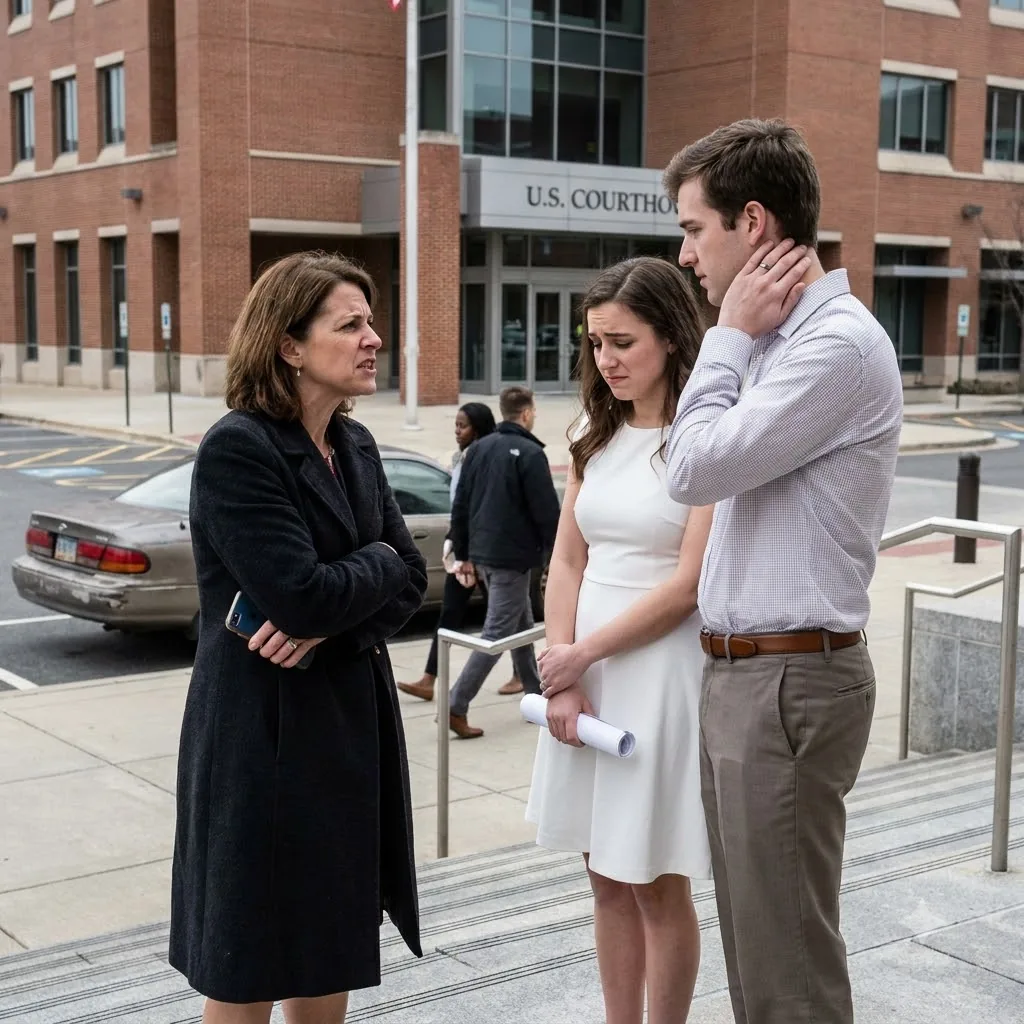
Denise picked the exact moment Maya and Eli stepped onto the courthouse steps with the marriage license in Maya’s hand to say they were done using her car, done using her phone plan, and done getting a ride home unless Maya got back in line and went with her. People were passing in and out with manila envelopes and coffee cups, and Denise said it loud enough for strangers to hear. The ugly part was how prepared she sounded, like the cutoff had been timed for the one hour when getting married depended on access.
I was there because I had gone downtown on another errand, and the whole scene stood out for one reason right away: Maya did not look surprised by the volume of Denise’s voice, but she did tighten her grip on the license folder and angle her body so the papers stayed against her chest.
Denise had parked along the curb below the steps. Her driver’s door was open. One hand kept landing on the roof of the car like she was calling attention to the fact that it was hers and the ride was hers. She wasn’t crying. She wasn’t pleading. She was laying out conditions.
“You are not taking my car anywhere,” she said. “If you walk in there with him, don’t call me for a ride back, don’t call me about your things, and don’t expect me to keep paying for that phone.”
Eli stayed one step down from Maya and checked his screen. Then he looked at it again, held it up briefly toward Maya, and put it away. That was the first visible sign that something had already been cut off. No dramatic speech, just a screen glance and a short nod between them.
Maya answered without matching Denise’s volume. “The license is already issued.”
That line changed the shape of the scene. Before that, it sounded like a family argument spilling outdoors. After that, it sounded like a parent trying to stop a train that had already left the station.
Denise pointed down the sidewalk toward the parking area. “Issued doesn’t mean complete. You still need to get home. You still need your stuff. You still need your number.”
The courthouse doors kept opening behind them. A deputy held one for an older couple. A woman in sneakers came out stuffing a receipt into her purse. Nobody stepped in. The building did what public buildings do in scenes like that: it stayed neutral while one person tried to make a private pressure campaign look official.
Maya did not hand the license to Eli. She kept it. That mattered. She also didn’t move toward Denise’s car. She looked once toward the curb where rideshare pickups usually rolled through, then back toward the doors.
“We just need witnesses and the time slot,” she said.
Denise answered that one fast. “You needed me first.”
There was no confusion in the sentence. It was a claim of position. The car. The phone. The ride. The way home. Whatever else sat behind those words, the visible move was simple: remove access at the worst possible moment and make obedience the price of restoring it.
Eli finally spoke, and even that came out measured. “We can still make it.”
Denise gave him a short look and laughed once through her nose, not because anything was funny but because she seemed to think he had just said something impossible in public. “On what?” she asked. “Your empty battery? Her canceled ride? You think this courthouse is going to solve your life?”
That was when Maya pulled her own phone out. The screen lit, then dimmed, then lit again under her thumb. She wasn’t scrolling at random. She opened one thread, typed something short, and put the phone back in her bag. No performance. No announcement.
Denise saw the movement and stepped higher onto the stairs. “Who are you texting?”
Maya said, “Someone who answers.”
It was the first line that made Denise stop talking for a full second.
I don’t mean the scene calmed down. It didn’t. Denise immediately started again, now listing practical losses one by one, almost like inventory. The key to the apartment. The storage shelf in the hall closet. The family insurance card in the kitchen drawer. The number on the phone account. Each item came out as proof that Maya could not move independently for even one day without circling back.
But the more Denise named, the less Maya argued. She only checked the courthouse clock over the entrance and asked Eli what time it was. He answered. She nodded once.
That exchange did not fit Denise’s script. If the cutoff had worked completely, there would have been bargaining. There would have been panic, or at least visible scrambling. Instead there was timing.
A white sedan turned slowly at the corner and paused near the loading zone. Eli looked up before it fully stopped. He didn’t wave. He just shifted his weight toward the curb like he had been waiting for that exact car.
Denise followed his line of sight and said, sharper now, “What is that?”
Maya did not answer her. She held the license folder tight, looked at the sedan, then at the courthouse doors, and said to Eli, “If that’s them, she cut us off too late.”
Denise was still standing there with her car keys visible in her hand, but for the first time on those steps, it looked possible that the only person who did not know the real transportation plan was Denise.
Denise picked the exact moment Maya and Eli stepped onto the courthouse steps with the marriage license in Maya’s hand to say they were done using her car, done using her phone plan, and done getting a ride home unless Maya got back in line and went with her. People were passing in and out with manila envelopes and coffee cups, and Denise said it loud enough for strangers to hear. The ugly part was how prepared she sounded, like the cutoff had been timed for the one hour when getting married depended on access.
I was there because I had gone downtown on another errand, and the whole scene stood out for one reason right away: Maya did not look surprised by the volume of Denise’s voice, but she did tighten her grip on the license folder and angle her body so the papers stayed against her chest.
Denise had parked along the curb below the steps. Her driver’s door was open. One hand kept landing on the roof of the car like she was calling attention to the fact that it was hers and the ride was hers. She wasn’t crying. She wasn’t pleading. She was laying out conditions.
“You are not taking my car anywhere,” she said. “If you walk in there with him, don’t call me for a ride back, don’t call me about your things, and don’t expect me to keep paying for that phone.”
Eli stayed one step down from Maya and checked his screen. Then he looked at it again, held it up briefly toward Maya, and put it away. That was the first visible sign that something had already been cut off. No dramatic speech, just a screen glance and a short nod between them.
Maya answered without matching Denise’s volume. “The license is already issued.”
That line changed the shape of the scene. Before that, it sounded like a family argument spilling outdoors. After that, it sounded like a parent trying to stop a train that had already left the station.
Denise pointed down the sidewalk toward the parking area. “Issued doesn’t mean complete. You still need to get home. You still need your stuff. You still need your number.”
The courthouse doors kept opening behind them. A deputy held one for an older couple. A woman in sneakers came out stuffing a receipt into her purse. Nobody stepped in. The building did what public buildings do in scenes like that: it stayed neutral while one person tried to make a private pressure campaign look official.
Maya did not hand the license to Eli. She kept it. That mattered. She also didn’t move toward Denise’s car. She looked once toward the curb where rideshare pickups usually rolled through, then back toward the doors.
“We just need witnesses and the time slot,” she said.
Denise answered that one fast. “You needed me first.”
There was no confusion in the sentence. It was a claim of position. The car. The phone. The ride. The way home. Whatever else sat behind those words, the visible move was simple: remove access at the worst possible moment and make obedience the price of restoring it.
Eli finally spoke, and even that came out measured. “We can still make it.”
Denise gave him a short look and laughed once through her nose, not because anything was funny but because she seemed to think he had just said something impossible in public. “On what?” she asked. “Your empty battery? Her canceled ride? You think this courthouse is going to solve your life?”
That was when Maya pulled her own phone out. The screen lit, then dimmed, then lit again under her thumb. She wasn’t scrolling at random. She opened one thread, typed something short, and put the phone back in her bag. No performance. No announcement.
Denise saw the movement and stepped higher onto the stairs. “Who are you texting?”
Maya said, “Someone who answers.”
It was the first line that made Denise stop talking for a full second.
I don’t mean the scene calmed down. It didn’t. Denise immediately started again, now listing practical losses one by one, almost like inventory. The key to the apartment. The storage shelf in the hall closet. The family insurance card in the kitchen drawer. The number on the phone account. Each item came out as proof that Maya could not move independently for even one day without circling back.
But the more Denise named, the less Maya argued. She only checked the courthouse clock over the entrance and asked Eli what time it was. He answered. She nodded once.
That exchange did not fit Denise’s script. If the cutoff had worked completely, there would have been bargaining. There would have been panic, or at least visible scrambling. Instead there was timing.
A white sedan turned slowly at the corner and paused near the loading zone. Eli looked up before it fully stopped. He didn’t wave. He just shifted his weight toward the curb like he had been waiting for that exact car.
Denise followed his line of sight and said, sharper now, “What is that?”
Maya did not answer her. She held the license folder tight, looked at the sedan, then at the courthouse doors, and said to Eli, “If that’s them, she cut us off too late.”
Denise was still standing there with her car keys visible in her hand, but for the first time on those steps, it looked possible that the only person who did not know the real transportation plan was Denise.