Story code: ST-000961
Part 1: She Pointed at the Wrong Adult
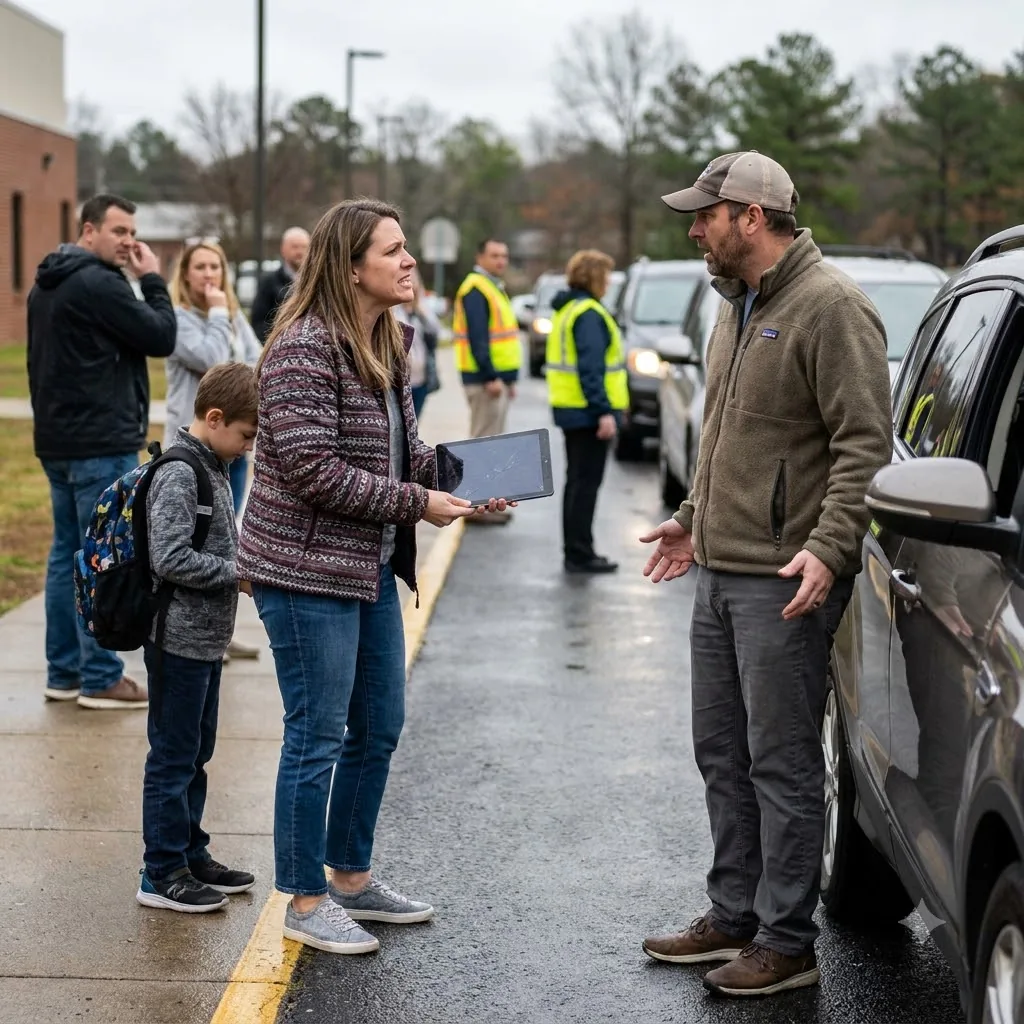
A mom in my son’s elementary school pickup lane tried to stick another parent with her kid’s broken tablet in front of a full line of waiting families, and for about twenty seconds it looked like it was going to work. The worst part was how fast everybody turned toward Dana Mercer like the case was already closed, even though she was standing by the lane marker with a backpack looped over one wrist and a lunchbox in both hands when that boy started pointing.
This happened in the parent waiting area beside the curbside dismissal zone, right where the kids come out in clusters and staff keep waving cars forward. It was normal pickup noise one second. Engines idling. Backpack tags flapping. Parents half watching the doors, half watching the line.
Then a boy yelled, “She broke it. She knocked it out of my hands.”
Everybody looked where he was pointing.
He was Tyler Doyle, holding a tablet with a spiderwebbed screen and a dented corner. His mother, Heather Doyle, moved in so fast it almost looked rehearsed from the outside, except I am staying with what was visible: she heard him, stepped right up beside him, and raised her voice before anybody asked a single follow-up question.
“Are you serious right now?” she said, aiming it straight at Dana. “You break my son’s tablet and you’re just going to stand there?”
Dana did not move toward them. She stayed where she was near the painted pickup sign, one hand still trapped under the strap of a little purple backpack, the other balancing a metal lunchbox against her hip. Her answer came out short and flat.
“I didn’t touch his tablet.”
That should have slowed it down. It did not.
A few parents did that automatic crowd thing where they shift their bodies toward the loudest person. I saw one dad glance at the cracked screen, then at Dana, and just give her that look people give when they think they’ve already figured out who the problem is. Heather picked up on that instantly.
“My son has no reason to lie,” she said, louder this time. “He said you hit it out of his hands. Look at this screen. Are you going to replace it?”
That line landed exactly how she wanted it to land. Not because of proof. Because she said it in the tone people use when they expect immediate compliance.
Dana said, “No. Because that didn’t happen.”
Tyler hugged the tablet tighter against his chest and pointed again with two fingers. “You bumped me right there,” he said. “By the curb.”
That was the first place the story snagged on something ordinary.
Dana was not by the curb when he started yelling. She was three or four steps back in the waiting area near the line of parents, and Ms. Alvarez had just handed off a younger child to her. That much I know because I was standing two spots over waiting for my niece, and I had just watched Dana bend awkwardly to get the lunchbox without dropping the backpack.
Ms. Alvarez heard the voices rise and came over from the dismissal line with that look school staff get when they are trying to stop a scene without making it bigger.
“Let’s bring the volume down,” she said. “What’s going on?”
Heather answered before anyone else could. “This woman knocked my son’s tablet out of his hands and cracked it, and now she’s denying it in front of everybody.”
Ms. Alvarez turned to Dana.
Dana said, “I did not touch him or the tablet. I was picking up my child.”
Tyler cut in. “She did. She was right next to me.”
There was a small pause there, just long enough for everybody to keep staring at the broken screen instead of the details around it. I noticed the dent in the tablet’s corner because Tyler had shifted his grip. It wasn’t just cracked flat across the middle. One corner casing looked scuffed and pressed in, the kind of mark people started noticing only after the first blast of noise was over.
Heather reached for the public finish. “Then why is it broken right now?”
Dana could have argued the whole lane. She didn’t. She looked at Ms. Alvarez and said, “Please tell her where I was standing when you released my child to me.”
That was the second snag.
Ms. Alvarez glanced from Dana to the painted curb lane, then back toward the doors where more students were still coming out. “Dana was in the parent waiting area for pickup,” she said carefully. “I handed off there.”
Heather crossed her arms and said, “That doesn’t mean she didn’t hit him after that.”
Maybe that would have kept working too, except Tyler had just said “by the curb,” and Dana still had both hands full from the handoff everyone had watched happen. A couple of us started looking at the same things at the same time: where Dana had been standing, what she was carrying, and the tablet corner that looked older than the fresh drama around it.
Then Nina Patel, who had been just behind Tyler in the cluster of parents, said the one sentence that froze the whole lane for a beat.
“He already had that tablet tucked under his arm when he came out, and the screen was facing in, so when exactly did Dana even touch it?”
A mom in my son’s elementary school pickup lane tried to stick another parent with her kid’s broken tablet in front of a full line of waiting families, and for about twenty seconds it looked like it was going to work. The worst part was how fast everybody turned toward Dana Mercer like the case was already closed, even though she was standing by the lane marker with a backpack looped over one wrist and a lunchbox in both hands when that boy started pointing.
This happened in the parent waiting area beside the curbside dismissal zone, right where the kids come out in clusters and staff keep waving cars forward. It was normal pickup noise one second. Engines idling. Backpack tags flapping. Parents half watching the doors, half watching the line.
Then a boy yelled, “She broke it. She knocked it out of my hands.”
Everybody looked where he was pointing.
He was Tyler Doyle, holding a tablet with a spiderwebbed screen and a dented corner. His mother, Heather Doyle, moved in so fast it almost looked rehearsed from the outside, except I am staying with what was visible: she heard him, stepped right up beside him, and raised her voice before anybody asked a single follow-up question.
“Are you serious right now?” she said, aiming it straight at Dana. “You break my son’s tablet and you’re just going to stand there?”
Dana did not move toward them. She stayed where she was near the painted pickup sign, one hand still trapped under the strap of a little purple backpack, the other balancing a metal lunchbox against her hip. Her answer came out short and flat.
“I didn’t touch his tablet.”
That should have slowed it down. It did not.
A few parents did that automatic crowd thing where they shift their bodies toward the loudest person. I saw one dad glance at the cracked screen, then at Dana, and just give her that look people give when they think they’ve already figured out who the problem is. Heather picked up on that instantly.
“My son has no reason to lie,” she said, louder this time. “He said you hit it out of his hands. Look at this screen. Are you going to replace it?”
That line landed exactly how she wanted it to land. Not because of proof. Because she said it in the tone people use when they expect immediate compliance.
Dana said, “No. Because that didn’t happen.”
Tyler hugged the tablet tighter against his chest and pointed again with two fingers. “You bumped me right there,” he said. “By the curb.”
That was the first place the story snagged on something ordinary.
Dana was not by the curb when he started yelling. She was three or four steps back in the waiting area near the line of parents, and Ms. Alvarez had just handed off a younger child to her. That much I know because I was standing two spots over waiting for my niece, and I had just watched Dana bend awkwardly to get the lunchbox without dropping the backpack.
Ms. Alvarez heard the voices rise and came over from the dismissal line with that look school staff get when they are trying to stop a scene without making it bigger.
“Let’s bring the volume down,” she said. “What’s going on?”
Heather answered before anyone else could. “This woman knocked my son’s tablet out of his hands and cracked it, and now she’s denying it in front of everybody.”
Ms. Alvarez turned to Dana.
Dana said, “I did not touch him or the tablet. I was picking up my child.”
Tyler cut in. “She did. She was right next to me.”
There was a small pause there, just long enough for everybody to keep staring at the broken screen instead of the details around it. I noticed the dent in the tablet’s corner because Tyler had shifted his grip. It wasn’t just cracked flat across the middle. One corner casing looked scuffed and pressed in, the kind of mark people started noticing only after the first blast of noise was over.
Heather reached for the public finish. “Then why is it broken right now?”
Dana could have argued the whole lane. She didn’t. She looked at Ms. Alvarez and said, “Please tell her where I was standing when you released my child to me.”
That was the second snag.
Ms. Alvarez glanced from Dana to the painted curb lane, then back toward the doors where more students were still coming out. “Dana was in the parent waiting area for pickup,” she said carefully. “I handed off there.”
Heather crossed her arms and said, “That doesn’t mean she didn’t hit him after that.”
Maybe that would have kept working too, except Tyler had just said “by the curb,” and Dana still had both hands full from the handoff everyone had watched happen. A couple of us started looking at the same things at the same time: where Dana had been standing, what she was carrying, and the tablet corner that looked older than the fresh drama around it.
Then Nina Patel, who had been just behind Tyler in the cluster of parents, said the one sentence that froze the whole lane for a beat.
“He already had that tablet tucked under his arm when he came out, and the screen was facing in, so when exactly did Dana even touch it?”