Story code: ST-000281
Part 1: She Said Dana Stole Her Bin
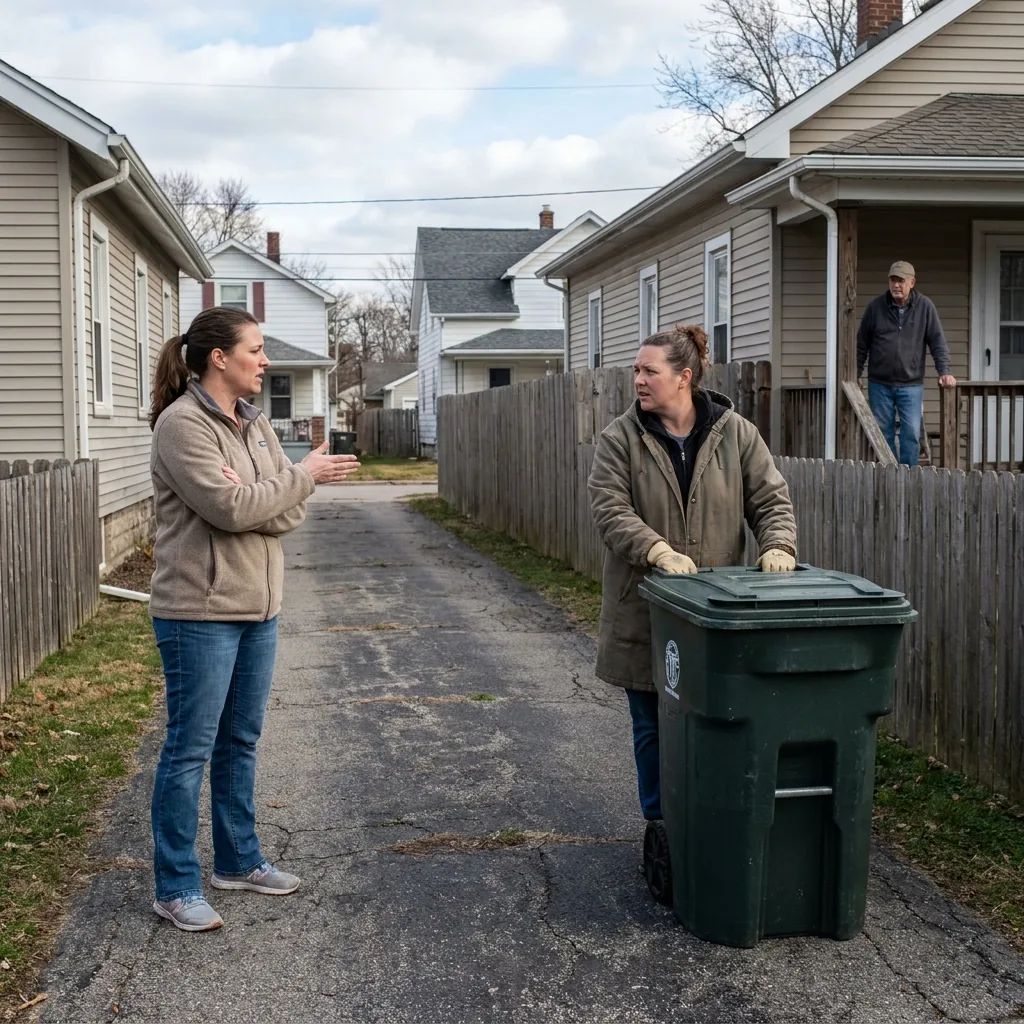
Leah Brooks stepped into the shared driveway while Dana Miller was rolling a trash bin toward the curb and said, loud enough for the houses on both sides to hear, that Dana had taken her property again. It landed fast and ugly in open daylight, right between the garage line and the narrow strip of concrete both homes used, and before Dana had even stopped moving the bin, Mr. Alvarez was already looking at her like the matter had been settled. The ugly part was how easy the claim sounded until one small thing on the bin refused to fit it.
Dana had come out with one hand on the lid and one on the handle, moving the bin the careful way she did everything in that driveway. The two houses shared the long concrete run before it split near the street, and trash day always forced the same small choreography: bins out, cars angled around them, no room for mistakes once the trucks started before sunrise.
Leah came off her side porch so quickly the screen door slapped behind her.
“That is my bin,” she said, pointing. “I told you last week to stop dragging my can over to your side.”
Dana stopped. She did not yank the bin closer to herself or let it go. She stood with her hand still on the handle and looked at Leah, then at the black plastic body of the bin between them.
“No,” Dana said. “It isn’t.”
That could have stayed small. It should have stayed small. But Leah raised her voice instead of lowering it.
“Everybody sees this,” she said. “You keep doing this because pickup is fuller on your side and you think no one notices.”
Mr. Alvarez had been unloading a bag from his trunk. He straightened, paused, and looked from Leah’s face to the bin. Across the drive, Tina Reed leaned forward from beside her own cans, eyes narrowing the way people do when they are reading a label from too far away.
Dana said, still controlled, “You can look at it.”
Leah did not look first. She kept talking.
“The label was on the front. You probably peeled it off.”
That brought one more screen door open two houses down. No one came close, but the driveway had that public feeling it gets in neighborhoods where everything echoes and every sentence travels farther than it should.
Dana turned the bin a few inches, enough for the front to face outward. There was a city sticker there, scuffed at one corner but still flat against the plastic. Beneath it, in white paint marker, were the numbers from Dana’s address, thick and crooked from being redone once after rain faded the first set.
Tina stepped closer to the edge of her side of the concrete.
“That sticker’s old,” she said. “It’s not fresh.”
Leah cut in immediately. “She switched them.”
Dana did not answer that right away. She lowered the lid, which had tipped open an inch, and set it flat with a soft thump. Then she pointed, not to the address numbers, but to the side near the wheel.
A bright pickup tag hung there, looped through the molded handle hole with a plastic tie. The sanitation department used those tags when a bin needed replacement or repair. This one had been attached two days earlier after the route supervisor stopped to note a cracked axle cap.
Mr. Alvarez took two steps closer. “What’s that for?”
“Replacement request,” Dana said.
Leah gave a short laugh that sounded more like a bark. “For my bin, apparently.”
But now Tina had left her own curb spot and come all the way to the boundary seam in the driveway. She did not look at Leah when she spoke. She bent a little, reading.
“It has the service number on it,” she said. “And the address line.”
Leah’s hand snapped out. “Those tags move. Anyone can move a tag.”
The accusation was still doing damage. Dana could tell by how Mr. Alvarez held himself half-turned toward Leah, as if waiting for Dana to explain a thing that had already been decided against her. That was the part that made the scene feel colder than a trash-day argument should have felt. The bin was in plain sight. The tag was in plain sight. The sticker was in plain sight. But the first loud version of the story was still hanging in the air.
Dana let go of the handle completely and stepped back one pace.
“Go ahead,” she said.
Leah frowned. “Go ahead what?”
“Show them it’s yours.”
For the first time, Leah stopped talking for a full second. Her eyes moved over the front sticker, the painted numbers, then down toward the pickup tag by the wheel. She did not crouch. She did not touch the tag. She only stood there with one arm folded tight and the other still pointed at the bin, as if the gesture alone could keep the claim alive.
Mr. Alvarez looked down too. Tina stayed bent long enough to read the smaller print on the tag, then straightened slowly.
“If this is yours,” Tina said, very plain, “why is the pickup request attached to Dana’s address and not yours?”
Leah answered too quickly.
“Because she switched the whole thing before anyone came outside.”
It might have worked if the detail had stopped there. But when Dana looked at the wheels, she saw the other thing at the exact same moment Tina did, and it was too ordinary to fake on the fly.
One wheel still carried a thin half-moon of pale gravel dust from the patch beside Dana’s fence gate, and Leah’s side of the driveway had no gravel anywhere.
Leah Brooks stepped into the shared driveway while Dana Miller was rolling a trash bin toward the curb and said, loud enough for the houses on both sides to hear, that Dana had taken her property again. It landed fast and ugly in open daylight, right between the garage line and the narrow strip of concrete both homes used, and before Dana had even stopped moving the bin, Mr. Alvarez was already looking at her like the matter had been settled. The ugly part was how easy the claim sounded until one small thing on the bin refused to fit it.
Dana had come out with one hand on the lid and one on the handle, moving the bin the careful way she did everything in that driveway. The two houses shared the long concrete run before it split near the street, and trash day always forced the same small choreography: bins out, cars angled around them, no room for mistakes once the trucks started before sunrise.
Leah came off her side porch so quickly the screen door slapped behind her.
“That is my bin,” she said, pointing. “I told you last week to stop dragging my can over to your side.”
Dana stopped. She did not yank the bin closer to herself or let it go. She stood with her hand still on the handle and looked at Leah, then at the black plastic body of the bin between them.
“No,” Dana said. “It isn’t.”
That could have stayed small. It should have stayed small. But Leah raised her voice instead of lowering it.
“Everybody sees this,” she said. “You keep doing this because pickup is fuller on your side and you think no one notices.”
Mr. Alvarez had been unloading a bag from his trunk. He straightened, paused, and looked from Leah’s face to the bin. Across the drive, Tina Reed leaned forward from beside her own cans, eyes narrowing the way people do when they are reading a label from too far away.
Dana said, still controlled, “You can look at it.”
Leah did not look first. She kept talking.
“The label was on the front. You probably peeled it off.”
That brought one more screen door open two houses down. No one came close, but the driveway had that public feeling it gets in neighborhoods where everything echoes and every sentence travels farther than it should.
Dana turned the bin a few inches, enough for the front to face outward. There was a city sticker there, scuffed at one corner but still flat against the plastic. Beneath it, in white paint marker, were the numbers from Dana’s address, thick and crooked from being redone once after rain faded the first set.
Tina stepped closer to the edge of her side of the concrete.
“That sticker’s old,” she said. “It’s not fresh.”
Leah cut in immediately. “She switched them.”
Dana did not answer that right away. She lowered the lid, which had tipped open an inch, and set it flat with a soft thump. Then she pointed, not to the address numbers, but to the side near the wheel.
A bright pickup tag hung there, looped through the molded handle hole with a plastic tie. The sanitation department used those tags when a bin needed replacement or repair. This one had been attached two days earlier after the route supervisor stopped to note a cracked axle cap.
Mr. Alvarez took two steps closer. “What’s that for?”
“Replacement request,” Dana said.
Leah gave a short laugh that sounded more like a bark. “For my bin, apparently.”
But now Tina had left her own curb spot and come all the way to the boundary seam in the driveway. She did not look at Leah when she spoke. She bent a little, reading.
“It has the service number on it,” she said. “And the address line.”
Leah’s hand snapped out. “Those tags move. Anyone can move a tag.”
The accusation was still doing damage. Dana could tell by how Mr. Alvarez held himself half-turned toward Leah, as if waiting for Dana to explain a thing that had already been decided against her. That was the part that made the scene feel colder than a trash-day argument should have felt. The bin was in plain sight. The tag was in plain sight. The sticker was in plain sight. But the first loud version of the story was still hanging in the air.
Dana let go of the handle completely and stepped back one pace.
“Go ahead,” she said.
Leah frowned. “Go ahead what?”
“Show them it’s yours.”
For the first time, Leah stopped talking for a full second. Her eyes moved over the front sticker, the painted numbers, then down toward the pickup tag by the wheel. She did not crouch. She did not touch the tag. She only stood there with one arm folded tight and the other still pointed at the bin, as if the gesture alone could keep the claim alive.
Mr. Alvarez looked down too. Tina stayed bent long enough to read the smaller print on the tag, then straightened slowly.
“If this is yours,” Tina said, very plain, “why is the pickup request attached to Dana’s address and not yours?”
Leah answered too quickly.
“Because she switched the whole thing before anyone came outside.”
It might have worked if the detail had stopped there. But when Dana looked at the wheels, she saw the other thing at the exact same moment Tina did, and it was too ordinary to fake on the fly.
One wheel still carried a thin half-moon of pale gravel dust from the patch beside Dana’s fence gate, and Leah’s side of the driveway had no gravel anywhere.