Story code: ST-001273
Part 1: The Disappearing Tuesday
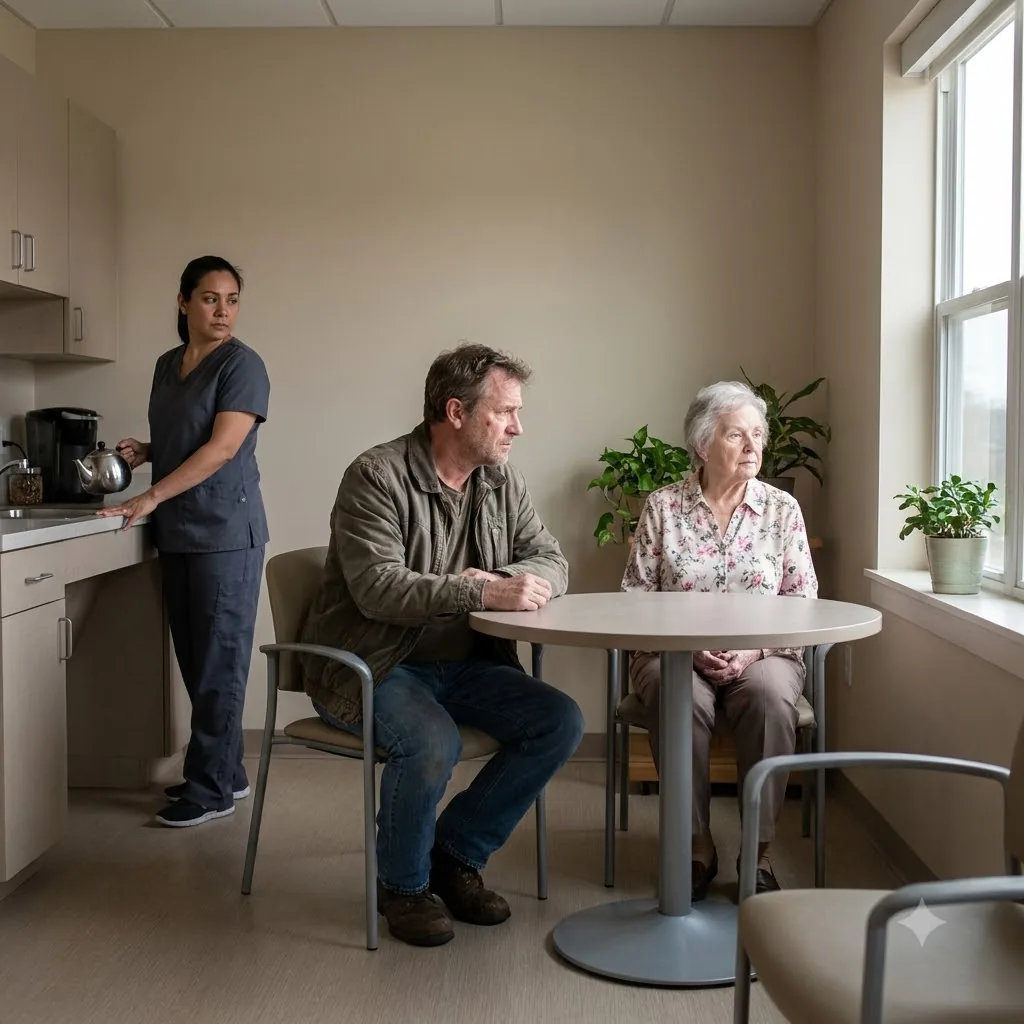
Inside Clara’s sterile senior living apartment, a home aide named Sylvia stood pouring chamomile tea while casually telling a visiting neighbor that Clara’s memory was failing. Clara sat frozen in her armchair, staring at the color-coded weekly pill organizer on the counter as Sylvia publicly denied failing to administer Tuesday’s critical medication. This quiet attack on the eighty-two-year-old woman’s credibility left Clara’s visiting son, Mark, watching from the kitchen threshold, his gaze locked on the subtle shift in the room’s power balance. The scent of lavender soap and clinical disinfectant hung in the air of the small-group space, where a regular afternoon tea had turned into an informal assessment of Clara’s mental competence.
Sylvia set the ceramic teapot down with a soft, deliberate click and smoothed the front of her clean blue scrubs. “We have to be patient,” Sylvia said, directing her words to Evelyn while keeping her back partially turned to Clara. “Clara has been insisting she missed her Tuesday evening dose, but as we know, the evening routine can sometimes get a little blurry for her at this stage of the month.”
Clara’s hands trembled as she gripped the floral fabric of her armrests. Her knuckles turned white under the thin, translucent skin. “I did not receive the blue capsules, Evelyn,” Clara said, her voice shaking but her gaze remaining fixed on the kitchen counter. “Sylvia was not here on Tuesday evening. The pill compartment was completely untouched until Wednesday morning.”
Evelyn, the neighbor from down the hall, sighed and looked down at her teacup, her fingers tapping against the saucer. “Clara, dear, Sylvia has been so wonderful to you. Memory slips are frustrating, but we have to trust the professionals who keep us on track. It is easy to lose count of the days when you do not leave the apartment.”
From his position by the kitchen threshold, Mark watched the exchange. He noted the way Sylvia adjusted the collar of her scrubs, her posture relaxed, her expression a mask of gentle concern. Mark stepped toward the counter where the weekly pill organizer-a plastic AM/PM tray with translucent snap lids-sat beside a heavy clipboard holding the daily care logbook. He watched Sylvia’s eyes follow his hand as he approached the counter, though her smile did not falter.
“Sylvia,” Mark said, keeping his voice level. “My mother is quite certain about Tuesday. She keeps a calendar on the fridge and crosses off each day as she takes her pills.”
Sylvia turned her head, her smile remaining perfectly in place. “I understand it’s hard to hear, Mark. But I was here. I gave her the medication at exactly seven o’clock on Tuesday evening, just as the care plan dictates. I signed for it, and I logged it immediately.”
“The logbook is on the counter,” Evelyn murmured to Mark, her tone suggesting he should drop the matter. “Sylvia is very thorough. It’s written down, I’m sure. We have to be realistic about cognitive decline.”
Clara looked up at her son, her chest rising and falling in rapid, shallow breaths. She did not speak, but her eyes remained wide, locked onto Mark’s face. Mark reached out and touched the plastic pill organizer. The snap lids for each day were molded in bright translucent plastic: green for morning, blue for evening. He stared at the row of compartments. The denial hung heavily in the clinical silence of the living room, leaving the room divided between Sylvia’s professional assurance and Clara’s trembling insistence. Mark’s hand hovered over the plastic tray, his eyes catching a detail in the physical layout of the organizer that did not align with a caregiver who had stood at this counter on Tuesday night. He lifted the plastic tray slightly, noticing the empty compartments for Monday and Tuesday, but his eyes drifted to a small, folded piece of paper caught beneath the clipboard.
Inside Clara’s sterile senior living apartment, a home aide named Sylvia stood pouring chamomile tea while casually telling a visiting neighbor that Clara’s memory was failing. Clara sat frozen in her armchair, staring at the color-coded weekly pill organizer on the counter as Sylvia publicly denied failing to administer Tuesday’s critical medication. This quiet attack on the eighty-two-year-old woman’s credibility left Clara’s visiting son, Mark, watching from the kitchen threshold, his gaze locked on the subtle shift in the room’s power balance. The scent of lavender soap and clinical disinfectant hung in the air of the small-group space, where a regular afternoon tea had turned into an informal assessment of Clara’s mental competence.
Sylvia set the ceramic teapot down with a soft, deliberate click and smoothed the front of her clean blue scrubs. “We have to be patient,” Sylvia said, directing her words to Evelyn while keeping her back partially turned to Clara. “Clara has been insisting she missed her Tuesday evening dose, but as we know, the evening routine can sometimes get a little blurry for her at this stage of the month.”
Clara’s hands trembled as she gripped the floral fabric of her armrests. Her knuckles turned white under the thin, translucent skin. “I did not receive the blue capsules, Evelyn,” Clara said, her voice shaking but her gaze remaining fixed on the kitchen counter. “Sylvia was not here on Tuesday evening. The pill compartment was completely untouched until Wednesday morning.”
Evelyn, the neighbor from down the hall, sighed and looked down at her teacup, her fingers tapping against the saucer. “Clara, dear, Sylvia has been so wonderful to you. Memory slips are frustrating, but we have to trust the professionals who keep us on track. It is easy to lose count of the days when you do not leave the apartment.”
From his position by the kitchen threshold, Mark watched the exchange. He noted the way Sylvia adjusted the collar of her scrubs, her posture relaxed, her expression a mask of gentle concern. Mark stepped toward the counter where the weekly pill organizer-a plastic AM/PM tray with translucent snap lids-sat beside a heavy clipboard holding the daily care logbook. He watched Sylvia’s eyes follow his hand as he approached the counter, though her smile did not falter.
“Sylvia,” Mark said, keeping his voice level. “My mother is quite certain about Tuesday. She keeps a calendar on the fridge and crosses off each day as she takes her pills.”
Sylvia turned her head, her smile remaining perfectly in place. “I understand it’s hard to hear, Mark. But I was here. I gave her the medication at exactly seven o’clock on Tuesday evening, just as the care plan dictates. I signed for it, and I logged it immediately.”
“The logbook is on the counter,” Evelyn murmured to Mark, her tone suggesting he should drop the matter. “Sylvia is very thorough. It’s written down, I’m sure. We have to be realistic about cognitive decline.”
Clara looked up at her son, her chest rising and falling in rapid, shallow breaths. She did not speak, but her eyes remained wide, locked onto Mark’s face. Mark reached out and touched the plastic pill organizer. The snap lids for each day were molded in bright translucent plastic: green for morning, blue for evening. He stared at the row of compartments. The denial hung heavily in the clinical silence of the living room, leaving the room divided between Sylvia’s professional assurance and Clara’s trembling insistence. Mark’s hand hovered over the plastic tray, his eyes catching a detail in the physical layout of the organizer that did not align with a caregiver who had stood at this counter on Tuesday night. He lifted the plastic tray slightly, noticing the empty compartments for Monday and Tuesday, but his eyes drifted to a small, folded piece of paper caught beneath the clipboard.