Story code: ST-000861
Part 4: Her Place at the Desk Was Empty
Kendra did not block the doorway. She just held Dana’s badge in one hand and stood between Dana and the front counter.
“If you leave before handoff,” Kendra said, “I still note that you left before supervisor review.”
Dana reached for the lanyard once. Kendra kept her hand down at her side.
“That’s your choice,” Kendra said.
Dana looked past us toward the waiting room, where voices had started up again in that careful, lower register people use after hearing enough to know they got the first version wrong. She smoothed the front of her scrub top with both palms, picked up her tote from the hook behind the office door, and walked the other way instead of toward the desk.
She passed consult two without stopping.
By the time the side exit clicked shut, her station at the front was still open on the eligibility portal, but her login had already gone dead. The screen had kicked back to the sign-in page with an access disabled message across the top. Kendra handed me the badge.
“Put this in the lock drawer until Sandra gets here,” she said.
That was the visible cost. Not a speech. Not a room-wide confession. Her badge in my hand. Her terminal locked. Her chair empty in the middle of a busy walk-in shift.
When I stepped back through the half gate, the waiting room went quiet for one beat and then pretended not to. Eli Benton looked down at his folded intake paper so hard he nearly bent it in half. The hunting-cap man had found something urgent on his phone. The mother by the wall was whispering to her daughter instead of staring at Tasha now.
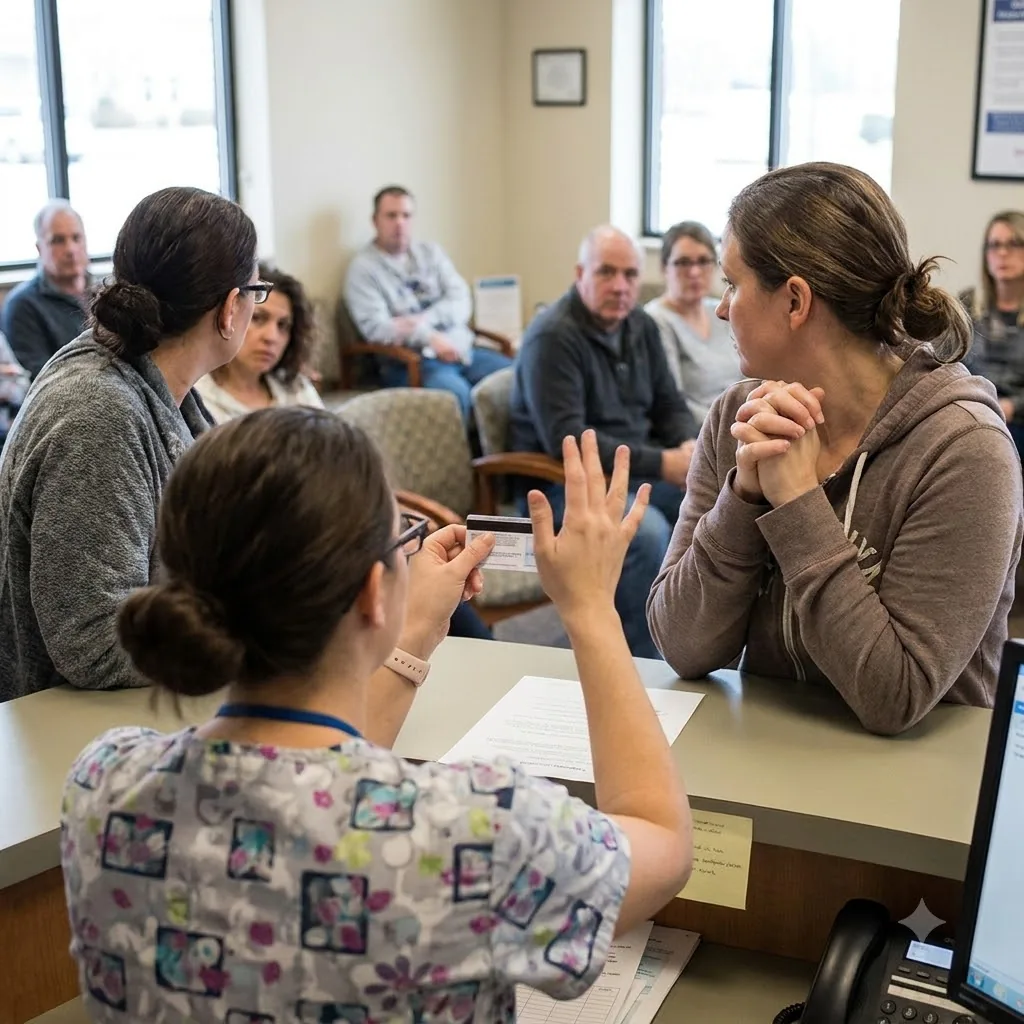
I set the card on the counter in front of Tasha, faceup, the same way Kendra had.
“Your coverage is active,” I said. “I verified it through the number on the back. I can finish checking you in if you still want to be seen.”
I did not say more than that. I did not explain Dana. I did not turn and educate the room. The truth stayed where it had to stay.
Tasha picked up the card first, then her ID. She looked past me once toward Dana’s empty station and the dark monitor beside mine. Her hand stayed on the edge of the counter.
“How long is the wait now?” she asked.
I checked the board. “About an hour and fifteen. Maybe a little longer.”
She gave one nod, slow and tired. All the fight had gone out of her posture, not because the proof failed, but because it had taken the whole waiting room with it. She slid the clipboard back toward me.
“I don’t want to sit out there now,” she said.
That was the bitter part. She had active coverage. She had done the ordinary thing right. She still looked at those chairs like they belonged to somebody else now.
Kendra came up beside me and kept her voice practical. “I can put her in triage first chair if one opens. No promises before that.”
Tasha glanced toward the hallway, then back at the room. Eli finally looked up, just long enough to see her seeing him. He dropped his eyes again.
“No,” Tasha said. “Just cancel it.”
I asked, “Are you sure?”
She tapped the insurance card once against the counter before slipping it into her wallet. “I’m sure.”
So I documented it the plain way. Verified active through member services. Patient declined to remain after intake dispute. Kendra initialed the note beside mine. No grand language. Just enough to keep the sequence straight for the chart and for whoever asked why one terminal sat empty for the rest of the afternoon.
Tasha took her receipt for the canceled visit but left the blank wristband I had printed at the start of all this. It curled beside the keyboard like something meant for another person. Before she turned away, she looked at me and said, “Thank you for reading the card.”
Then she walked out through the same waiting room that had judged her half an hour earlier. Nobody stopped her. Nobody apologized. Chairs shifted to let her pass. That was all.
After the door closed behind her, Eli stood when I called his name next. He came to the counter slower than people usually do when it’s finally their turn.
He set his form down and kept his eyes on the laminate edge. “You need my card too?” he asked.
“Yes,” I said.
He handed it over without another word.
The rest of the shift moved around the hole Dana left behind. I covered her terminal. Kendra took extra vitals up front when the line backed up. Sandra arrived twenty minutes later, saw the badge envelope in the lock drawer and the written reference number on Tasha’s form, and said, “All right,” in a voice that meant the day had already changed.
By closing, Dana’s name strip was still clipped above the disabled terminal, but her place at the desk was empty.
That was the only public piece most people ever saw.