Story code: ST-001211
Part 1: The Weight of the Canvas
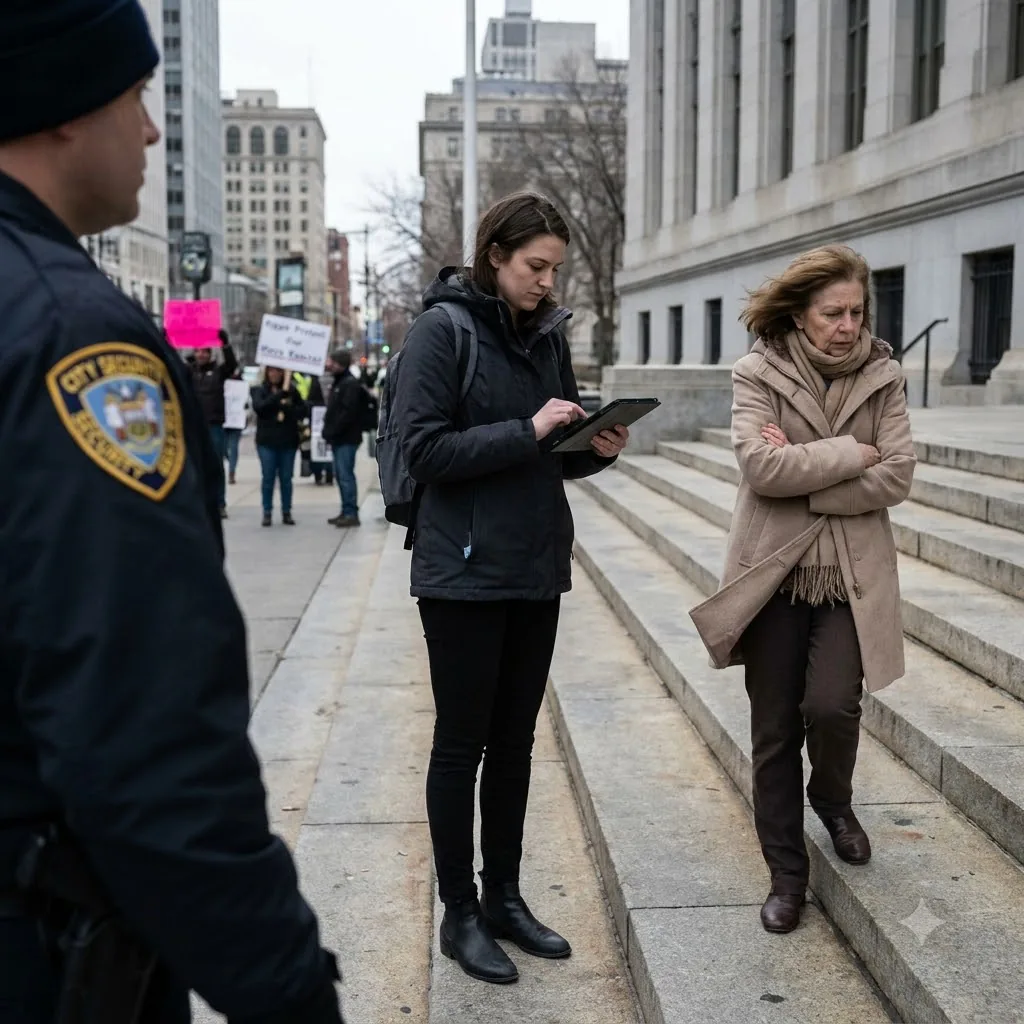
On the windy concrete steps of the City Council building, Maya Vance pocketed the brass car keys and tapped her tablet, locking the shared ride-share account to leave her aunt, Elena Vance, with no way to return home. Elena stood in the biting October draft, her hands gripping the heavy green canvas protest banner with its cold brass grommets. From his post near the glass entrance doors, security officer Marcus Briggs watched the two women, noting the sharp contrast between Maya’s bright campaign windbreaker and Elena’s worn wool coat. Elena’s shoulders sagged under the weight of the sign, her practical shoes shifting against the grey stone steps. Maya did not look up from her screen as she adjusted her grip on her tablet, directing a small group of volunteers with quick, dismissive hand gestures.
The protest banner, a massive sheet of green canvas with hand-painted white lettering protesting the city’s new zoning code, snapped in the heavy wind. Elena’s hands, red from the cold, adjusted their grip on the brass grommets. She leaned her weight back against the wind, trying to keep the banner taut. A few yards away, city employees hurried through the plaza, pulling their scarves tight against the chill.
“Maya, the wind is picking up, and my shift starts soon,” Elena said, her voice dry and low, barely carrying over the sound of city traffic. “I need the keys to get the car started.”
Maya’s fingers tapped the screen twice more before she answered, her eyes still fixed on the scrolling text. “The car stays locked, Aunt Elena. We need the full line holding the banner for the noon press arrival. If you log out now, the visual is ruined.”
Elena shifted her grip, the heavy canvas dragging her wrists down. “I have been standing on these concrete steps since eight this morning.”
“We all have to commit if we want the city to reject the pipeline permit,” Maya said, her voice flat and rehearsed. She stepped closer, adjusting the banner’s alignment with a sharp tug that pulled Elena forward by a step. “I paused the family account access on your phone, too. No rides home until the event is officially cleared. It’s only three more hours.”
Marcus Briggs watched the aunt’s chin drop toward her chest for a brief second before she pulled herself upright again. He adjusted his leather utility belt, pacing a short line across the granite landing. From this vantage point, he could see the digital lockout screen on the tablet Maya held-a red indicator showing a suspended user status. The wind roared through the plaza, catching the green canvas like a sail. Elena’s boots slid an inch on the smooth granite.
“If I miss the shift, they will find someone else for the cataloging work,” Elena said, her voice tight.
Maya did not look back. “This is more important than one afternoon of data entry, Elena. Just keep the banner up.”
A man in a dark suit carrying a blue municipal folder stepped out of the building’s side exit, pausing to look at the protest permit pinned to the volunteer coordinator’s table. He looked at the paperwork, then walked slowly toward the steps. Marcus Briggs stood taller, recognizing the city inspector’s badge pinned to the man’s lapel. The inspector’s arrival signaled a shift, but Maya remained focused on the street, unaware of the folder the man carried. He walked past the volunteers and stopped directly in front of the green banner, his eyes scanning the setup.
The city inspector adjusted his glasses, looking from the permit sheet in his hand to the faces of the two women. The wind whipped a stray corner of the green canvas banner, making a sharp snapping sound against the concrete. Marcus Briggs took two steps closer to the steps, his boots squeaking on the polished stone of the entryway. He watched Elena’s fingers tighten on the canvas, her knuckles showing pale white against the dark green fabric. Maya finally looked up from her tablet, her face smoothing into a bright, professional smile as she prepared to greet the official.
On the windy concrete steps of the City Council building, Maya Vance pocketed the brass car keys and tapped her tablet, locking the shared ride-share account to leave her aunt, Elena Vance, with no way to return home. Elena stood in the biting October draft, her hands gripping the heavy green canvas protest banner with its cold brass grommets. From his post near the glass entrance doors, security officer Marcus Briggs watched the two women, noting the sharp contrast between Maya’s bright campaign windbreaker and Elena’s worn wool coat. Elena’s shoulders sagged under the weight of the sign, her practical shoes shifting against the grey stone steps. Maya did not look up from her screen as she adjusted her grip on her tablet, directing a small group of volunteers with quick, dismissive hand gestures.
The protest banner, a massive sheet of green canvas with hand-painted white lettering protesting the city’s new zoning code, snapped in the heavy wind. Elena’s hands, red from the cold, adjusted their grip on the brass grommets. She leaned her weight back against the wind, trying to keep the banner taut. A few yards away, city employees hurried through the plaza, pulling their scarves tight against the chill.
“Maya, the wind is picking up, and my shift starts soon,” Elena said, her voice dry and low, barely carrying over the sound of city traffic. “I need the keys to get the car started.”
Maya’s fingers tapped the screen twice more before she answered, her eyes still fixed on the scrolling text. “The car stays locked, Aunt Elena. We need the full line holding the banner for the noon press arrival. If you log out now, the visual is ruined.”
Elena shifted her grip, the heavy canvas dragging her wrists down. “I have been standing on these concrete steps since eight this morning.”
“We all have to commit if we want the city to reject the pipeline permit,” Maya said, her voice flat and rehearsed. She stepped closer, adjusting the banner’s alignment with a sharp tug that pulled Elena forward by a step. “I paused the family account access on your phone, too. No rides home until the event is officially cleared. It’s only three more hours.”
Marcus Briggs watched the aunt’s chin drop toward her chest for a brief second before she pulled herself upright again. He adjusted his leather utility belt, pacing a short line across the granite landing. From this vantage point, he could see the digital lockout screen on the tablet Maya held-a red indicator showing a suspended user status. The wind roared through the plaza, catching the green canvas like a sail. Elena’s boots slid an inch on the smooth granite.
“If I miss the shift, they will find someone else for the cataloging work,” Elena said, her voice tight.
Maya did not look back. “This is more important than one afternoon of data entry, Elena. Just keep the banner up.”
A man in a dark suit carrying a blue municipal folder stepped out of the building’s side exit, pausing to look at the protest permit pinned to the volunteer coordinator’s table. He looked at the paperwork, then walked slowly toward the steps. Marcus Briggs stood taller, recognizing the city inspector’s badge pinned to the man’s lapel. The inspector’s arrival signaled a shift, but Maya remained focused on the street, unaware of the folder the man carried. He walked past the volunteers and stopped directly in front of the green banner, his eyes scanning the setup.
The city inspector adjusted his glasses, looking from the permit sheet in his hand to the faces of the two women. The wind whipped a stray corner of the green canvas banner, making a sharp snapping sound against the concrete. Marcus Briggs took two steps closer to the steps, his boots squeaking on the polished stone of the entryway. He watched Elena’s fingers tighten on the canvas, her knuckles showing pale white against the dark green fabric. Maya finally looked up from her tablet, her face smoothing into a bright, professional smile as she prepared to greet the official.