Story code: ST-000757
Part 1: The Rule at the Fence
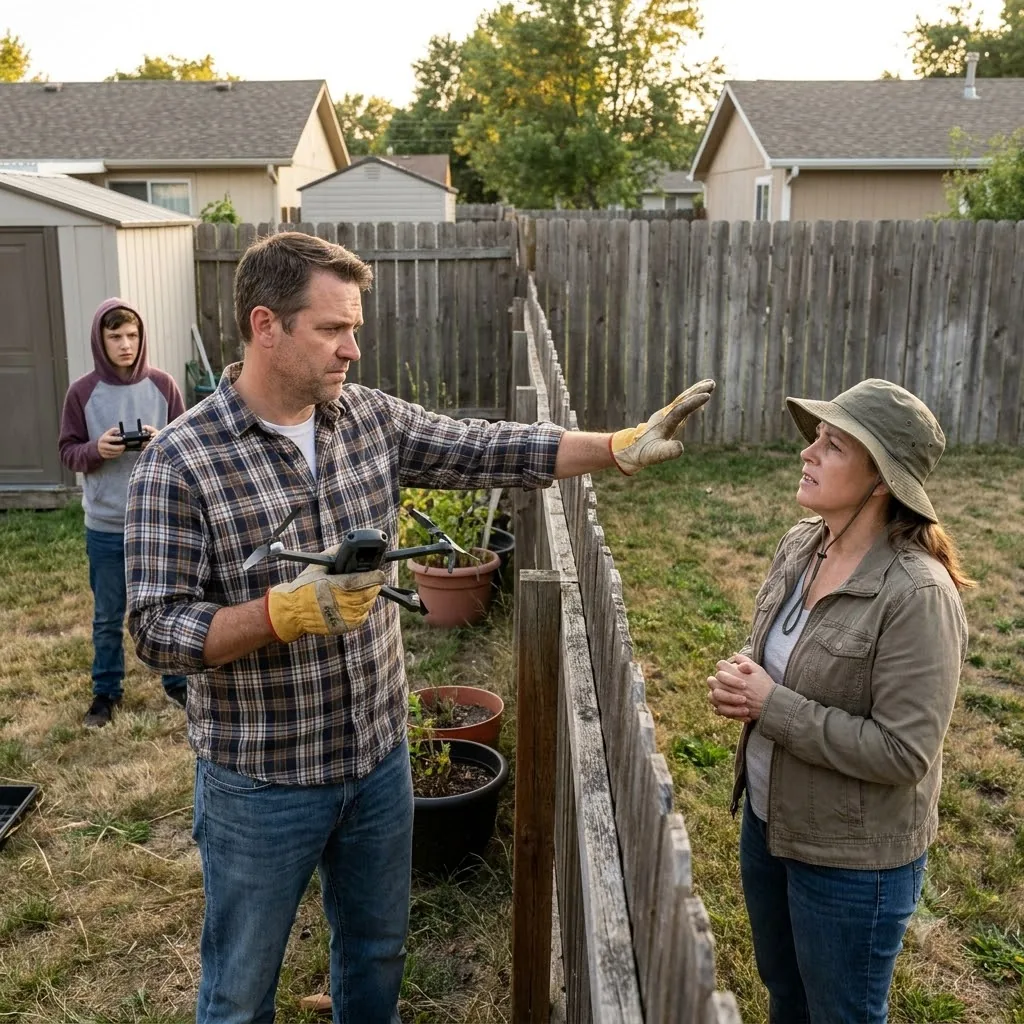
Derek stopped Mara at the backyard fence with a fallen drone in his hand and a rule he could not point to anywhere: no one was getting it back until he said so. The drone had dropped in the middle of ordinary backyard activity, right beside a patch of trampled grass and a plastic sprinkler head, and the first thing he did was announce the rule like it came from somewhere official. Mara stood at the fence line, watched the drone’s busted propeller hang loose, and asked him to say the rule again in plain words.
He lifted the drone higher, as if the object itself proved he was in charge. “No access until I clear it,” he said. “That is how we do it.”
“Who is we?” Mara asked.
Derek did not answer that part. He shifted his weight, kept one hand under the drone body, and repeated that it could stay where it was until the situation was “sorted.” The wording sounded polished enough to be practiced, but nobody standing there could point to a sign, a posted policy, or any kind of written rule. The fence separated two yards, not a restricted zone, and the drone was visible from both sides. Its camera gimbal hung at an angle. One arm had cracked near the joint.
Mrs. Hale came up from the patio with her arms crossed and her mouth set tight. She did not look at Mara first. She looked at Derek and said, “Tell her what the rule is.”
Derek gave a shorter version this time. “No one goes near it until I say okay.”
Mara kept her voice even. “That is not a rule. That is you saying no.”
Mrs. Hale stepped in before Derek answered. She said there had been a neighborhood understanding about privacy and drone handling, and that if something came down in the shared boundary space, the group handled it carefully. She said it in the same tone people use when they think repetition makes a thing real.
Mara asked for the part that explained why the drone could be kept from its owner. Mrs. Hale did not answer that directly. She looked to Derek, then toward the side yard, then back at Mara. Derek repeated that the drone could not move until the matter was “reviewed.” The word review did not match the setting. No one there had a clipboard. No one there had a form. No one had even agreed on what was being reviewed.
Tom appeared from the next yard with a rake in his hand and a bag of yard debris at his feet. He had been doing ordinary cleanup by the fence, nothing more. Mrs. Hale turned toward him and made the same kind of voice she had used with Mara. “Tom, you can leave the rake right there until we sort this out.”
Tom stopped with the bag half-lifted. “Why?” he asked.
Mrs. Hale said, “Because there’s a rule for this.”
Tom looked at the rake, then at the drone, then back at her. “What rule?”
The whole exchange changed shape in that moment. Mara did not move. Derek did not speak right away. Mrs. Hale repeated the rule, but only in the broadest way, and when Tom asked whether the same thing applied to his cleanup bag, she hesitated long enough for everyone to see it. The rake was ordinary. The bag was ordinary. The drone was still broken in Derek’s hand. Yet the rule had suddenly stretched to cover both sides of the fence and two different people, and it was not behaving the same way.
Mara asked the question that cut through the yard noise. “If this rule is real, why does it only show up when Derek wants to keep the drone?”
Nobody answered that one. Mrs. Hale’s eyes moved to Derek. Derek tightened his grip on the drone and said the matter was not the same. Mara pointed to Tom’s bag, then to the drone, then to the fence line where all three of them were standing in plain view. “You just used it on him too,” she said. “So why does it change every time you have to explain it?”
Derek stopped Mara at the backyard fence with a fallen drone in his hand and a rule he could not point to anywhere: no one was getting it back until he said so. The drone had dropped in the middle of ordinary backyard activity, right beside a patch of trampled grass and a plastic sprinkler head, and the first thing he did was announce the rule like it came from somewhere official. Mara stood at the fence line, watched the drone’s busted propeller hang loose, and asked him to say the rule again in plain words.
He lifted the drone higher, as if the object itself proved he was in charge. “No access until I clear it,” he said. “That is how we do it.”
“Who is we?” Mara asked.
Derek did not answer that part. He shifted his weight, kept one hand under the drone body, and repeated that it could stay where it was until the situation was “sorted.” The wording sounded polished enough to be practiced, but nobody standing there could point to a sign, a posted policy, or any kind of written rule. The fence separated two yards, not a restricted zone, and the drone was visible from both sides. Its camera gimbal hung at an angle. One arm had cracked near the joint.
Mrs. Hale came up from the patio with her arms crossed and her mouth set tight. She did not look at Mara first. She looked at Derek and said, “Tell her what the rule is.”
Derek gave a shorter version this time. “No one goes near it until I say okay.”
Mara kept her voice even. “That is not a rule. That is you saying no.”
Mrs. Hale stepped in before Derek answered. She said there had been a neighborhood understanding about privacy and drone handling, and that if something came down in the shared boundary space, the group handled it carefully. She said it in the same tone people use when they think repetition makes a thing real.
Mara asked for the part that explained why the drone could be kept from its owner. Mrs. Hale did not answer that directly. She looked to Derek, then toward the side yard, then back at Mara. Derek repeated that the drone could not move until the matter was “reviewed.” The word review did not match the setting. No one there had a clipboard. No one there had a form. No one had even agreed on what was being reviewed.
Tom appeared from the next yard with a rake in his hand and a bag of yard debris at his feet. He had been doing ordinary cleanup by the fence, nothing more. Mrs. Hale turned toward him and made the same kind of voice she had used with Mara. “Tom, you can leave the rake right there until we sort this out.”
Tom stopped with the bag half-lifted. “Why?” he asked.
Mrs. Hale said, “Because there’s a rule for this.”
Tom looked at the rake, then at the drone, then back at her. “What rule?”
The whole exchange changed shape in that moment. Mara did not move. Derek did not speak right away. Mrs. Hale repeated the rule, but only in the broadest way, and when Tom asked whether the same thing applied to his cleanup bag, she hesitated long enough for everyone to see it. The rake was ordinary. The bag was ordinary. The drone was still broken in Derek’s hand. Yet the rule had suddenly stretched to cover both sides of the fence and two different people, and it was not behaving the same way.
Mara asked the question that cut through the yard noise. “If this rule is real, why does it only show up when Derek wants to keep the drone?”
Nobody answered that one. Mrs. Hale’s eyes moved to Derek. Derek tightened his grip on the drone and said the matter was not the same. Mara pointed to Tom’s bag, then to the drone, then to the fence line where all three of them were standing in plain view. “You just used it on him too,” she said. “So why does it change every time you have to explain it?”