Story code: ST-001097
Part 1: The Eleven O’Clock Rule
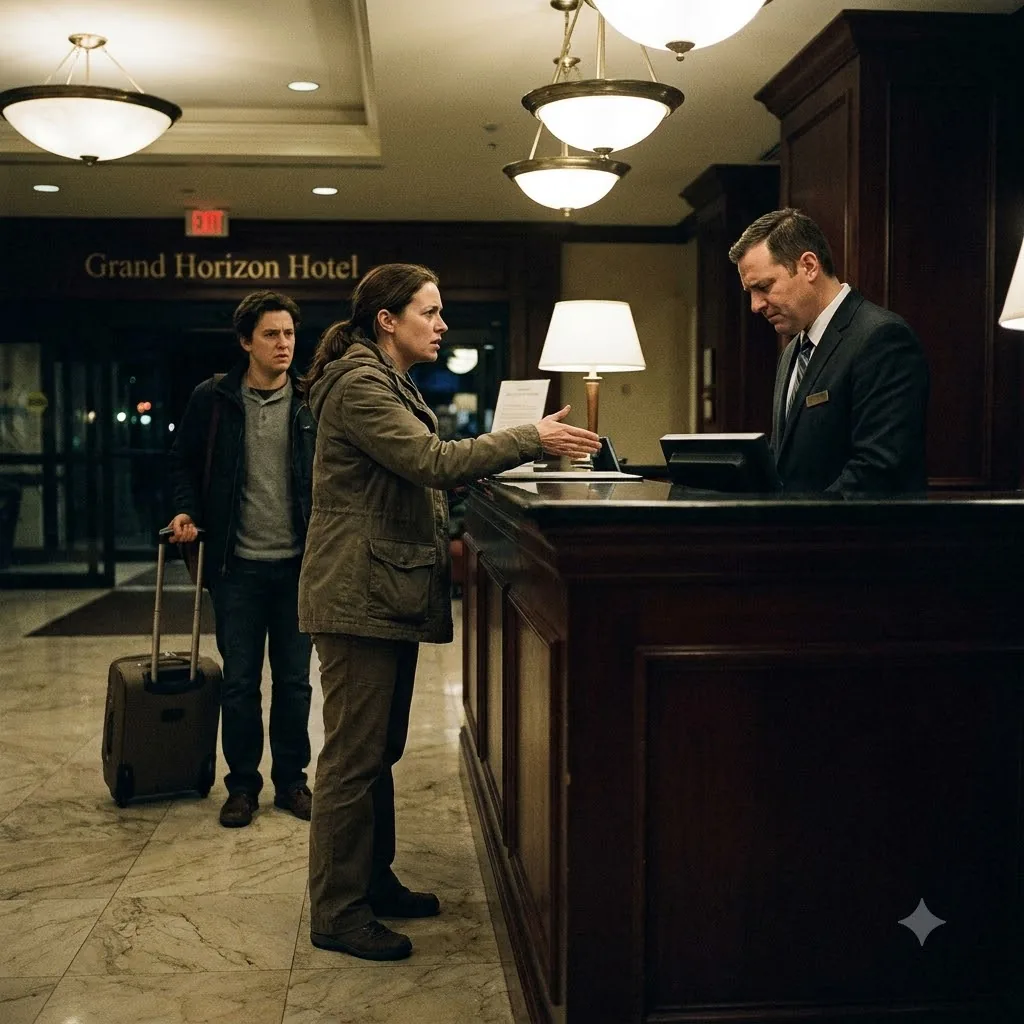
At 11:42 PM, inside the marble-tiled lobby of the Grand Horizon Hotel, the security camera footage captures Clara Jenkins standing before the front desk counter, her hand outstretched for a reservation keycard that front desk manager Arthur Pendelton refuses to slide across the counter. Citing a fabricated corporate “system maintenance policy,” Arthur informs her that all late arrivals after 11:00 PM are automatically canceled, leaving her stranded in Chicago without the room she pre-paid for weeks ago.
Investigator Donald Miller reconstructed this sequence from the lobby’s high-definition surveillance feeds and terminal transaction logs. The footage shows Clara presenting her phone, displaying a digital confirmation code. On the screen, the check-in time is marked as “guaranteed late arrival.”
Arthur does not look at the phone. Instead, he rests his palms on the edge of the polished mahogany desk. His lips form a tight, practiced smile. “As of midnight tonight, the Grand Horizon is transitioning to our new reservation database,” he says, his voice carrying clearly over the ambient murmur of the lobby. “Under the new protocol, any reservation not claimed by 11:00 PM is purged to allow the system upgrade to run. Your room is no longer in our active queue.”
Clara does not retract her hand. She points directly to the green-striped reservation keycard resting in the plastic slot on Arthur’s side of the desk. It has her room number, 412, printed on a small white sticker on the back.
“If my reservation was purged,” Clara says, her voice measured but distinct, “why is my name printed on the room card right there?”
Arthur shifts his stance. He moves his hand to cover the keycard, sliding it out of sight behind the terminal monitor. “The card was pre-printed before the system purge,” he replies, eyes remaining fixed on Clara’s shoulder rather than meeting her gaze. “The room itself has been returned to the general inventory and is currently unavailable due to the maintenance lock.”
Miller’s investigation of the hotel’s terminal logs confirms that at this exact moment, Room 412 was not locked by any system maintenance. The log shows the room status as “active, unoccupied, clean.”
The camera captures Clara leaning forward slightly, placing both hands flat on the marble counter. “I would like to see this policy in writing, please. Print out the document that states pre-paid, late-arrival reservations are canceled at eleven.”
Arthur’s eyes dart toward the line forming behind Clara. A young couple and an elderly man carrying a leather briefcase have stepped into the queue. “The policy is internal corporate code,” Arthur says, his shoulders tightening. “It is not a public document.”
At that moment, the clerk at the neighboring terminal speaks to the elderly man. “I can get you checked in, sir. That will be three hundred and fifty dollars for the night.”
Clara turns her head toward the clerk, then back to Arthur. “Wait,” she says. “You just told me the entire system is locked for maintenance and no bookings can be processed. How is he checking in?”
Arthur’s jaw tightens. The camera records a three-second silence before he responds, his eyes darting toward the security camera mounted above the desk.
At 11:42 PM, inside the marble-tiled lobby of the Grand Horizon Hotel, the security camera footage captures Clara Jenkins standing before the front desk counter, her hand outstretched for a reservation keycard that front desk manager Arthur Pendelton refuses to slide across the counter. Citing a fabricated corporate “system maintenance policy,” Arthur informs her that all late arrivals after 11:00 PM are automatically canceled, leaving her stranded in Chicago without the room she pre-paid for weeks ago.
Investigator Donald Miller reconstructed this sequence from the lobby’s high-definition surveillance feeds and terminal transaction logs. The footage shows Clara presenting her phone, displaying a digital confirmation code. On the screen, the check-in time is marked as “guaranteed late arrival.”
Arthur does not look at the phone. Instead, he rests his palms on the edge of the polished mahogany desk. His lips form a tight, practiced smile. “As of midnight tonight, the Grand Horizon is transitioning to our new reservation database,” he says, his voice carrying clearly over the ambient murmur of the lobby. “Under the new protocol, any reservation not claimed by 11:00 PM is purged to allow the system upgrade to run. Your room is no longer in our active queue.”
Clara does not retract her hand. She points directly to the green-striped reservation keycard resting in the plastic slot on Arthur’s side of the desk. It has her room number, 412, printed on a small white sticker on the back.
“If my reservation was purged,” Clara says, her voice measured but distinct, “why is my name printed on the room card right there?”
Arthur shifts his stance. He moves his hand to cover the keycard, sliding it out of sight behind the terminal monitor. “The card was pre-printed before the system purge,” he replies, eyes remaining fixed on Clara’s shoulder rather than meeting her gaze. “The room itself has been returned to the general inventory and is currently unavailable due to the maintenance lock.”
Miller’s investigation of the hotel’s terminal logs confirms that at this exact moment, Room 412 was not locked by any system maintenance. The log shows the room status as “active, unoccupied, clean.”
The camera captures Clara leaning forward slightly, placing both hands flat on the marble counter. “I would like to see this policy in writing, please. Print out the document that states pre-paid, late-arrival reservations are canceled at eleven.”
Arthur’s eyes dart toward the line forming behind Clara. A young couple and an elderly man carrying a leather briefcase have stepped into the queue. “The policy is internal corporate code,” Arthur says, his shoulders tightening. “It is not a public document.”
At that moment, the clerk at the neighboring terminal speaks to the elderly man. “I can get you checked in, sir. That will be three hundred and fifty dollars for the night.”
Clara turns her head toward the clerk, then back to Arthur. “Wait,” she says. “You just told me the entire system is locked for maintenance and no bookings can be processed. How is he checking in?”
Arthur’s jaw tightens. The camera records a three-second silence before he responds, his eyes darting toward the security camera mounted above the desk.