Story code: ST-000703
Part 1: He Kept Saying The Card Wasn’t Active For Our Stay
The front desk manager stopped my sister in the middle of a packed hotel lobby and said, for the third time, that her room keycard was “not active for your stay,” even though the card sleeve in his hand had our room number on it and our bags were stacked by the elevator. Before he finished the sentence, a woman from our own group pointed at my sister and said, loud enough for everyone by the coffee station to hear, “Rina, if the card isn’t active for your stay, then stop arguing and let them fix it.” I was ten feet away in uniform, straightening a luggage cart by the desk, and the part that hit me first was not the volume. It was that exact wording coming out of two different mouths.
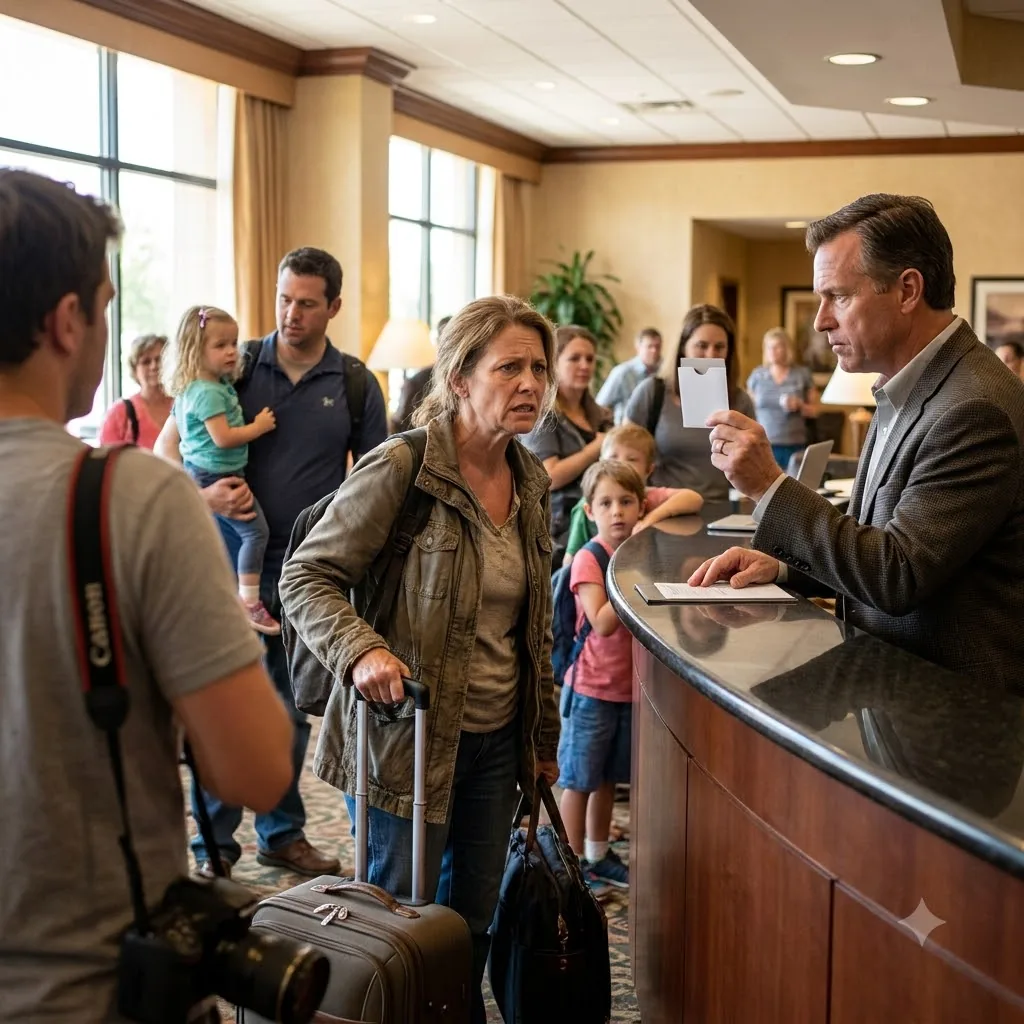
Friday check-in always made the lobby feel smaller than it was. Kids dragged neck pillows over the tile, two little boys were spinning around the brass suitcase stand, and a line had curled past the bowl of apples toward the front doors. Rina Torres stood at the counter with a travel tote slipping down her arm, her phone faceup on the laminate, and a white keycard pinched between two fingers like she was trying to keep everybody focused on one thing at a time.
“I’m not asking for a favor,” she said. “I’m asking why this key opens our room one minute and suddenly doesn’t count the next.”
Evan Pike kept one hand near the keyboard and the other on the keycard sleeve. His jacket was buttoned, his shoulders square, voice flat and polished in that front-desk way that sounds calm until you hear it too many times.
“Ma’am, that keycard is not active for your stay.”
Rina held her hand out. “Then tell me what that means.”
He slid the card back onto the counter instead of into her palm. “It means you will need the registered guest to present at the desk.”
Behind her, Noah Torres tightened both hands on the handle of a stacked suitcase and stopped moving. Darlene Torres stepped in from the side with a tote over her shoulder and repeated, almost word for word, “Rina, he just told you. It’s not active for your stay. Why would you keep pushing this?”
That was the first visible crack in the room. Other guests had been pretending not to listen. After Darlene said it, people stopped pretending. A woman waiting with two kids shifted her stroller half a foot back so she could watch the desk. A man by the lobby seating looked up from his phone. A little girl in a pink sweatshirt kept tapping a rolling bag against the leg of a bench while her dad stared straight ahead and listened anyway.
Rina did not lower her voice. “You keep saying the same sentence like it explains anything. The room is under our reservation. We already have the card. So what exactly changed?”
Evan blinked once and repeated it again, slower this time, each word placed down neatly like he was setting glasses on a shelf. “That keycard is not active for your stay.”
I had heard him use prepared lines before. Every hotel desk has them. We use them when someone is drunk, or when a family shows up six hours early and wants a room that does not exist yet, or when somebody tries to get information about a guest they should not be asking about. But prepared lines still have to connect to a real process. You still have to be able to explain the plain-language version when someone asks.
Rina tapped the keycard with one finger. “What stay?”
Evan looked at the monitor, then back at her. “The current stay attached to the room.”
“Whose current stay?” she asked.
He did not answer that one. He only said, “The card is not active for your stay.”
Darlene gave a short, irritated laugh and folded her arms. “Maybe because it’s not your stay, Rina. Maybe stop acting like they’re doing this to you.”
Rina turned and looked at her for one second, then faced the desk again. She kept the card visible the whole time. That mattered to me. People hiding something usually tuck it away. She held hers out where anyone could see it, even while Evan kept feeding the same line into the room.
I took two steps closer under the excuse of moving a bin of folded maps. From that distance, I could hear the exact cadence. He was not changing the sentence except for tiny places where it should have sounded more natural and somehow sounded less.
“Explain active,” Rina said. “Explain stay. Explain why you won’t just say what’s wrong.”
Evan’s jaw shifted once. “The card is not active for your stay at this time.”
That was when I looked up.
At this time.
He had not said that before. And the word that had been bothering me from the start snapped into place right after it. Not active was desk language. For a keycard, the word people used when they actually knew the system was encoded. Invalid sometimes. Deactivated if it had been killed. But active for your stay was a line built out of pieces, and he kept leaning hardest on one word that sounded borrowed every time he said it.
Your.
Not the room’s stay. Not the reservation. Your stay.
Rina heard the break too, because she stopped arguing and asked one clean question into the middle of the lobby.
“If you know what you’re saying,” she told him, “then tell me whose stay you think this room belongs to.”
The front desk manager stopped my sister in the middle of a packed hotel lobby and said, for the third time, that her room keycard was “not active for your stay,” even though the card sleeve in his hand had our room number on it and our bags were stacked by the elevator. Before he finished the sentence, a woman from our own group pointed at my sister and said, loud enough for everyone by the coffee station to hear, “Rina, if the card isn’t active for your stay, then stop arguing and let them fix it.” I was ten feet away in uniform, straightening a luggage cart by the desk, and the part that hit me first was not the volume. It was that exact wording coming out of two different mouths.
Friday check-in always made the lobby feel smaller than it was. Kids dragged neck pillows over the tile, two little boys were spinning around the brass suitcase stand, and a line had curled past the bowl of apples toward the front doors. Rina Torres stood at the counter with a travel tote slipping down her arm, her phone faceup on the laminate, and a white keycard pinched between two fingers like she was trying to keep everybody focused on one thing at a time.
“I’m not asking for a favor,” she said. “I’m asking why this key opens our room one minute and suddenly doesn’t count the next.”
Evan Pike kept one hand near the keyboard and the other on the keycard sleeve. His jacket was buttoned, his shoulders square, voice flat and polished in that front-desk way that sounds calm until you hear it too many times.
“Ma’am, that keycard is not active for your stay.”
Rina held her hand out. “Then tell me what that means.”
He slid the card back onto the counter instead of into her palm. “It means you will need the registered guest to present at the desk.”
Behind her, Noah Torres tightened both hands on the handle of a stacked suitcase and stopped moving. Darlene Torres stepped in from the side with a tote over her shoulder and repeated, almost word for word, “Rina, he just told you. It’s not active for your stay. Why would you keep pushing this?”
That was the first visible crack in the room. Other guests had been pretending not to listen. After Darlene said it, people stopped pretending. A woman waiting with two kids shifted her stroller half a foot back so she could watch the desk. A man by the lobby seating looked up from his phone. A little girl in a pink sweatshirt kept tapping a rolling bag against the leg of a bench while her dad stared straight ahead and listened anyway.
Rina did not lower her voice. “You keep saying the same sentence like it explains anything. The room is under our reservation. We already have the card. So what exactly changed?”
Evan blinked once and repeated it again, slower this time, each word placed down neatly like he was setting glasses on a shelf. “That keycard is not active for your stay.”
I had heard him use prepared lines before. Every hotel desk has them. We use them when someone is drunk, or when a family shows up six hours early and wants a room that does not exist yet, or when somebody tries to get information about a guest they should not be asking about. But prepared lines still have to connect to a real process. You still have to be able to explain the plain-language version when someone asks.
Rina tapped the keycard with one finger. “What stay?”
Evan looked at the monitor, then back at her. “The current stay attached to the room.”
“Whose current stay?” she asked.
He did not answer that one. He only said, “The card is not active for your stay.”
Darlene gave a short, irritated laugh and folded her arms. “Maybe because it’s not your stay, Rina. Maybe stop acting like they’re doing this to you.”
Rina turned and looked at her for one second, then faced the desk again. She kept the card visible the whole time. That mattered to me. People hiding something usually tuck it away. She held hers out where anyone could see it, even while Evan kept feeding the same line into the room.
I took two steps closer under the excuse of moving a bin of folded maps. From that distance, I could hear the exact cadence. He was not changing the sentence except for tiny places where it should have sounded more natural and somehow sounded less.
“Explain active,” Rina said. “Explain stay. Explain why you won’t just say what’s wrong.”
Evan’s jaw shifted once. “The card is not active for your stay at this time.”
That was when I looked up.
At this time.
He had not said that before. And the word that had been bothering me from the start snapped into place right after it. Not active was desk language. For a keycard, the word people used when they actually knew the system was encoded. Invalid sometimes. Deactivated if it had been killed. But active for your stay was a line built out of pieces, and he kept leaning hardest on one word that sounded borrowed every time he said it.
Your.
Not the room’s stay. Not the reservation. Your stay.
Rina heard the break too, because she stopped arguing and asked one clean question into the middle of the lobby.
“If you know what you’re saying,” she told him, “then tell me whose stay you think this room belongs to.”