Story code: ST-000848
Part 1: He Called It Family Duty at Register Three
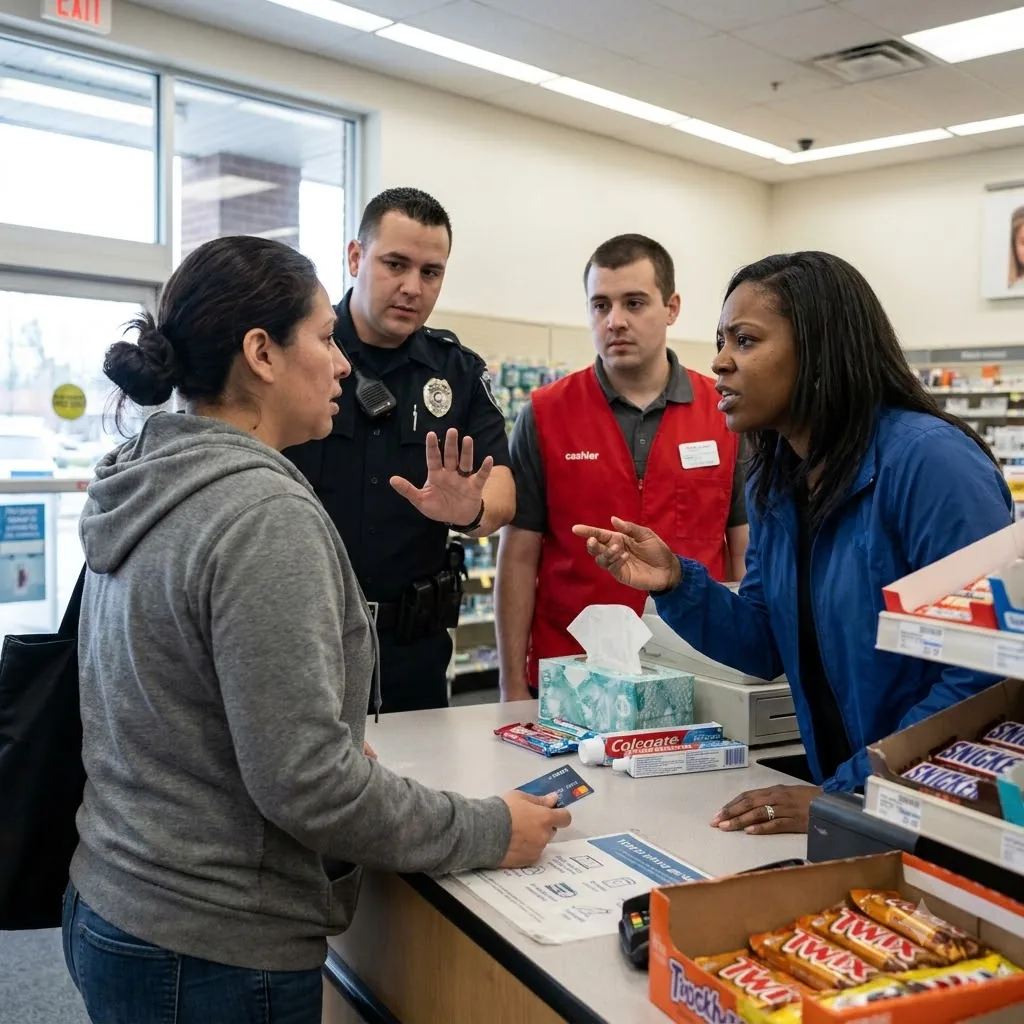
Tasha Reed tried to shame Nina Alvarez into handing over money in the middle of a pharmacy checkout line, and when Nina said no, the loss prevention guard stepped in like she was the one doing something criminal. It happened at a front register with cold medicine, toothpaste, and a paper receipt still warm from the printer, and the ugliest part was how fast refusing a money demand got turned into proof that she was heartless. By the time people in line started staring, one tiny purchase on that counter looked like it mattered more than anybody understood yet.
This was a regular chain pharmacy, the kind with candy bars by the card reader and a line that inches forward while people glance at their phones and basket handles. Leah Park was scanning Nina’s items in short, practiced motions. A travel pack of tissues. A bottle of children’s fever reducer. Toothpaste. A small pack of bandages. Nina had her wallet open already, one hand on the cart, the other near the payment terminal.
That was when Tasha moved in close enough to turn a private boundary into a public performance.
“Nina, I told you what this is for,” she said, loud enough to reach the next customer. “You really can’t help family one time?”
Nina did not raise her voice. “Not here. And not like this.”
That answer should have ended it. Instead, Tasha leaned harder into the line, shoulders squared toward the register as if the cashier and everyone waiting had been invited to judge. “So you’ll buy all this but won’t help when it actually matters?”
Leah paused for half a beat, then kept scanning. That was one of the first useful details. She kept the transaction moving, but she also kept watching the order of the items and where each one landed.
Nina said, “I said no.”
Tasha gave a short laugh that didn’t sound amused. “Wow. So that’s what we’re doing? You’re really going to let family sit there and suffer over money?”
People in line started doing what people always do when somebody uses the word family in public. Heads lifted. Eyes narrowed. The scene got moral before anybody knew a fact.
Evan Doyle, holding a sports drink and a protein bar two places back, looked from Tasha to Nina to the card terminal like he was trying to decide whether this was about a declined card, a stolen wallet, or something worse.
Nina kept both hands visible and close to her own things. “Do not do this here.”
But Tasha was already committed. She pointed toward the counter, not at any item in particular, just at the purchase itself. “You have money right now. You’re choosing not to help. Say that part out loud.”
That was when Marlon Pike crossed over from the endcap near cosmetics. Loss prevention has a certain walk in stores like that: quick, flat, already halfway convinced there is a problem. He stopped at the mouth of the lane and looked first at Nina’s open wallet, then at the bagging area, then at Tasha.
“What’s going on here?” he asked.
Tasha answered before anybody else could. “She’s refusing to pay what she owes family and acting weird at the register. She’s trying to rush this through.”
It was a slippery accusation, not exactly theft, not exactly debt, but close enough to drag store authority into a family ambush.
Marlon turned to Nina. “Ma’am, I need you to slow down and keep your hands where I can see them.”
Leah looked up. “She hasn’t done anything with the merchandise.”
But Marlon had already attached himself to the loudest version of events. “I said slow down.”
Nina’s posture changed only in one visible way: she stopped reaching for the card reader. “I am paying for my items.”
Tasha cut in again. “If she can pay for all that, she can pay what she was asked for. She just doesn’t want these people hearing what kind of person she is.”
That was the cruelty frame locking into place. Nina wasn’t being argued with anymore. She was being displayed.
Marlon asked for the receipt before the sale had even been completed, which made no procedural sense and put Leah in the awkward position of having to explain that the register had not finished the transaction yet. He glanced at the bag, the belt, Nina’s hands, then back to Tasha as if her certainty filled in the gaps.
“I need to know what’s been paid for and what hasn’t,” he said.
Leah said, “Nothing is bagged wrong. I’m still ringing her up.”
On the counter beside the fever reducer sat a tiny item that had barely registered at first: a single trial-size bottle from the personal care shelf. Cheap, easy to miss, exactly the kind of add-on nobody notices in a basket unless they have a reason. Tasha noticed it. Nina noticed that Tasha noticed it.
The change was visible because Tasha stopped talking for one beat too long.
Leah finished the scan, the receipt printer clicked, and that thin strip of paper began to slide out. Nina’s eyes went to the receipt before they went to the bag.
Then Tasha said, too fast, “She doesn’t need to be looking at that.”
That was the first line in the whole mess that sounded less like family duty and more like fear of a detail getting pinned down, and the detail was tied to one small purchase sitting in plain view at register three.
Tasha Reed tried to shame Nina Alvarez into handing over money in the middle of a pharmacy checkout line, and when Nina said no, the loss prevention guard stepped in like she was the one doing something criminal. It happened at a front register with cold medicine, toothpaste, and a paper receipt still warm from the printer, and the ugliest part was how fast refusing a money demand got turned into proof that she was heartless. By the time people in line started staring, one tiny purchase on that counter looked like it mattered more than anybody understood yet.
This was a regular chain pharmacy, the kind with candy bars by the card reader and a line that inches forward while people glance at their phones and basket handles. Leah Park was scanning Nina’s items in short, practiced motions. A travel pack of tissues. A bottle of children’s fever reducer. Toothpaste. A small pack of bandages. Nina had her wallet open already, one hand on the cart, the other near the payment terminal.
That was when Tasha moved in close enough to turn a private boundary into a public performance.
“Nina, I told you what this is for,” she said, loud enough to reach the next customer. “You really can’t help family one time?”
Nina did not raise her voice. “Not here. And not like this.”
That answer should have ended it. Instead, Tasha leaned harder into the line, shoulders squared toward the register as if the cashier and everyone waiting had been invited to judge. “So you’ll buy all this but won’t help when it actually matters?”
Leah paused for half a beat, then kept scanning. That was one of the first useful details. She kept the transaction moving, but she also kept watching the order of the items and where each one landed.
Nina said, “I said no.”
Tasha gave a short laugh that didn’t sound amused. “Wow. So that’s what we’re doing? You’re really going to let family sit there and suffer over money?”
People in line started doing what people always do when somebody uses the word family in public. Heads lifted. Eyes narrowed. The scene got moral before anybody knew a fact.
Evan Doyle, holding a sports drink and a protein bar two places back, looked from Tasha to Nina to the card terminal like he was trying to decide whether this was about a declined card, a stolen wallet, or something worse.
Nina kept both hands visible and close to her own things. “Do not do this here.”
But Tasha was already committed. She pointed toward the counter, not at any item in particular, just at the purchase itself. “You have money right now. You’re choosing not to help. Say that part out loud.”
That was when Marlon Pike crossed over from the endcap near cosmetics. Loss prevention has a certain walk in stores like that: quick, flat, already halfway convinced there is a problem. He stopped at the mouth of the lane and looked first at Nina’s open wallet, then at the bagging area, then at Tasha.
“What’s going on here?” he asked.
Tasha answered before anybody else could. “She’s refusing to pay what she owes family and acting weird at the register. She’s trying to rush this through.”
It was a slippery accusation, not exactly theft, not exactly debt, but close enough to drag store authority into a family ambush.
Marlon turned to Nina. “Ma’am, I need you to slow down and keep your hands where I can see them.”
Leah looked up. “She hasn’t done anything with the merchandise.”
But Marlon had already attached himself to the loudest version of events. “I said slow down.”
Nina’s posture changed only in one visible way: she stopped reaching for the card reader. “I am paying for my items.”
Tasha cut in again. “If she can pay for all that, she can pay what she was asked for. She just doesn’t want these people hearing what kind of person she is.”
That was the cruelty frame locking into place. Nina wasn’t being argued with anymore. She was being displayed.
Marlon asked for the receipt before the sale had even been completed, which made no procedural sense and put Leah in the awkward position of having to explain that the register had not finished the transaction yet. He glanced at the bag, the belt, Nina’s hands, then back to Tasha as if her certainty filled in the gaps.
“I need to know what’s been paid for and what hasn’t,” he said.
Leah said, “Nothing is bagged wrong. I’m still ringing her up.”
On the counter beside the fever reducer sat a tiny item that had barely registered at first: a single trial-size bottle from the personal care shelf. Cheap, easy to miss, exactly the kind of add-on nobody notices in a basket unless they have a reason. Tasha noticed it. Nina noticed that Tasha noticed it.
The change was visible because Tasha stopped talking for one beat too long.
Leah finished the scan, the receipt printer clicked, and that thin strip of paper began to slide out. Nina’s eyes went to the receipt before they went to the bag.
Then Tasha said, too fast, “She doesn’t need to be looking at that.”
That was the first line in the whole mess that sounded less like family duty and more like fear of a detail getting pinned down, and the detail was tied to one small purchase sitting in plain view at register three.