Story code: ST-000553
Part 3: Make It Show the Start
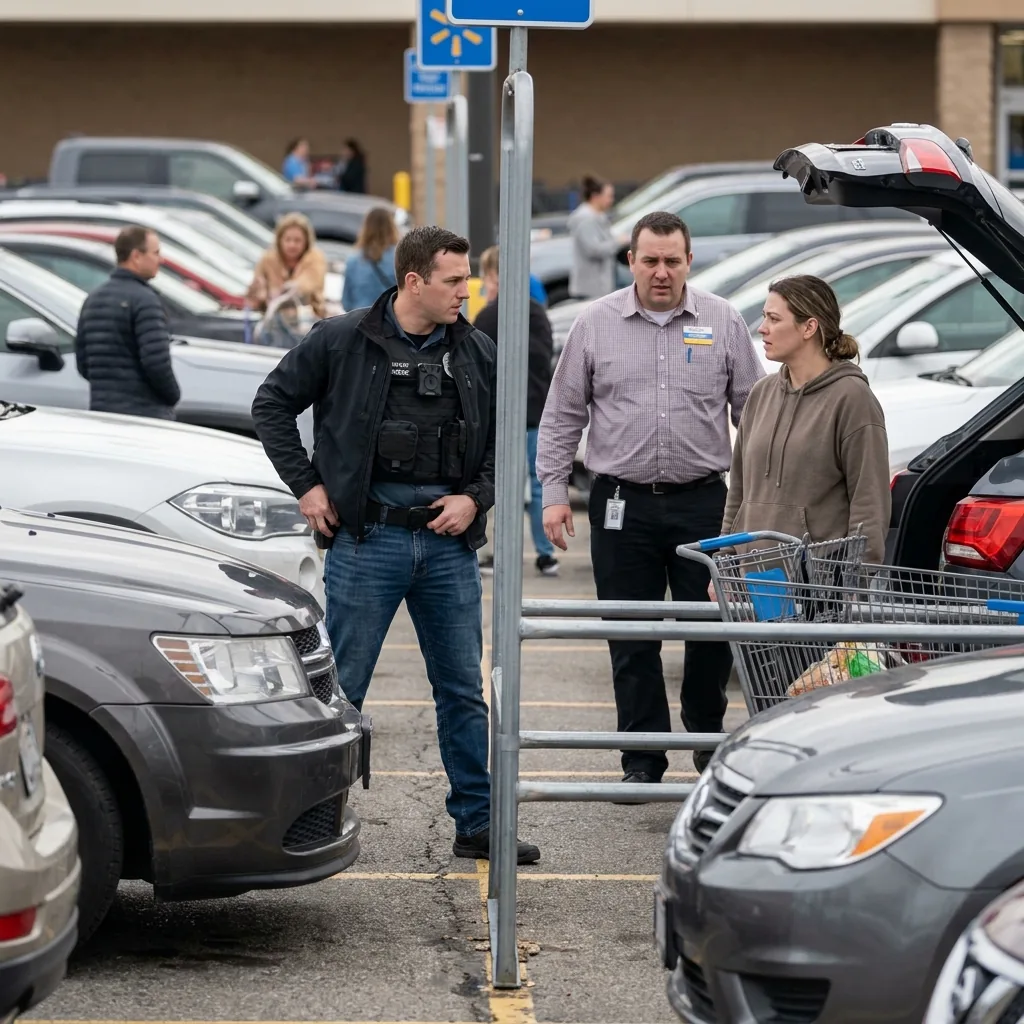
Derek Holloway left his sentence hanging, and that pause did more than another denial would have done. He was still standing in the same patch of lane between Mara Bennett’s hatchback and the crooked SUV, but he no longer sounded like the man who had first stepped into the scene with a badge wallet and a finished answer. Tina Alvarez did not fill the pause for him.
“I didn’t ask you to hand it to me,” she said. “I asked what it captured from when you crossed into this lane.”
Holloway kept his eyes on her. “Off-duty equipment doesn’t get reviewed in a parking lot because a customer doesn’t like the wording of a contact.”
“Then call whoever does review it,” Mara said.
He turned his head fast enough that the bodycam flashed in the afternoon light. “This isn’t about wording. This is about you trying to recast a simple inquiry into detention after the fact.”
Noah Pike noticed that he had moved back to inquiry now. Not contact. Not drive-off. Not hatch strike. Inquiry. Every time the ground got too specific, Holloway stepped onto a different word.
Tina looked from Mara to Holloway to Noah. “Noah, when he crossed the row, where was she?”
“At her driver-side door,” Noah said. “She’d already loaded the hatch.”
“And where was he?”
“Coming from over there.” Noah nodded toward the next row. “He cut in front of my cart line. That’s why I saw it.”
Tina held out one hand toward Holloway’s chest. Not touching. Just indicating the camera. “If your story is that she answered your question before any stop happened, this device should show you approaching, speaking, and getting that answer in order.”
Nobody in the little knot of bystanders said anything. A cart banged somewhere farther down the lot. Lila Cho had folded her arms across the front of her jacket and was watching the camera now, not Holloway’s face.
Holloway said, “Bodycams don’t solve memory disputes the way TV makes people think.”
“This isn’t memory anymore,” Mara said. She lifted the receipt again, still folded down the middle and soft at the edges from being held too long. “You’ve given four versions in ten minutes. You said vehicle contact. Then I was trying to leave. Then maybe my hatch. Then maybe my body was too close. Now it’s only about wording. If the camera was on when you walked over here, it has your first words.”
He gave a brief, tight smile that did not spread anywhere else. “You are very focused on editing one phrase because the rest of your story doesn’t hold.”
“Then prove it,” Tina said.
That was the first plain challenge anybody had put to him. Not argue. Not calm down. Prove it.
He drew a breath through his nose and pulled a phone from his pocket. He took two steps away from the group, angled his body, and made a call nobody else could fully hear. Noah caught only clipped pieces: “off-duty,” “retail lot,” “customer dispute,” and “manager requesting review.” Holloway’s free hand stayed near the camera the whole time, thumb rubbing the lower edge of the mount.
When he came back, his voice had gone flatter. “My watch commander says I can verify whether there is buffered footage and, if there is, play the initial segment without releasing the file. That satisfies immediate scene clarification.”
Tina nodded once. “Do that.”
The word landed like a pin in the middle of the lane.
Holloway took the bodycam off his chest with a practiced twist. For the first time since Noah had noticed it, the device sat in Holloway’s palm instead of on his jacket, smaller than it had looked from a distance. He pressed one side button, then another. The screen woke blue, then shifted to a menu. Even from where Noah stood, he could see Holloway’s thumb hesitate over one option before moving down.
Mara did not say anything. She only stepped half a pace closer when Tina did.
“You said from when you crossed into this lane,” Tina reminded him.
“I heard you,” Holloway said.
He opened a clip list. A timestamp appeared. He selected one entry and angled the screen outward just enough for Tina and Mara to see. Noah could not make out the image clearly from his spot by the carts, but he could hear the audio when Holloway hit play.
Wind hissed first. Then shoe noise on pavement. Then Holloway’s own voice, sharp and near the microphone: “Ma’am, don’t get in the car yet.”
Noah watched the change happen around the circle before the rest of the clip even caught up. Lila’s arms dropped. Tina’s chin lifted slightly. Mara did not move at all.
On the small speaker, Mara’s voice came next, thinner with distance than it had sounded in the lot: “Why?”
Then Holloway again: “You’re not leaving until we clear this up.”
The clip kept going for another second, long enough to make his claim from two minutes ago impossible to put back together. He jabbed the button and stopped it.
Nobody raised a voice. Nobody stepped forward. The lane only emptied of argument all at once.
Tina looked at the blank screen in his hand and said, very evenly, “Play the next ten seconds.”