Story code: ST-000834
Part 1: He Turned Thank You Into Permission
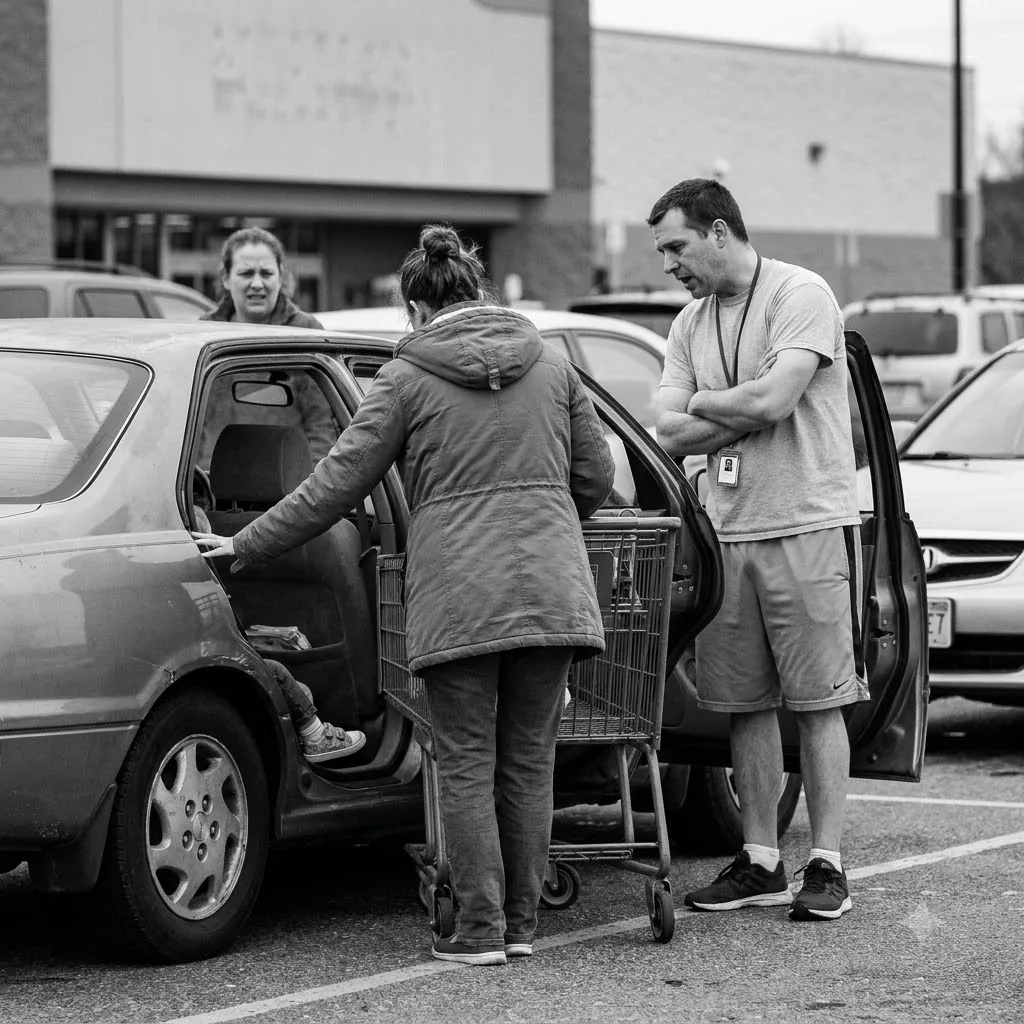
I had one kid halfway into the back seat, one hand on a shopping cart, and a stranger with a badge clipped to his gym shorts standing in front of my open passenger door telling me I was not about to leave until I understood what he had done for my family. He said it loud enough for the people loading cars around us to hear, and when I gave him one automatic thank you just to keep things moving, he took that like I had agreed he was now in charge.
It was a Saturday at the big-box store, the lot packed with carts, brake lights, and people trying to beat each other to open spaces. Luis had the reusable bags stacked against his chest. Nina was by the rear passenger door with her backpack still on, looking at me because kids always know which adult is supposed to make a strange moment end.
The man stepped closer instead.
“Off-duty officer,” he said, tapping the badge clipped at his waistband like that explained why he had planted himself between my cart and the SUV. “You need to slow down and listen for a second. I just kept something bad from happening to you people.”
I looked past him, trying to figure out if a car was backing out too fast or if something had dropped behind us. All I saw was a row of parked cars, a cart corral, and a woman returning a cart who had started watching us instead of leaving.
“What happened?” I asked.
He gave me a look like I had already missed the point. “I saw a guy circling over here. I stepped in. I made myself the target so your family could load up. That’s what happened.”
Luis shifted the bags to one arm and said, “Okay. Appreciate it. We’re good.”
That should have ended it. Instead the man put one hand up, palm out, not touching us, just stopping the air in front of us like that counted.
“No, don’t do that,” he said. “Don’t brush me off after I put myself on the line for you.”
That was the first moment it stopped sounding like help.
I kept my voice even. “Sir, if there was a problem, tell me what problem. My daughter needs to get in the car.”
Nina said, “Can we go now?”
He glanced at her and then back at me. “You can go when we’re clear on what happened here. Because people like you say thanks and then act like officers are the problem five seconds later.”
People like you. In a parking lot. While my kid stood there waiting for an adult stranger to move away from our car.
I said, “You said you’re off duty. Are you stopping us for something?”
He smiled without moving. “I’m trying to protect you, ma’am. You should be grateful that’s all this is.”
He had a phone in his other hand. At first I thought he was filming us. Then he turned it slightly and I saw a paused video on the screen. It was bodycam footage. I could make out the wide-angle view, a hood of a car, voices too muddy to follow from where I stood.
He noticed me looking.
“I keep this for a reason,” he said. “So when people question what officers do, I can show them what stepping up actually looks like.”
He brought the phone closer to his chest, not close enough for me to really see, just enough to make it part of the conversation. The screen reflected sunlight. A little red progress bar sat near the bottom.
I said, “I’m not questioning what officers do. I’m trying to load my groceries and leave.”
“Then act like it,” he said. “Because right now you seem real comfortable dismissing the person who just took a risk for you.”
Behind him, the woman with the cart slowed near the corral and stayed there. Another man glanced over while unlocking his truck. Nobody came close, but the scene had turned outward. That was the point where I understood this wasn’t just about whatever story he was telling me. It was about making me answer it in public.
I tried one more clean exit. “Thank you for saying something. We are leaving now.”
I reached for the cart.
He stepped sideways with me.
Not touching. Not yelling. Just keeping his body where every normal movement turned into a choice to squeeze past him with a child at my side.
Luis put the bags in the cargo area and shut it harder than he meant to. “Move, man.”
The officer’s head turned fast. “Don’t start acting aggressive because you don’t like being held accountable for basic respect.”
Held accountable.
For loading our own car.
I could feel the whole shape of it by then: if we argued, he got to say we were hostile. If we thanked him again, he got to stretch the moment longer. If we tried to edge around him, he got to act like we were making the scene unsafe.
So I asked the only question that mattered. “If you helped us, why are you the one stopping us from leaving?”
For the first time, he didn’t answer right away. He lifted the phone again and thumbed the bodycam clip like he was deciding how much to show.
Then he said, “Because you don’t get to walk off before you understand the sacrifice somebody made for you.”
And when the video on his screen moved for half a second, I saw enough to know his story and that clip were not lining up the way he wanted me to believe.
I had one kid halfway into the back seat, one hand on a shopping cart, and a stranger with a badge clipped to his gym shorts standing in front of my open passenger door telling me I was not about to leave until I understood what he had done for my family. He said it loud enough for the people loading cars around us to hear, and when I gave him one automatic thank you just to keep things moving, he took that like I had agreed he was now in charge.
It was a Saturday at the big-box store, the lot packed with carts, brake lights, and people trying to beat each other to open spaces. Luis had the reusable bags stacked against his chest. Nina was by the rear passenger door with her backpack still on, looking at me because kids always know which adult is supposed to make a strange moment end.
The man stepped closer instead.
“Off-duty officer,” he said, tapping the badge clipped at his waistband like that explained why he had planted himself between my cart and the SUV. “You need to slow down and listen for a second. I just kept something bad from happening to you people.”
I looked past him, trying to figure out if a car was backing out too fast or if something had dropped behind us. All I saw was a row of parked cars, a cart corral, and a woman returning a cart who had started watching us instead of leaving.
“What happened?” I asked.
He gave me a look like I had already missed the point. “I saw a guy circling over here. I stepped in. I made myself the target so your family could load up. That’s what happened.”
Luis shifted the bags to one arm and said, “Okay. Appreciate it. We’re good.”
That should have ended it. Instead the man put one hand up, palm out, not touching us, just stopping the air in front of us like that counted.
“No, don’t do that,” he said. “Don’t brush me off after I put myself on the line for you.”
That was the first moment it stopped sounding like help.
I kept my voice even. “Sir, if there was a problem, tell me what problem. My daughter needs to get in the car.”
Nina said, “Can we go now?”
He glanced at her and then back at me. “You can go when we’re clear on what happened here. Because people like you say thanks and then act like officers are the problem five seconds later.”
People like you. In a parking lot. While my kid stood there waiting for an adult stranger to move away from our car.
I said, “You said you’re off duty. Are you stopping us for something?”
He smiled without moving. “I’m trying to protect you, ma’am. You should be grateful that’s all this is.”
He had a phone in his other hand. At first I thought he was filming us. Then he turned it slightly and I saw a paused video on the screen. It was bodycam footage. I could make out the wide-angle view, a hood of a car, voices too muddy to follow from where I stood.
He noticed me looking.
“I keep this for a reason,” he said. “So when people question what officers do, I can show them what stepping up actually looks like.”
He brought the phone closer to his chest, not close enough for me to really see, just enough to make it part of the conversation. The screen reflected sunlight. A little red progress bar sat near the bottom.
I said, “I’m not questioning what officers do. I’m trying to load my groceries and leave.”
“Then act like it,” he said. “Because right now you seem real comfortable dismissing the person who just took a risk for you.”
Behind him, the woman with the cart slowed near the corral and stayed there. Another man glanced over while unlocking his truck. Nobody came close, but the scene had turned outward. That was the point where I understood this wasn’t just about whatever story he was telling me. It was about making me answer it in public.
I tried one more clean exit. “Thank you for saying something. We are leaving now.”
I reached for the cart.
He stepped sideways with me.
Not touching. Not yelling. Just keeping his body where every normal movement turned into a choice to squeeze past him with a child at my side.
Luis put the bags in the cargo area and shut it harder than he meant to. “Move, man.”
The officer’s head turned fast. “Don’t start acting aggressive because you don’t like being held accountable for basic respect.”
Held accountable.
For loading our own car.
I could feel the whole shape of it by then: if we argued, he got to say we were hostile. If we thanked him again, he got to stretch the moment longer. If we tried to edge around him, he got to act like we were making the scene unsafe.
So I asked the only question that mattered. “If you helped us, why are you the one stopping us from leaving?”
For the first time, he didn’t answer right away. He lifted the phone again and thumbed the bodycam clip like he was deciding how much to show.
Then he said, “Because you don’t get to walk off before you understand the sacrifice somebody made for you.”
And when the video on his screen moved for half a second, I saw enough to know his story and that clip were not lining up the way he wanted me to believe.