Story code: ST-000837
Part 1: She Said He Couldn’t Stay
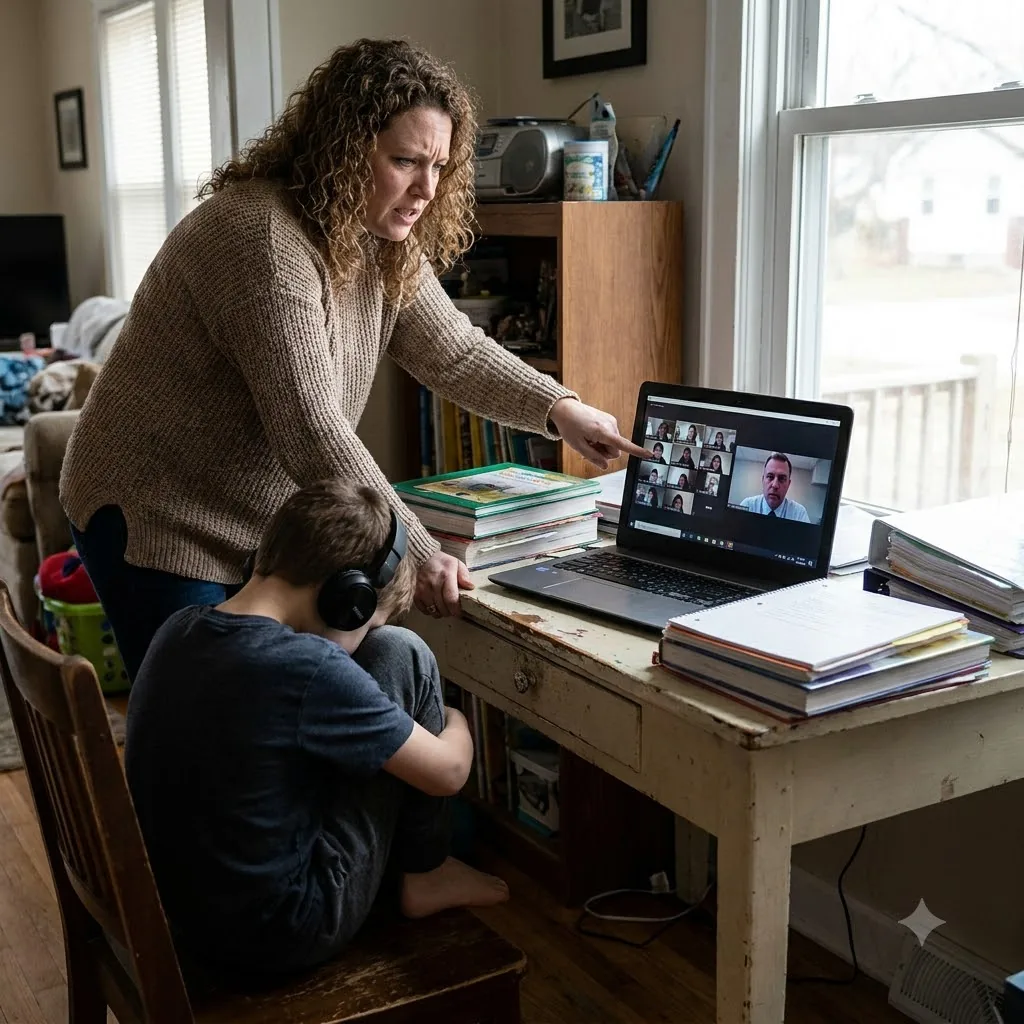
Dana Mercer dropped into Roosevelt Virtual Academy’s live homeroom while kids were still reading from a shared screen and said my son could not stay in class unless his camera remained on the entire time. Mateo had logged in on time, his name was already on Mr. Colin Avery’s roster, and within less than a minute an administrator had turned ordinary attendance into a public removal under a rule nobody in that room could point to. The worst part was that the class webcam recording kept running while she said it, which meant the whole bluff had a clock on it even before anyone called it a bluff.
This was not a dramatic morning before that. It was the usual school-platform routine: little boxes, muted microphones, kids typing in chat, Mr. Avery trying to get through homeroom announcements without losing the class to lag. Mateo joined from our dining room table with his Chromebook angled toward the window. His camera flickered once when the connection adjusted, then came back. Mr. Avery said, “Good morning, Mateo,” and kept going down the roster.
Then Dana Mercer’s square appeared.
She did not come in like a teacher checking on a class. She came in already speaking. “If your camera is off, you cannot remain in session,” she said. Her voice was flat, controlled, and loud enough that the students stopped typing in chat for a second. “That is the current requirement.”
Mr. Avery paused with the attendance list still open on his screen share. “We’re in homeroom,” he said.
Dana Mercer answered without lowering her voice. “The requirement applies in all live instructional spaces.”
Mateo’s camera was on by then, but the connection had clearly dipped a few seconds earlier. I know that because his image froze, then jumped, then steadied. Dana Mercer looked at the participant list and said, “Mateo Ruiz, you were admitted with camera noncompliance. If the camera does not remain on, you will need to leave.”
Mateo leaned toward the screen and said, “It is on.”
She replied, “It needs to stay on.”
That wording matters because it became the center of everything after. Not turn it on. Not fix a technical problem. Stay on.
I was nearby because distance learning had turned half the parents in our district into unofficial tech support. I stepped into the frame just enough to ask, “Can you tell me where that rule is posted?”
Dana Mercer did not answer the question I asked. “Parents should not interrupt live instruction,” she said. “Students who do not comply with camera expectations may not remain.”
I said, “I’m asking where it is posted.”
She repeated, “The expectation is active now.”
Mr. Avery sat there with that teacher look people have learned to recognize on video calls: eyes on one square, hand on the mute button, trying to keep twenty families from realizing nobody running the room could explain the room. He said, “Mrs. Ruiz, if you email the office, they can clarify.”
I asked him directly, “Have you seen the policy?”
He looked offscreen, then back at the camera. “I was told the expectation applies,” he said.
That was all he would verify.
The next thirty seconds were cleaner on the recording than they felt live. Dana Mercer said, “If this is going to be debated, Mateo can wait until compliance is possible.” Then Mateo’s tile vanished from the active grid.
On his end, the platform moved him into the waiting room. His class link still worked. His account still showed him signed in. He just was not allowed into the room where class was happening. He messaged me from the chat preview that appears before full admission: “It says waiting for host.”
Inside the class, Mr. Avery cleared his throat, reopened the shared slide, and continued the morning agenda. A couple of students put question marks in the chat. One kid typed, “My camera doesn’t work.” That message disappeared a few seconds later, either buried by new chat or deleted by whoever had host controls. I only know what I could still see on screen.
I wrote down the exact time from the corner of the laptop. I saved the meeting link. I took a screenshot of Mateo’s waiting-room notice and another of his camera indicator showing enabled. Then I sent the office a short email: Please send the written policy that says a student can be removed from live class if the camera does not remain on.
The answer did not come during homeroom. What came first was attendance. Mateo was marked absent from a class he had entered on time.
By lunch, I had heard from one other parent who asked if our internet had gone out. I said no, an administrator had removed him over a camera rule. There was a long pause on the line, then she said, “That’s strange. My daughter keeps hers off in the afternoon because of bandwidth, and nobody says anything.”
That was the first crack, but not the last one. The sharper problem was still sitting inside the recording itself: Dana Mercer had announced a rule as if everybody should already know it, Mr. Avery had deferred to it without citing it, and my son had been pushed into the lobby under it. If the rule covered every live class, why were other students still in class with cameras off, and why couldn’t the teacher explain where the rule came from?
Dana Mercer dropped into Roosevelt Virtual Academy’s live homeroom while kids were still reading from a shared screen and said my son could not stay in class unless his camera remained on the entire time. Mateo had logged in on time, his name was already on Mr. Colin Avery’s roster, and within less than a minute an administrator had turned ordinary attendance into a public removal under a rule nobody in that room could point to. The worst part was that the class webcam recording kept running while she said it, which meant the whole bluff had a clock on it even before anyone called it a bluff.
This was not a dramatic morning before that. It was the usual school-platform routine: little boxes, muted microphones, kids typing in chat, Mr. Avery trying to get through homeroom announcements without losing the class to lag. Mateo joined from our dining room table with his Chromebook angled toward the window. His camera flickered once when the connection adjusted, then came back. Mr. Avery said, “Good morning, Mateo,” and kept going down the roster.
Then Dana Mercer’s square appeared.
She did not come in like a teacher checking on a class. She came in already speaking. “If your camera is off, you cannot remain in session,” she said. Her voice was flat, controlled, and loud enough that the students stopped typing in chat for a second. “That is the current requirement.”
Mr. Avery paused with the attendance list still open on his screen share. “We’re in homeroom,” he said.
Dana Mercer answered without lowering her voice. “The requirement applies in all live instructional spaces.”
Mateo’s camera was on by then, but the connection had clearly dipped a few seconds earlier. I know that because his image froze, then jumped, then steadied. Dana Mercer looked at the participant list and said, “Mateo Ruiz, you were admitted with camera noncompliance. If the camera does not remain on, you will need to leave.”
Mateo leaned toward the screen and said, “It is on.”
She replied, “It needs to stay on.”
That wording matters because it became the center of everything after. Not turn it on. Not fix a technical problem. Stay on.
I was nearby because distance learning had turned half the parents in our district into unofficial tech support. I stepped into the frame just enough to ask, “Can you tell me where that rule is posted?”
Dana Mercer did not answer the question I asked. “Parents should not interrupt live instruction,” she said. “Students who do not comply with camera expectations may not remain.”
I said, “I’m asking where it is posted.”
She repeated, “The expectation is active now.”
Mr. Avery sat there with that teacher look people have learned to recognize on video calls: eyes on one square, hand on the mute button, trying to keep twenty families from realizing nobody running the room could explain the room. He said, “Mrs. Ruiz, if you email the office, they can clarify.”
I asked him directly, “Have you seen the policy?”
He looked offscreen, then back at the camera. “I was told the expectation applies,” he said.
That was all he would verify.
The next thirty seconds were cleaner on the recording than they felt live. Dana Mercer said, “If this is going to be debated, Mateo can wait until compliance is possible.” Then Mateo’s tile vanished from the active grid.
On his end, the platform moved him into the waiting room. His class link still worked. His account still showed him signed in. He just was not allowed into the room where class was happening. He messaged me from the chat preview that appears before full admission: “It says waiting for host.”
Inside the class, Mr. Avery cleared his throat, reopened the shared slide, and continued the morning agenda. A couple of students put question marks in the chat. One kid typed, “My camera doesn’t work.” That message disappeared a few seconds later, either buried by new chat or deleted by whoever had host controls. I only know what I could still see on screen.
I wrote down the exact time from the corner of the laptop. I saved the meeting link. I took a screenshot of Mateo’s waiting-room notice and another of his camera indicator showing enabled. Then I sent the office a short email: Please send the written policy that says a student can be removed from live class if the camera does not remain on.
The answer did not come during homeroom. What came first was attendance. Mateo was marked absent from a class he had entered on time.
By lunch, I had heard from one other parent who asked if our internet had gone out. I said no, an administrator had removed him over a camera rule. There was a long pause on the line, then she said, “That’s strange. My daughter keeps hers off in the afternoon because of bandwidth, and nobody says anything.”
That was the first crack, but not the last one. The sharper problem was still sitting inside the recording itself: Dana Mercer had announced a rule as if everybody should already know it, Mr. Avery had deferred to it without citing it, and my son had been pushed into the lobby under it. If the rule covered every live class, why were other students still in class with cameras off, and why couldn’t the teacher explain where the rule came from?