Story code: ST-000837
Part 4: She Had to Fill In the Blank Herself
The last step was not a speech, and that is probably why it held. After Nina Patel circulated the timestamp notes and flagged Mateo’s attendance entry for verification, the school could not leave the issue floating in email language anymore. A corrected attendance decision required a reason code. Enforcement of a classroom removal required a source. The same platform record Dana Mercer had used to interrupt class had now narrowed the process until there was one empty space left on the form, and her office had to fill it.
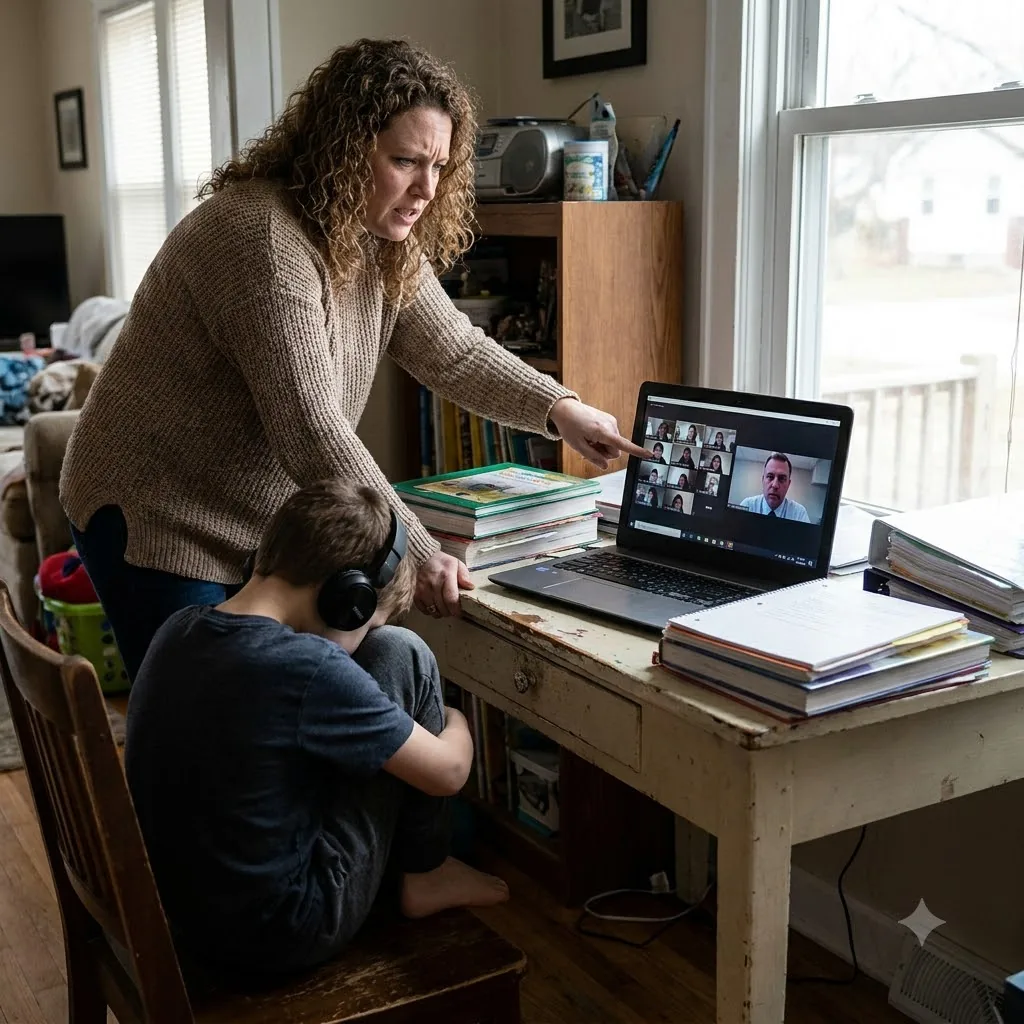
The follow-up session took place the next afternoon on the same video platform. Nina was there again. Mr. Colin Avery was there because his roster was affected. Dana Mercer joined from what looked like the same office wall as before. A district operations manager was copied onto the call but spoke only once to identify the purpose: attendance verification and rule-source confirmation tied to the recorded event.
That framing kept everything cold.
Nina shared a split screen. On one side was the participant log and the marked recording timestamps from homeroom. On the other was the attendance correction screen for Mateo’s class entry. She read from the visible fields without dramatics. “Student admitted on time. Removed by host action at 8:02:09. Reentry attempt logged. Current attendance mark: absent. Verification required: determine whether absence stands, or whether removal was based on an authorized enforceable rule documented for that session.”
Then she turned to Dana Mercer. “Can you provide the written source used for the camera-removal enforcement?”
Dana Mercer answered in the same controlled voice she had used in class, but this time every answer had a box next to it. “The expectation was communicated as an administrative practice during live instruction.”
Nina said, “I’m asking for the written source attached to this enforcement decision. Policy page, handbook section, district directive, session notice, or posted class rule.”
There was a pause long enough for Mr. Avery to look down at his desk and then back up. Dana Mercer said, “I do not have a separate written document attached to this meeting record.”
Nina clicked into the next field. “Then I can’t validate the absence on that basis.”
Dana Mercer tried a narrower version. “The concern was compliance in the moment.”
Nina moved the recording bar to the marked freeze and replayed it. Mateo’s tile paused, returned, and showed the camera indicator active before the host removal. She stopped the clip on his visible image.
“For the record,” Nina said, “the recording shows brief instability and then active camera presence before removal. The system does not show an automated camera violation. The session settings contain no continuous-camera enforcement rule. Comparable session logs supplied for review do not show consistent removal for camera-off status. Based on available records, I cannot verify a rule source supporting exclusion from class or the resulting absence mark.”
No one raised a voice. That made it sharper.
The district operations manager spoke then, only to state the next required action. “Please update the attendance entry now and add an administrative note reflecting unsupported enforcement pending campus guidance review.”
The screen stayed shared.
Dana Mercer’s cursor appeared in the attendance box. She changed Mateo’s mark from absent to present. Then she opened the note field. Everyone on the call could see the line waiting there. She typed slowly enough that each phrase was readable as it appeared:
“Student admitted to live session on time. Removed from session by host action during camera compliance dispute. Written policy source not produced during verification. Attendance corrected to present.”
That was it. No dramatic admission. No argument big enough to hide inside. Just a formal note attached to the school record in the same plain language the platform required.
Nina asked one more necessary question. “For closure of the log review, should this session be coded as administrator removal rather than nonattendance?”
The operations manager said yes.
A second field changed on screen.
That visible consequence mattered more than any apology would have. Mateo’s record no longer showed that he had failed to attend class. It showed that an administrator had removed him and that the written basis for doing so was not produced during verification. The burden moved off my son and onto the act that had blocked him.
Mr. Avery exhaled into his microphone and said, “I’ll make sure he’s restored for participation credit on that day’s homeroom activity.”
Rhea Bennett, still on the call as the cross-application example, asked whether the same camera expectation would continue to be announced as mandatory in live sessions. The operations manager answered carefully: “Any campus expectation affecting access to instruction must be distributed in verifiable written form before enforcement as a removal basis.”
That was the public correction, and it came in the driest voice on the call.
Dana Mercer did not leave the meeting suddenly. She stayed on long enough to confirm the note had saved. Nina read the final status from the screen: attendance corrected, event recoded, verification complete. Then the recording review was closed.
Afterward, the school sent a short follow-up email. It did not repeat the webcam rule. It said Mateo’s attendance had been corrected and that classroom access expectations would be communicated through written campus guidance going forward. The sentence was plain enough to miss if you had not watched the path that forced it there.
That was the end of it. Not a victory lap. Not reconciliation. A row in the record changed, a note locked into place, and the rule that had arrived with so much authority failed the first ordinary check it could not interrupt.