Story code: ST-001262
Part 1: The Registry at Window Four
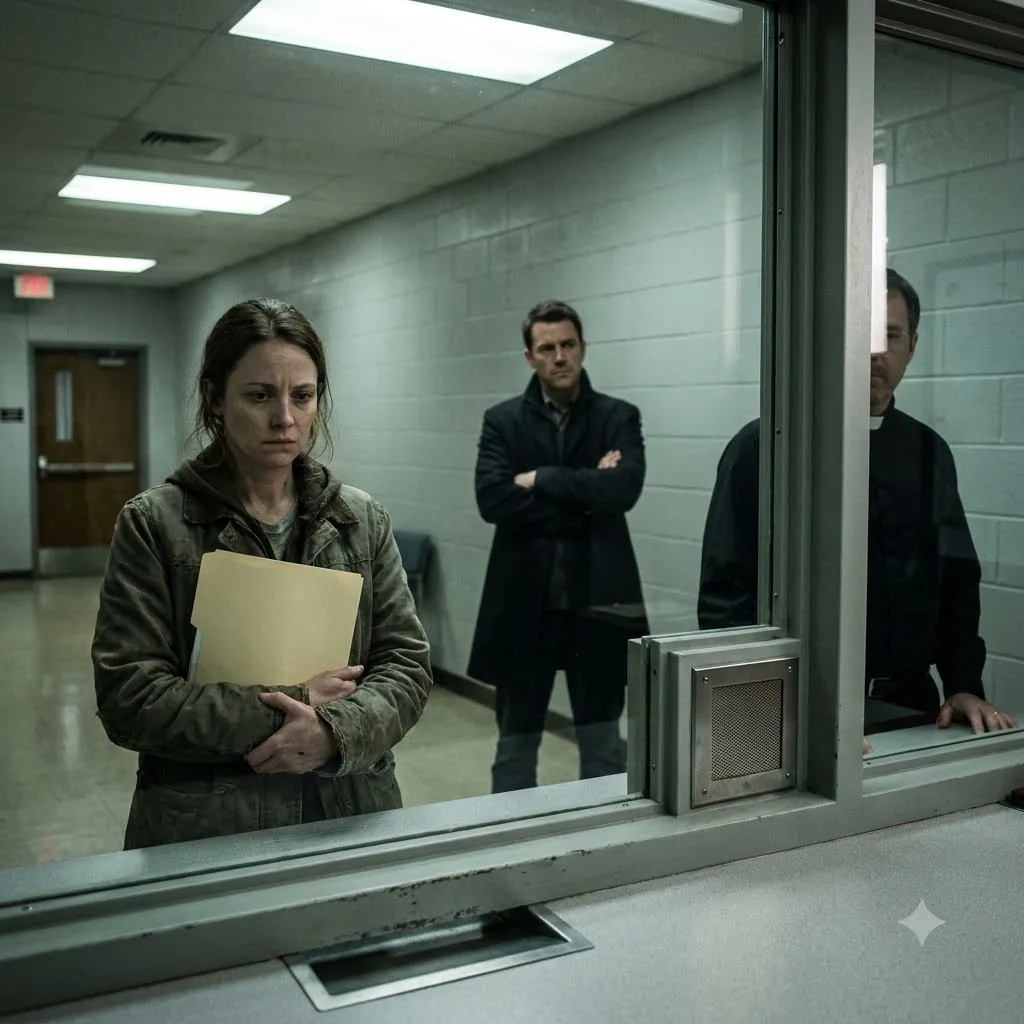
Sarah Miller stood motionless at Clerk Window 4 in the sterile county records hallway, holding a manila folder containing photographic proof that her property manager had crossed into her private garage without permission. The fluorescent lights overhead hummed as a county clerk stamped documents at a nearby desk, the rhythmic clacking underlining the quiet tension of the hallway. For three weeks, Sarah’s personal boundary at the Oakridge complex had been repeatedly breached, her stored boxes shifted and fresh tire tracks left on the concrete floor behind her locked garage door.
From behind the safety glass, David Lin watched Sarah’s tense shoulders and her frequent glances toward the heavy double doors at the end of the corridor. Her voice, when she spoke to present the initial complaint, remained controlled, though her fingers trembled slightly against the counter. She clutched the manila folder tightly, her gaze fixed on the county clerk assistant.
“I have documented three separate dates,” Sarah said, her voice carrying clearly in the quiet space. “Each time, items were moved. On the second occasion, heavy building materials that do not belong to me were left inside. The door was locked when I left, and it was locked when I returned.”
A door at the end of the hallway clicked open, and Gordon Vance walked in, wearing his branded Oakridge Apartments polo shirt and carrying a heavy ring of keys that jingled with every step. He stopped ten feet away, clearing his throat loudly as he caught sight of Sarah. He adjusted his jacket, his eyes darting toward the folder in her hands.
“There must be a mistake here,” Gordon said, taking a step toward the window. He spoke in a loud, defensive tone that drew a brief glance from a courier walking past. “Oakridge staff only enter units with proper twenty-four-hour notice, unless there’s an emergency. We have no record of any maintenance orders for her unit. If things are moving, she must be misremembering.”
Sarah did not turn her head to look at him. She kept her eyes on David, who was noting the interaction on a yellow legal pad. “The lock was not damaged,” Sarah said to David. “There were no signs of forced entry on the frame or the handle. Yet, the space was accessed.”
David took the folder from Sarah, spreading the photographs across his desk. He compared the images of the shifted boxes with the architectural schematics of the Oakridge detached garages. The quiet in the hallway grew heavier, punctuated only by the distant hum of an elevator.
“These doors use a rolling-code receiver,” David observed, tracing a line on the technical spec sheet with his pen. “Without physical damage to the locking mechanism, entry requires a specific electronic signal. It points directly to an access path controlled by someone close, someone with access to the master programming system.”
Sarah Miller stood motionless at Clerk Window 4 in the sterile county records hallway, holding a manila folder containing photographic proof that her property manager had crossed into her private garage without permission. The fluorescent lights overhead hummed as a county clerk stamped documents at a nearby desk, the rhythmic clacking underlining the quiet tension of the hallway. For three weeks, Sarah’s personal boundary at the Oakridge complex had been repeatedly breached, her stored boxes shifted and fresh tire tracks left on the concrete floor behind her locked garage door.
From behind the safety glass, David Lin watched Sarah’s tense shoulders and her frequent glances toward the heavy double doors at the end of the corridor. Her voice, when she spoke to present the initial complaint, remained controlled, though her fingers trembled slightly against the counter. She clutched the manila folder tightly, her gaze fixed on the county clerk assistant.
“I have documented three separate dates,” Sarah said, her voice carrying clearly in the quiet space. “Each time, items were moved. On the second occasion, heavy building materials that do not belong to me were left inside. The door was locked when I left, and it was locked when I returned.”
A door at the end of the hallway clicked open, and Gordon Vance walked in, wearing his branded Oakridge Apartments polo shirt and carrying a heavy ring of keys that jingled with every step. He stopped ten feet away, clearing his throat loudly as he caught sight of Sarah. He adjusted his jacket, his eyes darting toward the folder in her hands.
“There must be a mistake here,” Gordon said, taking a step toward the window. He spoke in a loud, defensive tone that drew a brief glance from a courier walking past. “Oakridge staff only enter units with proper twenty-four-hour notice, unless there’s an emergency. We have no record of any maintenance orders for her unit. If things are moving, she must be misremembering.”
Sarah did not turn her head to look at him. She kept her eyes on David, who was noting the interaction on a yellow legal pad. “The lock was not damaged,” Sarah said to David. “There were no signs of forced entry on the frame or the handle. Yet, the space was accessed.”
David took the folder from Sarah, spreading the photographs across his desk. He compared the images of the shifted boxes with the architectural schematics of the Oakridge detached garages. The quiet in the hallway grew heavier, punctuated only by the distant hum of an elevator.
“These doors use a rolling-code receiver,” David observed, tracing a line on the technical spec sheet with his pen. “Without physical damage to the locking mechanism, entry requires a specific electronic signal. It points directly to an access path controlled by someone close, someone with access to the master programming system.”