Story code: ST-001203
Part 3: The Compliance Waiver
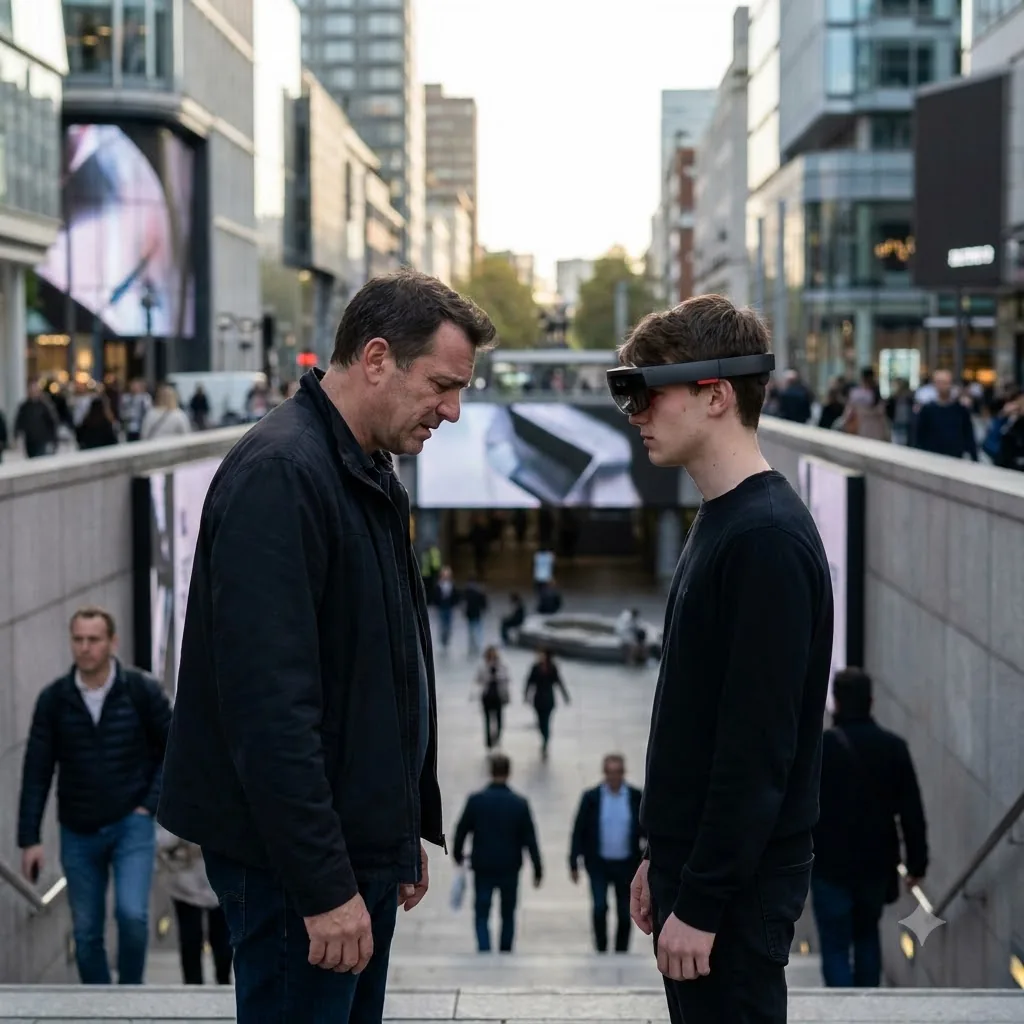
My phone buzzed in my pocket, three short vibrations that signaled a high-priority alert from our family dashboard. I pulled it out with a slick swipe. A message from Uncle Devin sat on the lock screen: “Telemetry is locking up. Tap the parental consent waiver on your app. I need your signature to push the override.” I stared at the glowing text. Devin wasn’t trying to help us. He was sitting out there in the parking lot, watching the failure flags on his monitor, and using this crisis to force me into signing a digital waiver that would give him permanent administrative access to our accounts. Leo whispered, his voice trembling under the frame of the AR glasses. “Liam, it’s showing a red box on the screen. It says ‘Awaiting Guardian Handshake.’ It won’t let me look away.” “Don’t click anything, Leo,” I said, keeping my voice low. Marcus stepped closer, his tablet glowing yellow. “Five seconds, kid. I’m tapping the submit button. The security team is already coming up the escalator. You’re getting the fine, and your accounts are locked.” “Wait,” I told Marcus, pointing at the reflection on Leo’s lenses. “Look at the error code on his screen. It’s not a user malfunction. The script is calling for a command called ‘expire’ instead of ‘exit.’ The plaza server doesn’t know what that means. If you submit the report now, the system will attribute it to network failure, not user disruption.” Marcus paused, his thumb hovering over the screen. He squinted at the reflection on Leo’s lenses. “I don’t care what the script says. The rule book says the primary user is responsible for hardware output. If your device broadcasts a corrupt string, it’s a violation.” I looked back at my phone. Devin sent another message: “Sign the waiver, Liam. Or I block your school network access tonight. You have two minutes before I wipe the device logs and leave you both there to deal with security.” He was going to delete the evidence of his test run, leaving us to take the fall for the network disruption. If he wiped the logs, we would have no proof that he coded the script, and the three-hundred-dollar fine would stay on my record forever. “Marcus, give me one minute,” I begged. “I can clear the queue.” “Thirty seconds,” Marcus said, his voice flat. “Security is at the platform.” I looked at Leo’s glasses. The blue LEDs on the temples were flashing faster, trying to compile Devin’s emergency patch. But Devin was still waiting for my digital signature on the waiver to authorize the push. I refused to tap the screen. If I signed, Devin would own our digital lives. But if I didn’t, how could I force the script to crash before Devin could wipe the telemetry logs? I remembered the wrong word. “Expire.” The script was trying to execute a command that the plaza’s local network didn’t support. It was trapped in a verification loop, sending requests to a dead address over and over. If I could force that request to repeat a thousand times a second, the stack would overflow. I grabbed Leo’s hand and pulled him toward the interactive check-in kiosk at the edge of the ramp. “Liam, what are you doing?” Leo whimpered, his eyes wide. “Hold the glasses right against the NFC terminal,” I instructed him, pushing his head gently toward the glowing blue sensor pane. “When it prompts for a ticket scan, say the word again.” The security guard stepped off the escalator, his eyes locking onto us. “Excuse me, step away from the kiosk,” the guard called out. I ignored him, pressing Leo’s glasses closer to the terminal. “Leo, say it now!”