Story code: ST-001226
Part 1: The Directed Consent
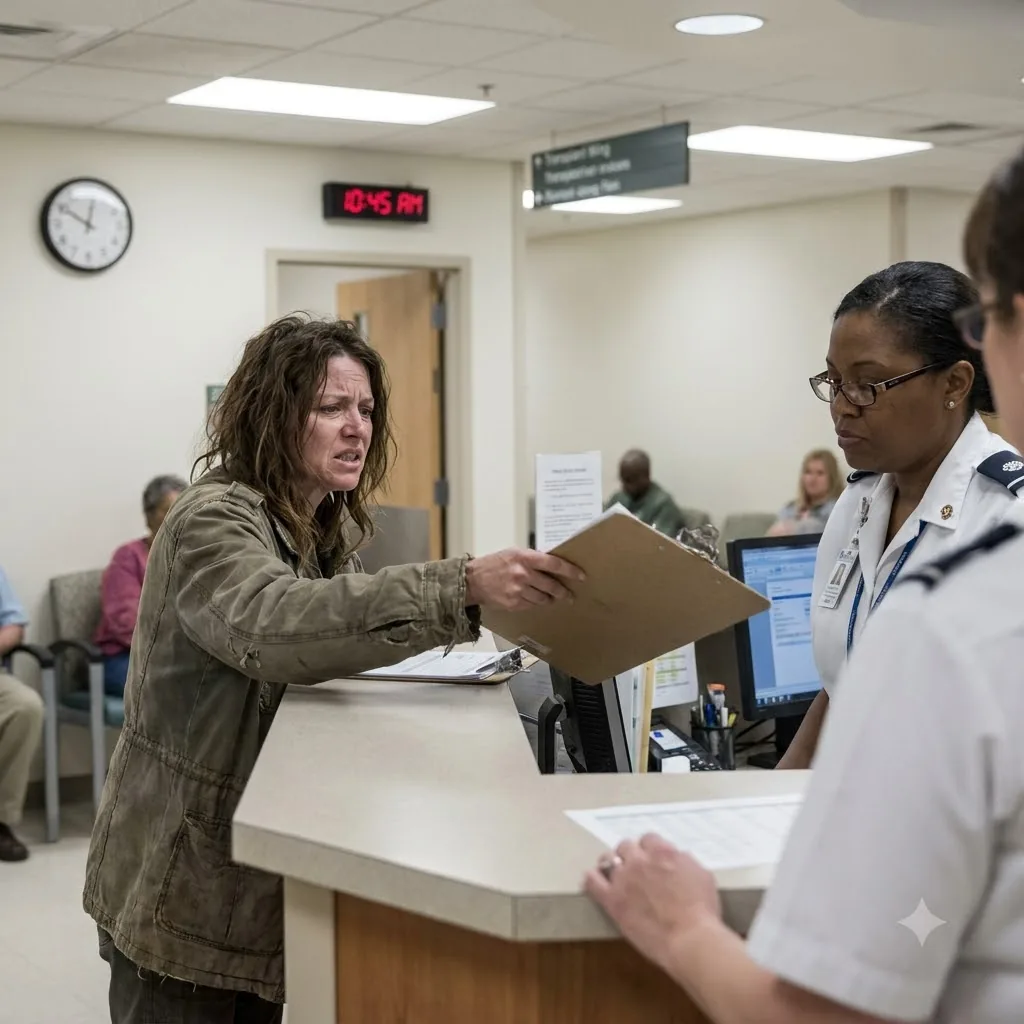
At the admitting counter desk of Transplant Waiting Room 3B, Sarah Miller slammed a signed consent document onto the counter, demanding that her deceased brother-in-law’s heart bypass the federal registry queue to save her husband. Nurse Elena Vance watched from the reception computer as Sarah weaponized hospital protocol against Dr. Randall Harris, claiming the family’s direct-directed donation form overrode the active transplant waiting list. The document, dated for that afternoon, threatened to redirect a critically needed organ from the top-priority recipient, yet Elena’s eyes scanned the intake log, stopping at a discrepancy that rendered the timeline impossible.
Around them, the waiting room carried the quiet hum of ordinary activity: a television murmured in the corner, a distant paging system announced a code, and the scent of chemical sterilizer hung heavy in the air. Sarah stood rigid, her heels clicking against the linoleum as she shifted her weight. She clutched a thick manila folder against her chest, her knuckles turning white.
“The law is clear, Dr. Harris,” Sarah said, her voice cutting through the quiet room. “A directed donation takes precedence over the general registry list. Thomas wanted his brother to have his heart. I have the signed and notarized consent form right here.”
Dr. Harris took the document, his thumb tracing the embossed notary seal at the bottom of the page. Behind the safety glass, Elena Vance continued sorting the patient files, her eyes moving between the digital schedule on her monitor and the tense interaction at the desk. On the wall clock, the second hand swept past 15:15.
“Mrs. Miller,” Dr. Harris said, his voice flat. “The registry allocation system is automated. Once a patient is entered into the database as a donor, the matching sequence begins immediately. We cannot simply halt it without legal verification.”
“This is your verification,” Sarah said, tapping the paper. “My brother-in-law signed this in ICU Room 402. The notary witnessed it. George is downstairs in ward 2A right now, waiting for a match. You have the heart, and we have the signature. Why hasn’t the surgical team been notified to redirect the organ?”
Elena pulled up Thomas Miller’s electronic chart. The system showed the donor file was already locked, marked with a bright red flag indicating the allocation algorithm had already selected a recipient at a regional pediatric facility. The automated system required absolute chronological order to function.
“We have to verify the timeline of the signature, Sarah,” Dr. Harris said, adjusting his glasses. “If the patient was already legally declared brain-dead before this document was executed, he no longer possessed the legal capacity to sign, and the registry queue cannot be bypassed.”
“He signed it himself at 14:30,” Sarah insisted, her chin lifting. “Look at the timestamp on the notary seal. 14:30. He was still breathing on the ventilator. The heart is ours.”
Elena Vance leaned forward. She reached for the physical file folder labeled Miller, Thomas, which had just been delivered from the ICU. Tucked inside the clear plastic pocket on the front of the folder was a discarded blue plastic band-the official donor bracelet removed from the patient’s wrist when he was prepped.
Elena’s fingers brushed the smooth plastic. Her eyes locked onto the black machine-printed numbers stamped onto the tamper-proof seal. The timeline on the official medical marker did not match Sarah’s story, pointing to a sequence that made the signature legally impossible.
At the admitting counter desk of Transplant Waiting Room 3B, Sarah Miller slammed a signed consent document onto the counter, demanding that her deceased brother-in-law’s heart bypass the federal registry queue to save her husband. Nurse Elena Vance watched from the reception computer as Sarah weaponized hospital protocol against Dr. Randall Harris, claiming the family’s direct-directed donation form overrode the active transplant waiting list. The document, dated for that afternoon, threatened to redirect a critically needed organ from the top-priority recipient, yet Elena’s eyes scanned the intake log, stopping at a discrepancy that rendered the timeline impossible.
Around them, the waiting room carried the quiet hum of ordinary activity: a television murmured in the corner, a distant paging system announced a code, and the scent of chemical sterilizer hung heavy in the air. Sarah stood rigid, her heels clicking against the linoleum as she shifted her weight. She clutched a thick manila folder against her chest, her knuckles turning white.
“The law is clear, Dr. Harris,” Sarah said, her voice cutting through the quiet room. “A directed donation takes precedence over the general registry list. Thomas wanted his brother to have his heart. I have the signed and notarized consent form right here.”
Dr. Harris took the document, his thumb tracing the embossed notary seal at the bottom of the page. Behind the safety glass, Elena Vance continued sorting the patient files, her eyes moving between the digital schedule on her monitor and the tense interaction at the desk. On the wall clock, the second hand swept past 15:15.
“Mrs. Miller,” Dr. Harris said, his voice flat. “The registry allocation system is automated. Once a patient is entered into the database as a donor, the matching sequence begins immediately. We cannot simply halt it without legal verification.”
“This is your verification,” Sarah said, tapping the paper. “My brother-in-law signed this in ICU Room 402. The notary witnessed it. George is downstairs in ward 2A right now, waiting for a match. You have the heart, and we have the signature. Why hasn’t the surgical team been notified to redirect the organ?”
Elena pulled up Thomas Miller’s electronic chart. The system showed the donor file was already locked, marked with a bright red flag indicating the allocation algorithm had already selected a recipient at a regional pediatric facility. The automated system required absolute chronological order to function.
“We have to verify the timeline of the signature, Sarah,” Dr. Harris said, adjusting his glasses. “If the patient was already legally declared brain-dead before this document was executed, he no longer possessed the legal capacity to sign, and the registry queue cannot be bypassed.”
“He signed it himself at 14:30,” Sarah insisted, her chin lifting. “Look at the timestamp on the notary seal. 14:30. He was still breathing on the ventilator. The heart is ours.”
Elena Vance leaned forward. She reached for the physical file folder labeled Miller, Thomas, which had just been delivered from the ICU. Tucked inside the clear plastic pocket on the front of the folder was a discarded blue plastic band-the official donor bracelet removed from the patient’s wrist when he was prepped.
Elena’s fingers brushed the smooth plastic. Her eyes locked onto the black machine-printed numbers stamped onto the tamper-proof seal. The timeline on the official medical marker did not match Sarah’s story, pointing to a sequence that made the signature legally impossible.