Story code: ST-001326
Part 3: Rule 44-B
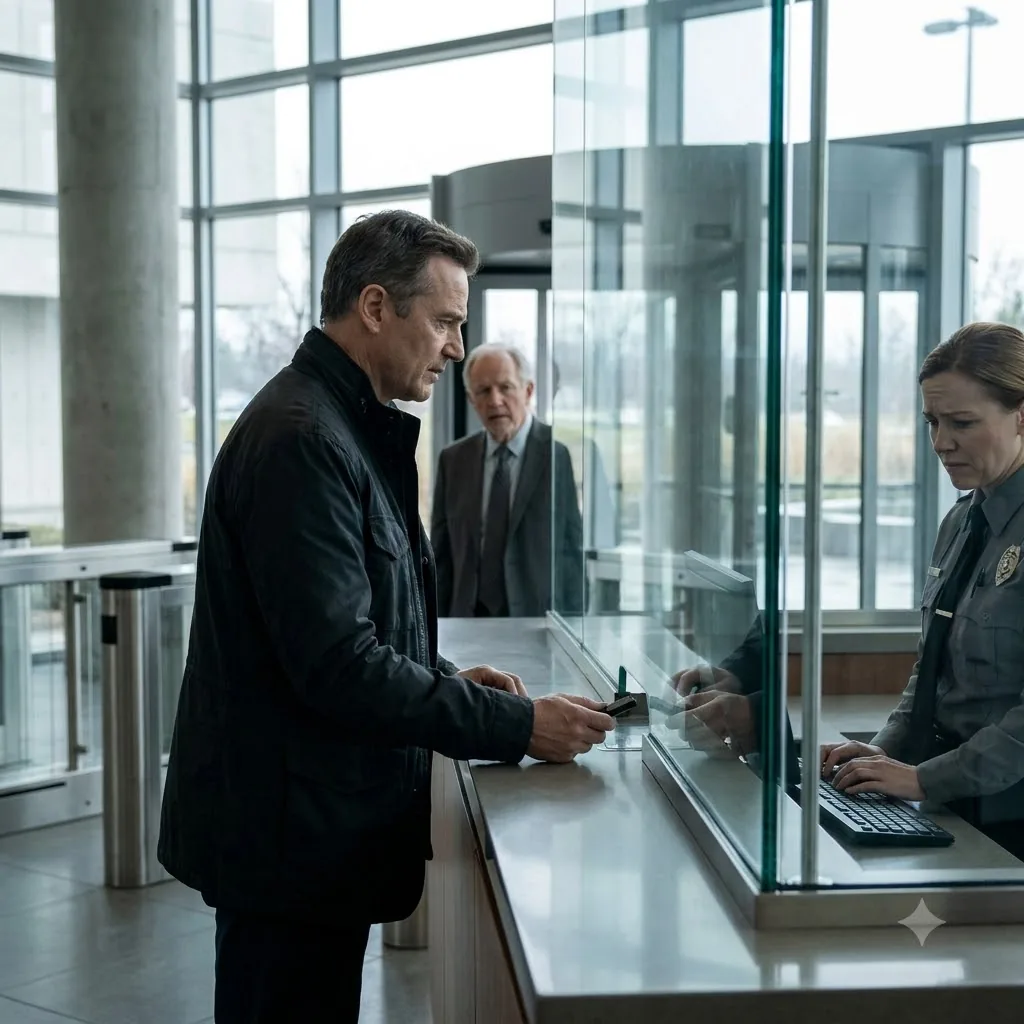
The lobby master terminal display remained locked in its verification sequence, the amber light casting a dull glow over the polished glass counter. Clara Higgins sat motionless behind the desk, her hands resting flat on the laminate surface. Marcus Vance stood tense, his breathing heavy but shallow, his eyes darting from the terminal to the security door. Behind him, Dr. Sarah Vance maintained her rigid posture, her gaze fixed on the flashing progress bar.
“The terminal is locked in a hardware loop,” Clara said, breaking the silence with her even, professional tone. “The system does not permit a manual override while the hardware reader is actively verifying the token’s internal clock-cycles.”
Dr. Vance stepped closer to the partition, her fingers tapping rhythmically against the wooden ledge. “This is absurd. We are the primary stakeholders of this institute. Clara, look at me. I am invoking Administrative Rule 44-B. In cases of critical system latency during active research cycles, the Director has the authority to bypass hardware verification. Record the override in the daily log under my personal authorization.”
Clara did not look up from her monitor. “Rule 44-B requires a physical signature from the Director’s own token to authorize a bypass. It also requires the target token to be in a verifiable state. The system is currently checking the cryptographic integrity of Marcus’s token.”
Marcus shifted his weight, his leather shoes squeaking against the terrazzo floor. “It’s a standard latency error. Aunt Sarah, if we do not clear this before the nine o’clock audit, the board will freeze the active directory. The calibration sequence is the only proof we have of the new cryo-chamber efficiency.”
“I am aware,” Dr. Vance said. She reached into her coat pocket and retrieved her own gold-trimmed access token. Unlike Marcus’s Model-9, hers was a Model-10 executive credential. She held it out toward Clara. “Insert this into the secondary slot. Override the loop.”
Clara pointed to the small card slot on the side of the terminal. “The secondary slot is only active when the primary token passes its baseline integrity check. The progress bar is at ninety-nine percent.”
The terminal emitted a single, sharp beep. The amber warning screen blinked once, then shifted to a deep, dark red.
A block of text materialized on the master terminal screen, visible to both Clara and the Vances through the glass partition:
ALERT: CRYPTOGRAPHIC SEQUENCING COLLISION.
Physical Token Sequence: 1042
Server Verified Sequence: 1043
Discrepancy: Physical token state is chronologically antecedent to the registered remote transaction at 05:01 AM. Verification failed. System requires administrative resolution or automatic lockout.
Marcus stared at the red text. His hand, still resting on the counter, slowly pulled back into his sleeve, his fingers curled.
“The system is flagging a chronological contradiction,” Clara said, her voice steady. “The physical token shows it has not logged a local connection since 8:15 last night. The remote connection at five this morning was authenticated, but because it bypassed the physical handshake, the physical token is now invalid.”
“It was a network mirror,” Marcus muttered, refusing to meet his aunt’s gaze. “A backup script must have triggered the remote login.”
“A backup script does not generate a unique cryptographic sequence key from your residential IP,” Clara replied.
Dr. Vance pressed her gold token against the secondary reader on the frame of the window. “Clara, use Rule 44-B. If you do not initiate the manual override now, the security protocols will trigger a hard lock on the directory. Swipe my token to clear the mismatch.”
The terminal screen flashed a new, sixty-second countdown timer. Underneath the countdown, a message read: Awaiting Executive Authorization for Sequence Bypass. Warning: Authorizing a mismatched sequence will bind the override credential to the security event.