Story code: ST-000749
Part 3: The Card She Kept Folded Away
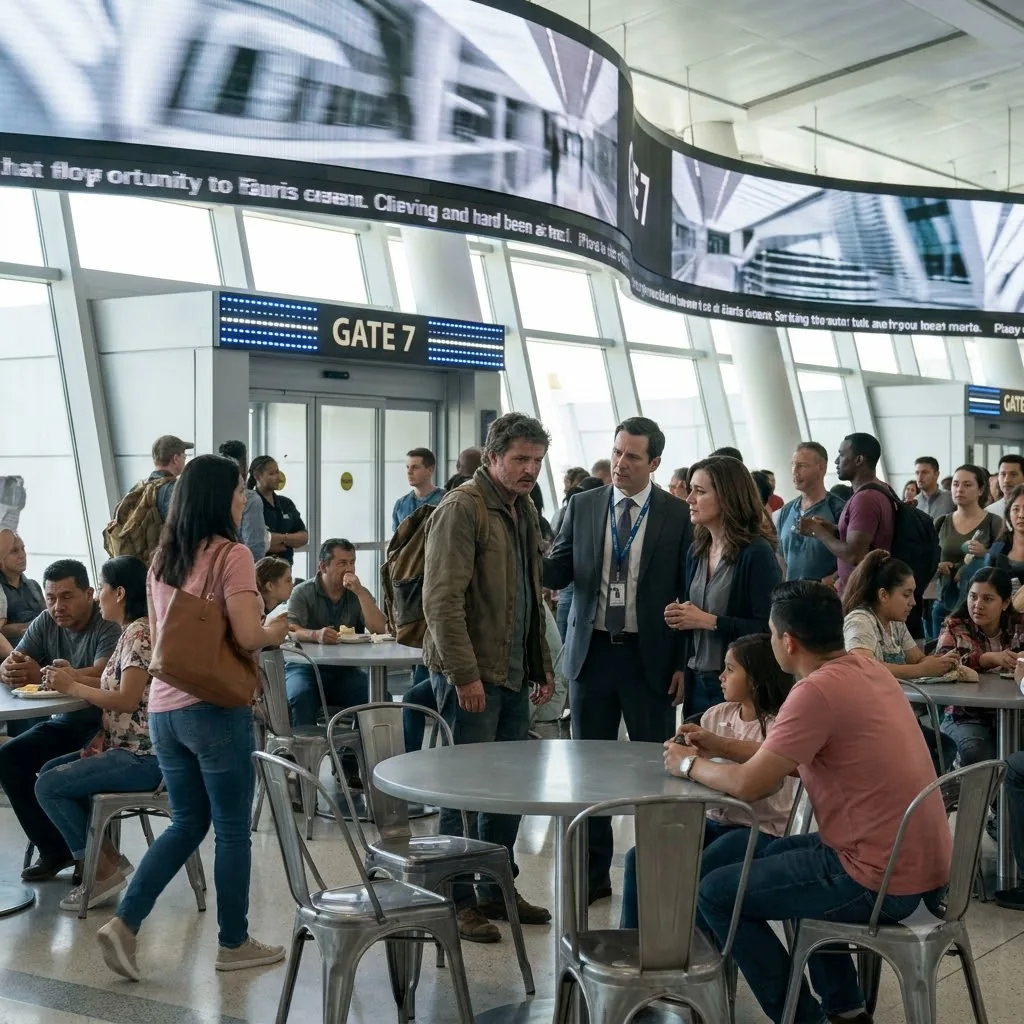
June opened the envelope all the way at last, right there beside Gate 7 with the sponsor banner and the family reunion tables still in view. The thing inside was not a second boarding pass. It was a small laminated card, older than the terminal scanners, with one corner bent soft from being handled too many times. She held it with both hands and turned it so I could see the front: a faded launch-day credential from the first family intake cycle, the kind they used before the current passes. On the back, someone had written in dark ink that had turned brown with age.
I could not read the whole line from where I stood. The part I could read was my name.
Dale saw the same thing and stepped in fast enough that his shoulder nearly brushed the card. “Put that away,” he said again. His voice stayed low, but it changed shape. The clean sponsor tone was gone. The terminal supervisor in gray looked from the card to Dale and back to June, waiting for someone to explain why an old credential mattered more than the one I had just handed over.
June did not close the envelope. She lifted the card a little higher and said, “You told them it was lost.”
Nobody in the cluster reacted like that was normal. A woman at the hydration station stopped with a stack of cups in her hand. Eli turned his head toward Dale and then toward me, the way people do when they hear a statement with a missing piece in it. Dale did not answer June right away. He reached for the edge of the sponsor podium instead, then let his hand fall without touching it. That was visible too. He was trying to find the version of the room where this did not count.
The terminal supervisor asked June if the card belonged to the family record. She turned it over and let him see the back. The handwriting was short, rushed, and straight enough to read under the gate lights: KEEP HER ON THE LIST. Under that was a second line, smaller, with a date from the prior intake cycle. The supervisor did not say anything. He just looked at Dale with the flat face people use when they have been handed something they were not supposed to see.
Dale answered before anyone else could. “That was an internal note. It is not current authorization.”
He was still trying to turn the card into something private and harmless, but the room had already heard the part that mattered. He had not been talking around a mistake. He had been talking around my name.
June kept the card between her fingers and said, “You handed this back to me and told me not to bring it up in public.”
That was the second crack. Not because she raised her voice. She did not. It cracked because she said it where the gate cameras could catch it, where the staff could hear it, where the other families could hear that there had been a kept object in this story all along. Eli shifted one step closer to the supervisor, then stopped. The gray vest made a small gesture toward my boarding pass. I placed it flat on the scan shelf without taking my eyes off the card.
The scanner light ran over the pass once, then blinked yellow instead of green. The terminal screen above the lane paused on a loading symbol. Dale looked at the screen, then at the card, then at June, as if he was measuring which one he could still out-talk. He could not.
The supervisor asked for the family intake reference. June gave it without hesitation. Dale said, “That record was superseded.” But the way he said it did not sound like confidence anymore. It sounded like a man reading the only sentence he had left.
The scan shelf spit my boarding pass back into the tray. Then the terminal screen changed on its own. A small line appeared under my name: FAMILY STATUS REVIEW PENDING MANUAL CORRECTION. Nobody announced it. It just sat there in blue letters for everyone nearby to read.
That was the point where the public story stopped holding. The card in June’s hand was not loud. It did not need to be. It had my name, the old intake note, and a sequence that matched the date on the launch paper in my coat pocket. Dale saw the match and went still. The supervisor saw it too, because he reached for his radio only after the screen changed.
June did not hand the card over yet. She kept it visible in the light, like she was waiting for the room to look at it long enough to understand that the denial had been built on something hidden from the start. Then the supervisor said, very carefully, “We need to correct the manifest before boarding resumes.” That was the first time anyone in the terminal said a sentence that made my place in the room sound real instead of arguable.
Dale kept standing at the podium, but nobody was looking at the podium anymore.