Story code: ST-000709
Part 1: She Said Rosa Did Not Count
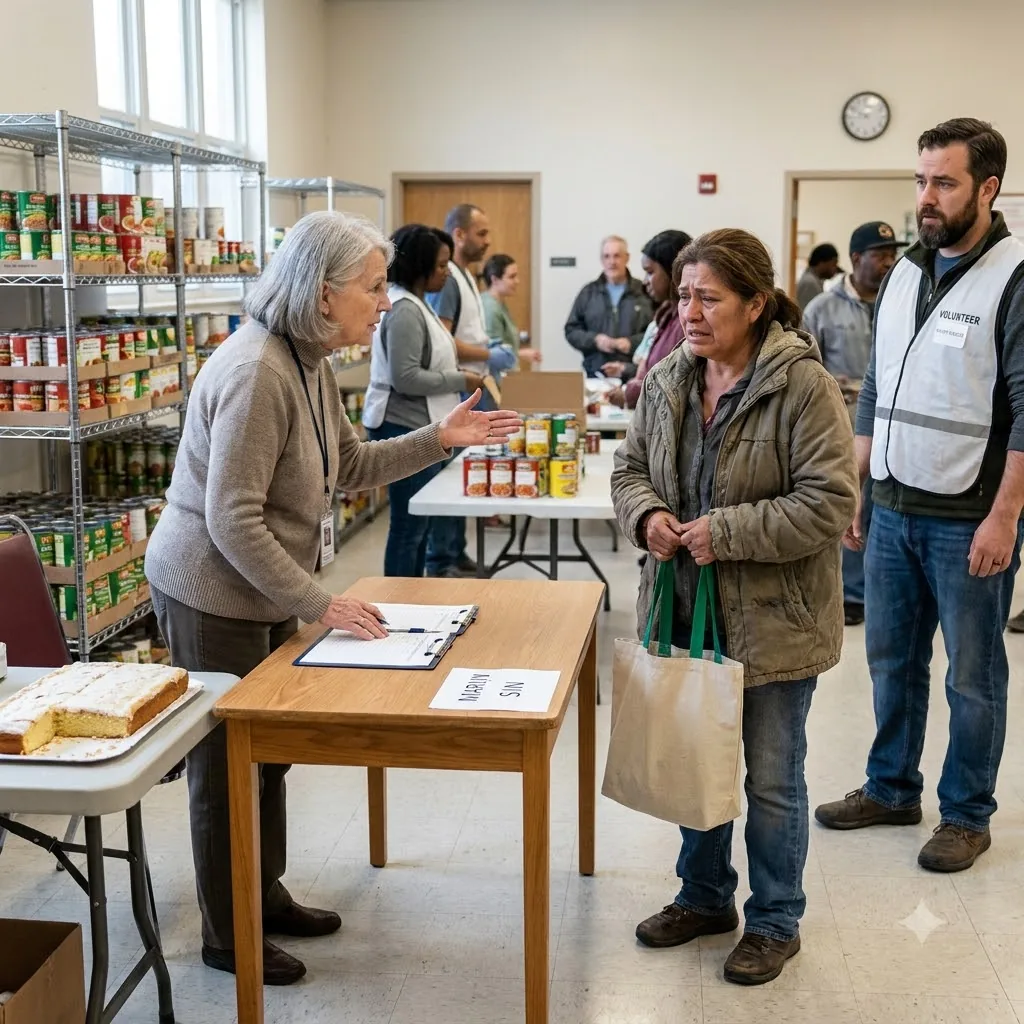
Marilyn Pritchard set one hand on the sign-in table and told the room, in front of the sheet cake and the stacked canned goods, that Rosa Delgado was welcome to visit but was not really part of the group being honored. Rosa was standing three feet from a tower of dry-goods boxes with a blue donation tote at her ankle, and the words landed so plainly that even the volunteers still folding chairs stopped mid-motion. Evan Mercer had a sleeve of plastic forks in one hand when Marilyn added, in the same polished tone, that tonight was for the pantry’s core team, not “everyone who passed through over the years.” Nobody answered right away. The room was too public for that kind of sentence and too small to pretend not to hear it. Hope Shelf Pantry had not been closed down for the reunion. The sorting tables were still lined with dented cans and family-size boxes of pasta. A coffeemaker clicked near the reunion chairs. Name tags curled at the edges on a card table under a paper sign that said CELEBRATING OUR PANTRY FAMILY. Marilyn stood directly beneath that sign, smoothing the stack of tags with two fingers like she was straightening the wording itself. Rosa did not move toward the chairs. She bent instead, lifted the blue tote by its worn white-taped handle, and set it onto the nearest sorting table with the easy motion of somebody who knew exactly how much weight was in it. Canned vegetables knocked softly against one another inside. She checked the bottom seam with her thumb, then turned the tote so the opening faced the aisle. Evan had only been volunteering there a year and a half, but even he noticed the difference between people who wandered through the pantry and people who worked around it like they knew where every cart jammed and which shelf leaned. Rosa moved without asking where anything went. She reached for the extra box cutter hanging from a hook by the rice bags as if it had always hung there. Marilyn saw it too. Her smile tightened at the corners, though her voice stayed bright. “Rosa, if you don’t mind, we’re doing the recognition first,” she said. “Then later maybe you can share a few memories as a community friend.” The word friend sat there in the air, placed carefully. Rosa set the box cutter back on the hook. “I got your message about the reunion,” she said. “Yes, and I’m glad you came.” Marilyn lifted a clipboard. “I just want to be accurate about the history we’re presenting. A lot of newer volunteers are here tonight.” A few people looked down at their name tags. One older man near the coffee station pretended to be very interested in napkins. Loretta Bain, who had been cutting sheet cake into small rectangles, stopped with the knife halfway through the frosting and turned her head without saying anything. Marilyn began calling names from the clipboard. She thanked people for years of service, for weathering food drives, for keeping the shelves full during hard seasons. Each phrase had the smooth, rounded shape of something repeated before. When she got to the line about the pantry’s “foundational volunteer family,” she opened her hand toward the first row of chairs. Rosa was still standing by the sorting table. Marilyn glanced over and made a small correcting gesture. “The recognized team can come forward,” she said. “Others can stay where they are for now.” That got a sharper silence than the first remark. Even the coffeemaker seemed loud. Evan set down the forks and went back to stacking cans because standing still looked too much like staring. From the edge of the shelf, he watched Rosa slide three dented cans out of the blue tote, check the labels, and line them with the others by date. Her hands never hurried. Marilyn kept speaking, but more eyes had shifted to Rosa than to the front. Then Marilyn changed course. “Actually,” she said, looking over with a little laugh that nobody picked up, “Rosa, since you were around some of the early donation days, maybe you can help me with one small point. We want to be clear that the pantry’s first neighborhood distribution runs were organized by the original committee, not by drop-in helpers. You remember it that way too, right?” The sentence was dressed like a request and placed like a test. Rosa looked at Marilyn, then at the tote on the table. “I remember the runs,” she said. Marilyn kept her hand open, waiting for more. “Right. Under committee direction. That’s what I’m saying.” Rosa did not fill the space for her. Loretta put down the cake knife. She wiped her fingers on a paper towel and stared at the blue tote, not at Marilyn. Evan followed her line of sight. The tote was old enough to look out of place among the newer red bins in storage. The white tape around one handle had yellowed and split at the edges. On one side, half-peeled marker still showed the beginning of a name or label under pantry scuffs. Marilyn saw people looking and stepped away from the sign-in table. “That one shouldn’t even be out here,” she said quickly. “We only kept a few damaged totes from storage because nobody had time to toss them.” Rosa rested her palm on the taped handle. “You kept this one.” It was the first time her voice had cut cleanly across the room. Loretta took two slow steps closer to the sorting table. She did not touch the tote, but her eyes narrowed on the tape, the marker, the worn stitching at the side seam. Evan could see recognition arrive only through the way she stopped cutting cake and forgot the knife entirely. Marilyn was already speaking again, a little faster now, asking everyone to take their seats so the formal thanks could continue. But nobody sat down. Not yet. And the old blue.
Marilyn Pritchard set one hand on the sign-in table and told the room, in front of the sheet cake and the stacked canned goods, that Rosa Delgado was welcome to visit but was not really part of the group being honored. Rosa was standing three feet from a tower of dry-goods boxes with a blue donation tote at her ankle, and the words landed so plainly that even the volunteers still folding chairs stopped mid-motion. Evan Mercer had a sleeve of plastic forks in one hand when Marilyn added, in the same polished tone, that tonight was for the pantry’s core team, not “everyone who passed through over the years.” Nobody answered right away. The room was too public for that kind of sentence and too small to pretend not to hear it. Hope Shelf Pantry had not been closed down for the reunion. The sorting tables were still lined with dented cans and family-size boxes of pasta. A coffeemaker clicked near the reunion chairs. Name tags curled at the edges on a card table under a paper sign that said CELEBRATING OUR PANTRY FAMILY. Marilyn stood directly beneath that sign, smoothing the stack of tags with two fingers like she was straightening the wording itself. Rosa did not move toward the chairs. She bent instead, lifted the blue tote by its worn white-taped handle, and set it onto the nearest sorting table with the easy motion of somebody who knew exactly how much weight was in it. Canned vegetables knocked softly against one another inside. She checked the bottom seam with her thumb, then turned the tote so the opening faced the aisle. Evan had only been volunteering there a year and a half, but even he noticed the difference between people who wandered through the pantry and people who worked around it like they knew where every cart jammed and which shelf leaned. Rosa moved without asking where anything went. She reached for the extra box cutter hanging from a hook by the rice bags as if it had always hung there. Marilyn saw it too. Her smile tightened at the corners, though her voice stayed bright. “Rosa, if you don’t mind, we’re doing the recognition first,” she said. “Then later maybe you can share a few memories as a community friend.” The word friend sat there in the air, placed carefully. Rosa set the box cutter back on the hook. “I got your message about the reunion,” she said. “Yes, and I’m glad you came.” Marilyn lifted a clipboard. “I just want to be accurate about the history we’re presenting. A lot of newer volunteers are here tonight.” A few people looked down at their name tags. One older man near the coffee station pretended to be very interested in napkins. Loretta Bain, who had been cutting sheet cake into small rectangles, stopped with the knife halfway through the frosting and turned her head without saying anything. Marilyn began calling names from the clipboard. She thanked people for years of service, for weathering food drives, for keeping the shelves full during hard seasons. Each phrase had the smooth, rounded shape of something repeated before. When she got to the line about the pantry’s “foundational volunteer family,” she opened her hand toward the first row of chairs. Rosa was still standing by the sorting table. Marilyn glanced over and made a small correcting gesture. “The recognized team can come forward,” she said. “Others can stay where they are for now.” That got a sharper silence than the first remark. Even the coffeemaker seemed loud. Evan set down the forks and went back to stacking cans because standing still looked too much like staring. From the edge of the shelf, he watched Rosa slide three dented cans out of the blue tote, check the labels, and line them with the others by date. Her hands never hurried. Marilyn kept speaking, but more eyes had shifted to Rosa than to the front. Then Marilyn changed course. “Actually,” she said, looking over with a little laugh that nobody picked up, “Rosa, since you were around some of the early donation days, maybe you can help me with one small point. We want to be clear that the pantry’s first neighborhood distribution runs were organized by the original committee, not by drop-in helpers. You remember it that way too, right?” The sentence was dressed like a request and placed like a test. Rosa looked at Marilyn, then at the tote on the table. “I remember the runs,” she said. Marilyn kept her hand open, waiting for more. “Right. Under committee direction. That’s what I’m saying.” Rosa did not fill the space for her. Loretta put down the cake knife. She wiped her fingers on a paper towel and stared at the blue tote, not at Marilyn. Evan followed her line of sight. The tote was old enough to look out of place among the newer red bins in storage. The white tape around one handle had yellowed and split at the edges. On one side, half-peeled marker still showed the beginning of a name or label under pantry scuffs. Marilyn saw people looking and stepped away from the sign-in table. “That one shouldn’t even be out here,” she said quickly. “We only kept a few damaged totes from storage because nobody had time to toss them.” Rosa rested her palm on the taped handle. “You kept this one.” It was the first time her voice had cut cleanly across the room. Loretta took two slow steps closer to the sorting table. She did not touch the tote, but her eyes narrowed on the tape, the marker, the worn stitching at the side seam. Evan could see recognition arrive only through the way she stopped cutting cake and forgot the knife entirely. Marilyn was already speaking again, a little faster now, asking everyone to take their seats so the formal thanks could continue. But nobody sat down. Not yet. And the old blue.