Story code: ST-000609
Part 1: He Said I Did Not Count
Eli Mercer looked straight at me in that converted motel safe room, with folding chairs scraping and someone pouring burnt coffee behind him, and said, “Before we begin, Mara does not count as one of us.” Then he pointed at my wrist and told me I had no right to keep the blue-and-white retreat bracelet because I had never really belonged in the first place.
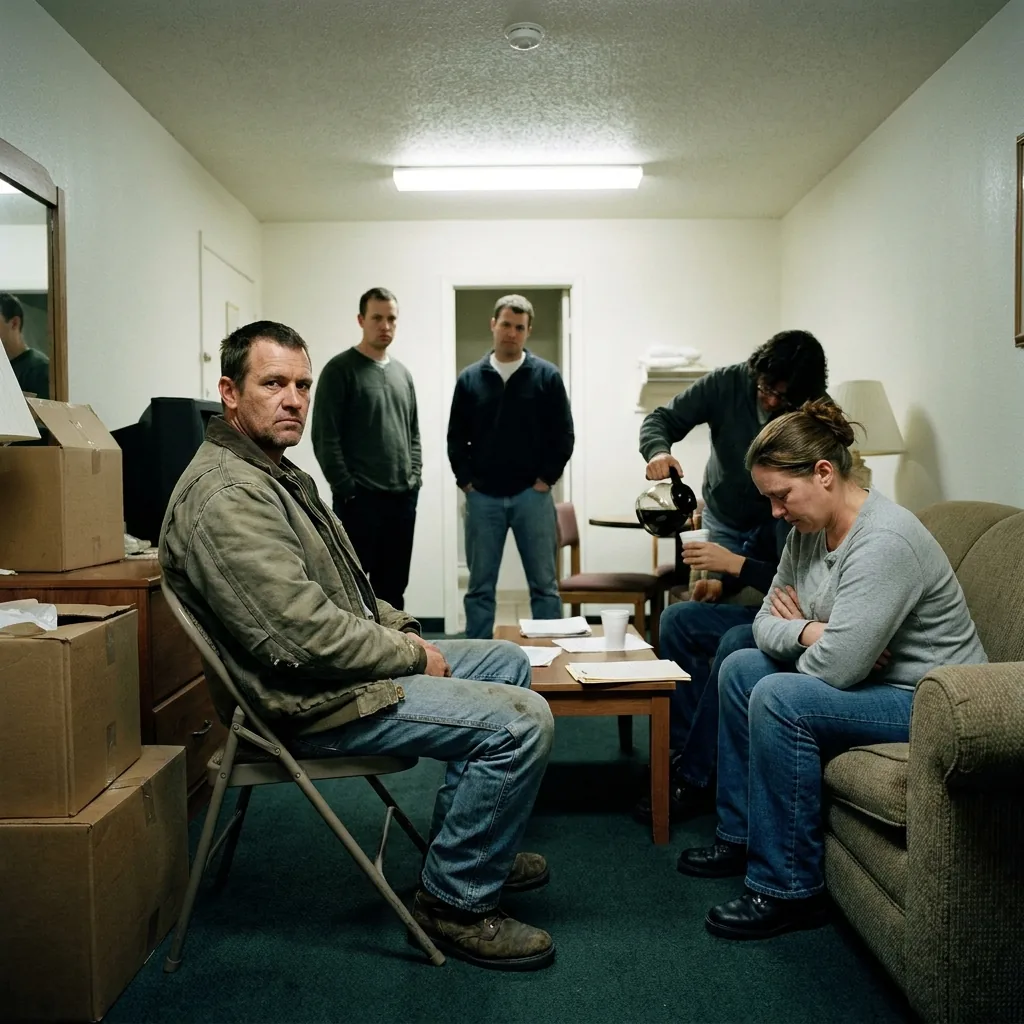
The room was too small for that kind of lie. The metal door was shut. The fluorescent lights buzzed over paper name tags spread across a folding table like this was some church basement welcome night instead of a reunion staged inside a budget motel safe room.
I had come because Tessa asked me to stop avoiding these people and hear them out once, in one room, with witnesses. She stood near the coffee urn with a Styrofoam cup in both hands, shoulders locked, watching Eli like she was trying to figure out whether he was hosting a support group or running a drill.
Noah Pike was by the door under the little hanging keycard pouch, too alert for a normal reunion. Every time someone shifted in a chair, he looked at Eli first. Dana Ruiz sat halfway down the row with her arms folded tight, her heel tapping once against the tile and then stopping.
Eli smiled at the group, not at me. “This is why we have to clear language,” he said. “People leave, and later they try to keep symbols that were never theirs. That confuses healing. It confuses the younger people. It lets outsiders rewrite what happened here.”
He said outsiders and looked right at me again.
I stayed standing because the only empty chair was in the back corner, turned half away from the circle. I could feel Tessa looking between my face and Eli’s. I kept my voice even.
“You recruited me,” I said.
A few people moved in their seats. Eli lifted one hand like I was interrupting a workshop.
“I invited you to meetings,” he said. “That is different from belonging. A lot of people attended things. Not everyone was brought in. Not everyone was marked.”
There it was. He had not called this reunion a ceremony, but he had set the room up like one. Chairs in a half-circle. Agendas stacked on the table. Him standing where everyone had to angle toward him. And now he was building a line in public between those who counted and those who could be talked over.
Tessa took one step forward. “If this is supposed to help anybody, why are you talking about her like she’s not in the room?”
Eli turned just enough to include her without giving up the floor. “Because precision matters, Tessa. Family members often mistake proximity for participation. We are trying to separate history from attachment.”
“History?” I said. “You used to call me chosen in front of rooms bigger than this.”
Noah let out a quick breath through his nose, like he had practiced disapproval. “People say a lot of things when someone visits for a season.”
I looked at him. He was young enough that I could not place him at any of the older retreats, but he was using the same softened tone Eli used when they wanted to cut somebody down and make it sound generous.
Eli took a step toward me. Not close enough to touch, close enough to make everybody track the distance. “If the bracelet means nothing,” he said, “take it off and leave it on the table. No one is trying to shame you. We just do not let people display belonging they do not have.”
That was the trick. He needed me to do the stripping myself. Hand it over. Agree it was decoration. Help him make the room believe I had imagined the years they spent teaching me to measure my worth by whether they named me in or out.
I put my hand over the bracelet instead.
It was woven blue and white, faded softer than it used to be, the knot frayed from years in a drawer and then months on my wrist after I finally started wearing it again. Ordinary to anyone outside this room. Not ordinary here.
Eli’s eyes dropped to it for one beat and came back up. “You keeping a thing does not make it true,” he said.
“Neither does you saying it isn’t,” I said.
The vent hummed overhead. Somebody near the back folded an agenda in half and kept folding it into smaller squares. Dana had stopped tapping her heel. She was looking at my wrist now, not at Eli.
Eli heard the silence shift and moved faster. “Let’s make this simple. Were you ever formally given standing among us? Yes or no. Not your interpretation. Not your feelings. Yes or no.”
He wanted a small answer to cover a bigger lie. I could hear it in how quickly he said formally, like he was pulling a new rule across old years and daring anybody to object.
I looked around the room. Former members. A couple of loyal holdouts. My own relative holding motel coffee like it might keep her balanced. Dana watching my wrist. Noah watching Eli. Everyone waiting to see whether I would accept the story being built over my head.
“You know the answer,” I said.
Eli gave a short, patient smile. “Then prove it. Or put the bracelet down where it belongs.”
I should have felt trapped. What I actually felt was the knot pressing against the inside of my wrist, and with it one hard memory I had not spoken out loud in years. Dana’s chin lifted a fraction when she saw the underside of the weave.
That was when I realized she recognized something specific about it too, and Eli saw her see it.
Eli Mercer looked straight at me in that converted motel safe room, with folding chairs scraping and someone pouring burnt coffee behind him, and said, “Before we begin, Mara does not count as one of us.” Then he pointed at my wrist and told me I had no right to keep the blue-and-white retreat bracelet because I had never really belonged in the first place.
The room was too small for that kind of lie. The metal door was shut. The fluorescent lights buzzed over paper name tags spread across a folding table like this was some church basement welcome night instead of a reunion staged inside a budget motel safe room.
I had come because Tessa asked me to stop avoiding these people and hear them out once, in one room, with witnesses. She stood near the coffee urn with a Styrofoam cup in both hands, shoulders locked, watching Eli like she was trying to figure out whether he was hosting a support group or running a drill.
Noah Pike was by the door under the little hanging keycard pouch, too alert for a normal reunion. Every time someone shifted in a chair, he looked at Eli first. Dana Ruiz sat halfway down the row with her arms folded tight, her heel tapping once against the tile and then stopping.
Eli smiled at the group, not at me. “This is why we have to clear language,” he said. “People leave, and later they try to keep symbols that were never theirs. That confuses healing. It confuses the younger people. It lets outsiders rewrite what happened here.”
He said outsiders and looked right at me again.
I stayed standing because the only empty chair was in the back corner, turned half away from the circle. I could feel Tessa looking between my face and Eli’s. I kept my voice even.
“You recruited me,” I said.
A few people moved in their seats. Eli lifted one hand like I was interrupting a workshop.
“I invited you to meetings,” he said. “That is different from belonging. A lot of people attended things. Not everyone was brought in. Not everyone was marked.”
There it was. He had not called this reunion a ceremony, but he had set the room up like one. Chairs in a half-circle. Agendas stacked on the table. Him standing where everyone had to angle toward him. And now he was building a line in public between those who counted and those who could be talked over.
Tessa took one step forward. “If this is supposed to help anybody, why are you talking about her like she’s not in the room?”
Eli turned just enough to include her without giving up the floor. “Because precision matters, Tessa. Family members often mistake proximity for participation. We are trying to separate history from attachment.”
“History?” I said. “You used to call me chosen in front of rooms bigger than this.”
Noah let out a quick breath through his nose, like he had practiced disapproval. “People say a lot of things when someone visits for a season.”
I looked at him. He was young enough that I could not place him at any of the older retreats, but he was using the same softened tone Eli used when they wanted to cut somebody down and make it sound generous.
Eli took a step toward me. Not close enough to touch, close enough to make everybody track the distance. “If the bracelet means nothing,” he said, “take it off and leave it on the table. No one is trying to shame you. We just do not let people display belonging they do not have.”
That was the trick. He needed me to do the stripping myself. Hand it over. Agree it was decoration. Help him make the room believe I had imagined the years they spent teaching me to measure my worth by whether they named me in or out.
I put my hand over the bracelet instead.
It was woven blue and white, faded softer than it used to be, the knot frayed from years in a drawer and then months on my wrist after I finally started wearing it again. Ordinary to anyone outside this room. Not ordinary here.
Eli’s eyes dropped to it for one beat and came back up. “You keeping a thing does not make it true,” he said.
“Neither does you saying it isn’t,” I said.
The vent hummed overhead. Somebody near the back folded an agenda in half and kept folding it into smaller squares. Dana had stopped tapping her heel. She was looking at my wrist now, not at Eli.
Eli heard the silence shift and moved faster. “Let’s make this simple. Were you ever formally given standing among us? Yes or no. Not your interpretation. Not your feelings. Yes or no.”
He wanted a small answer to cover a bigger lie. I could hear it in how quickly he said formally, like he was pulling a new rule across old years and daring anybody to object.
I looked around the room. Former members. A couple of loyal holdouts. My own relative holding motel coffee like it might keep her balanced. Dana watching my wrist. Noah watching Eli. Everyone waiting to see whether I would accept the story being built over my head.
“You know the answer,” I said.
Eli gave a short, patient smile. “Then prove it. Or put the bracelet down where it belongs.”
I should have felt trapped. What I actually felt was the knot pressing against the inside of my wrist, and with it one hard memory I had not spoken out loud in years. Dana’s chin lifted a fraction when she saw the underside of the weave.
That was when I realized she recognized something specific about it too, and Eli saw her see it.