Story code: ST-000721
Part 1: She Said It Loud Enough for the Whole Gate
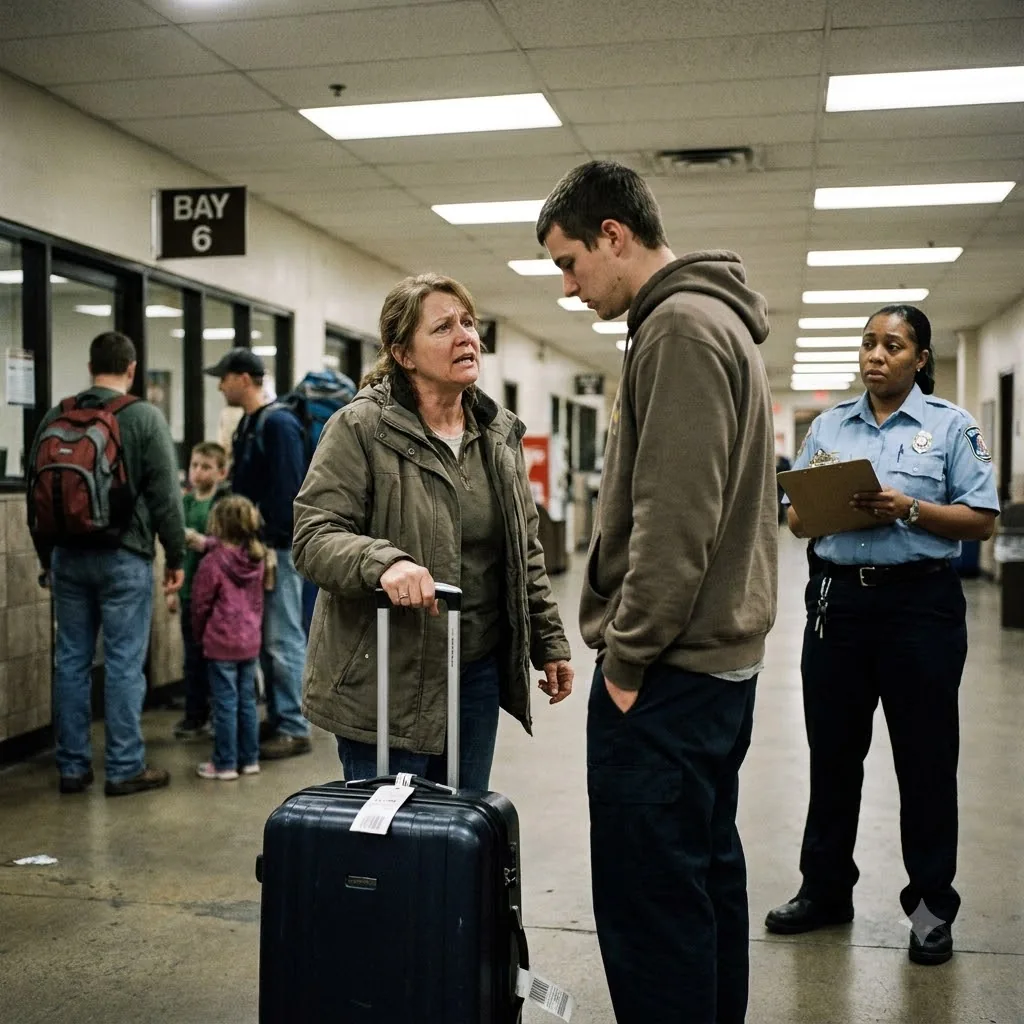
Denise Walker cut across the loading line in the bus station concourse, grabbed the handle of a hard-shell suitcase with a white tag swinging off it, and told everyone near Bay 6 that Eli Mercer was trying to leave with a bag that was not his. The driver had one hand on the luggage door, people were stacking backpacks by their shoes, and Denise used that exact ordinary rush to point at Eli like she wanted the whole station to decide before he got one full sentence out. Mara was two steps from the waiting bench with a coffee in her hand when the heads around her turned all at once.
The station had that in-between noise of rolling wheels, overhead announcements, and people asking what time the Richmond bus was boarding. Denise’s voice cut through all of it.
“He is not taking that suitcase,” she said. “He knows exactly what he’s doing.”
Eli kept one hand on the bag handle. He did not yank it back. He did not raise his voice over hers at first either. He only said, “Denise, stop.”
That quiet line did him no favors.
A man by the vending machines muttered, “If it ain’t his, he needs to let go.” A woman holding a child shifted to get a better view. The bus driver straightened, left the cargo door open, and looked toward the station desk instead of loading the next bag.
Denise took two fast steps forward, still holding one of the other travel bags in her left hand, and planted herself between Eli and the bus lane. She had the stance of someone used to deciding where people stood. “I sponsored this trip,” she said, not to Eli now but to everyone listening. “I paid to get him where he needed to go, and now he wants to walk off with something that doesn’t belong to him.”
That changed the room. Mara could feel it in the way strangers moved closer without speaking. The first version of a story had landed, and it was the kind people recognized fast: younger man, departure gate, one older relative sounding certain, one suitcase in dispute.
Nina Alvarez, who had been leaning near the row of molded plastic seats with her own tote at her feet, looked from Denise to Eli and then to the suitcase. “Then why’s he holding it like that?” she said to nobody in particular.
“Because it is mine,” Eli answered.
His voice stayed level, but his grip on the handle tightened enough to pull the tag into view again. It was one of those plain paper airline-style tags people still looped onto bus luggage when they were traveling with family, white with a strip of blue at the top, bent slightly at one corner.
Denise saw that motion and reached for the bag again. “Don’t do this in public,” she said, except she was the one keeping it public, speaking louder each time Eli tried to answer. “You were told what was yours. You were told what you were taking. Put it down.”
Marisol Grant came from the station counter at a quick walk, radio clipped at her belt, yellow employee lanyard bouncing against her shirt. She did not step between them right away. She looked first at their hands on the suitcase, then at the driver, then at the crowd that had already formed half a circle around Bay 6.
“What’s going on?” Marisol asked.
Denise answered before Eli could open his mouth. “He’s trying to board with a bag that isn’t his after everything I’ve done to get him on this bus.”
The phrase after everything I’ve done drew a few nods from people who knew nothing except tone. Mara saw one man fold his arms like the case was already settled. Nina gave a short shake of her head and said, “That’s low if that’s what he’s doing.”
Eli looked at Marisol instead of at the crowd. “Can I say one thing without being talked over?” he asked.
Marisol lifted one hand toward Denise. “One at a time.”
It helped for less than a second.
“He switched bags around on purpose,” Denise said, stepping in again. “He knows that one isn’t supposed to go with him.”
“Supposed to?” Marisol repeated.
Denise’s jaw set. “You know what I mean.”
But that word hung there. Mara noticed it because Eli noticed it too; his head came up sharply, and he lifted the suitcase just enough for the tag to swing free between them.
The crowd leaned in like the answer might be written somewhere bigger than it was. The tag was small. From where Mara stood, she could not read the print yet, only see that there was handwriting on one side and a clipped paper slip tucked under the plastic sleeve.
Eli did something strange for a man being accused of stealing. He turned the suitcase so the tag faced outward toward Marisol instead of hiding it behind his leg.
“If she wants to say that,” he said, “then let her read the tag out loud.”
The driver stopped moving entirely. Nina took one step closer. Denise’s hand, still on the side handle, did not leave the bag, but she did not read right away.
From three feet away, the tag was suddenly the only quiet thing in the station, and the way Denise looked at it did not match the certainty she had been borrowing from the crowd.
Denise Walker cut across the loading line in the bus station concourse, grabbed the handle of a hard-shell suitcase with a white tag swinging off it, and told everyone near Bay 6 that Eli Mercer was trying to leave with a bag that was not his. The driver had one hand on the luggage door, people were stacking backpacks by their shoes, and Denise used that exact ordinary rush to point at Eli like she wanted the whole station to decide before he got one full sentence out. Mara was two steps from the waiting bench with a coffee in her hand when the heads around her turned all at once.
The station had that in-between noise of rolling wheels, overhead announcements, and people asking what time the Richmond bus was boarding. Denise’s voice cut through all of it.
“He is not taking that suitcase,” she said. “He knows exactly what he’s doing.”
Eli kept one hand on the bag handle. He did not yank it back. He did not raise his voice over hers at first either. He only said, “Denise, stop.”
That quiet line did him no favors.
A man by the vending machines muttered, “If it ain’t his, he needs to let go.” A woman holding a child shifted to get a better view. The bus driver straightened, left the cargo door open, and looked toward the station desk instead of loading the next bag.
Denise took two fast steps forward, still holding one of the other travel bags in her left hand, and planted herself between Eli and the bus lane. She had the stance of someone used to deciding where people stood. “I sponsored this trip,” she said, not to Eli now but to everyone listening. “I paid to get him where he needed to go, and now he wants to walk off with something that doesn’t belong to him.”
That changed the room. Mara could feel it in the way strangers moved closer without speaking. The first version of a story had landed, and it was the kind people recognized fast: younger man, departure gate, one older relative sounding certain, one suitcase in dispute.
Nina Alvarez, who had been leaning near the row of molded plastic seats with her own tote at her feet, looked from Denise to Eli and then to the suitcase. “Then why’s he holding it like that?” she said to nobody in particular.
“Because it is mine,” Eli answered.
His voice stayed level, but his grip on the handle tightened enough to pull the tag into view again. It was one of those plain paper airline-style tags people still looped onto bus luggage when they were traveling with family, white with a strip of blue at the top, bent slightly at one corner.
Denise saw that motion and reached for the bag again. “Don’t do this in public,” she said, except she was the one keeping it public, speaking louder each time Eli tried to answer. “You were told what was yours. You were told what you were taking. Put it down.”
Marisol Grant came from the station counter at a quick walk, radio clipped at her belt, yellow employee lanyard bouncing against her shirt. She did not step between them right away. She looked first at their hands on the suitcase, then at the driver, then at the crowd that had already formed half a circle around Bay 6.
“What’s going on?” Marisol asked.
Denise answered before Eli could open his mouth. “He’s trying to board with a bag that isn’t his after everything I’ve done to get him on this bus.”
The phrase after everything I’ve done drew a few nods from people who knew nothing except tone. Mara saw one man fold his arms like the case was already settled. Nina gave a short shake of her head and said, “That’s low if that’s what he’s doing.”
Eli looked at Marisol instead of at the crowd. “Can I say one thing without being talked over?” he asked.
Marisol lifted one hand toward Denise. “One at a time.”
It helped for less than a second.
“He switched bags around on purpose,” Denise said, stepping in again. “He knows that one isn’t supposed to go with him.”
“Supposed to?” Marisol repeated.
Denise’s jaw set. “You know what I mean.”
But that word hung there. Mara noticed it because Eli noticed it too; his head came up sharply, and he lifted the suitcase just enough for the tag to swing free between them.
The crowd leaned in like the answer might be written somewhere bigger than it was. The tag was small. From where Mara stood, she could not read the print yet, only see that there was handwriting on one side and a clipped paper slip tucked under the plastic sleeve.
Eli did something strange for a man being accused of stealing. He turned the suitcase so the tag faced outward toward Marisol instead of hiding it behind his leg.
“If she wants to say that,” he said, “then let her read the tag out loud.”
The driver stopped moving entirely. Nina took one step closer. Denise’s hand, still on the side handle, did not leave the bag, but she did not read right away.
From three feet away, the tag was suddenly the only quiet thing in the station, and the way Denise looked at it did not match the certainty she had been borrowing from the crowd.