Story code: ST-000153
Part 1: The Tote Was Already There
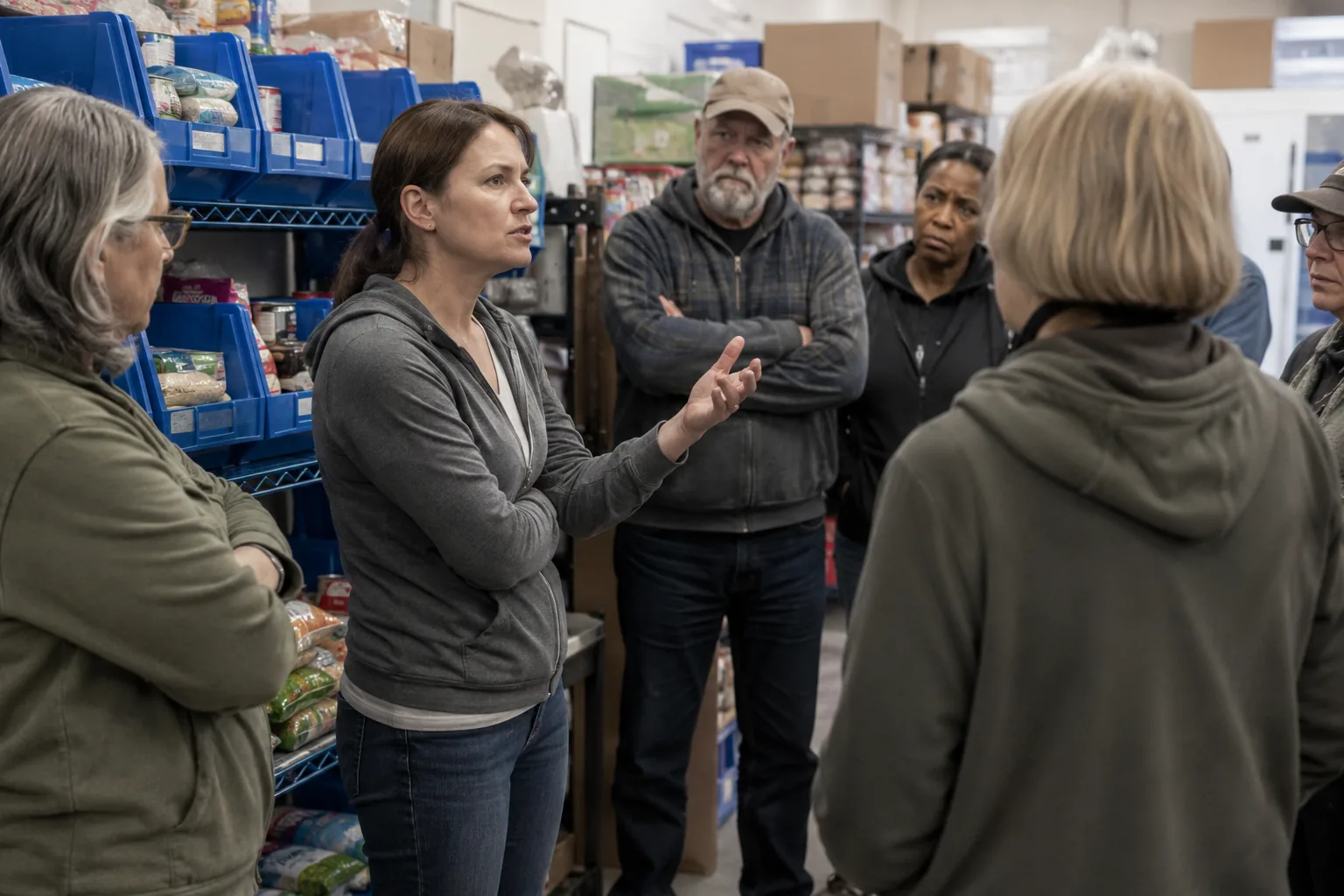
Tessa Reed stood in the pantry micro-location by the blue bin rack and said, in front of the whole volunteer line, that there had never been a donation tote set aside for anyone. The tote was still visible on the foldout table beside the canned beans, its plastic sides bent from being carried twice, and Mara Velez was the one who had to keep sorting boxes while Tessa said it like the room had all missed the same thing.
Mara had one hand on a case of pasta and one eye on the tote. The pantry was doing what it always did on distribution day: plastic carts rolling, canned food sliding into cardboard trays, people shifting forward a step at a time. Tessa was at the center of it in her committee-chair badge, clipped clean on her sweater, talking over the line with the practiced ease of someone used to being answered by silence. When Mara said, carefully, that the tote had been pulled out earlier and set by the prep table, Tessa cut in before the sentence could settle.
“No, it wasn’t,” Tessa said, loud enough for the waiting room to hear. “You must be mixing it up with the overflow bags.”
A woman near the end of the line looked at Mara, then at the tote, then back again. Dev Singh, still sorting canned corn into labeled crates, turned his head once toward the table and then back to his stack, like he was checking the same picture from two angles. Nina Brooks, waiting with her receipt slip in her hand, stopped moving for a second and watched the exchange without stepping out of line.
Mara kept her voice level. She pointed, not at Tessa, but at the tote itself. “That one was set aside for the family on the list before the ice chest got opened.”
Tessa gave a short laugh that carried no humor. “That tote has been here all morning because we use it for extras. Nobody promised it to anybody.”
That was the first hard shove of it. Not the tote, which still sat in plain sight, but the room itself, pushed into deciding whether Mara had mistaken a visible object for a promise. Tessa kept talking while she reached for a roll of tape, then a marker, then a box flap, each movement clean and busy, like motion could replace an answer. She named the next family, asked for the next basket count, and kept the pantry moving as if the conversation had already ended.
Mara watched the tote while Tessa watched the room. The tote had been filled, emptied, and dragged back twice already. Its handles were wrapped with a strip of white tape that Mara had seen Tessa put on earlier when she said, right there by the cooler, that it would be held for later pickup. That part had been visible. So had Tessa’s hand on the tote. So had the nod from the volunteer at the freezer. None of that fit the new version now being spoken out loud.
Dev slid a can into a carton and said, without looking up, “I saw it by the prep table before lunch.”
Tessa answered too fast. “You saw a bag by the prep table. We move bags around all day.”
Mara could hear the small shifts around her: the scrape of a chair, the pause in the line, the way Nina tightened her fingers on the slip. Nobody was shouting. Nobody had to. The room was already doing the work of pressure for Tessa. If Mara pushed harder, she would look like she was making trouble in a place that depended on being calm.
So she stayed with what could be seen. The tote was there. Tessa had touched it. Tessa was denying that it had been set aside. Dev had seen it moved. The line was still advancing, but the story had split in two in front of everyone. If Tessa was right, then Mara had misread the same clear sequence that Dev had just watched too. If Mara was right, then Tessa had already said something in front of the room that would not hold.
And Tessa, still speaking to the line with one hand on the marker, had just made one simple fact impossible to ignore: the tote could not be both the extra bag and the set-aside donation she had earlier promised it was.
Tessa Reed stood in the pantry micro-location by the blue bin rack and said, in front of the whole volunteer line, that there had never been a donation tote set aside for anyone. The tote was still visible on the foldout table beside the canned beans, its plastic sides bent from being carried twice, and Mara Velez was the one who had to keep sorting boxes while Tessa said it like the room had all missed the same thing.
Mara had one hand on a case of pasta and one eye on the tote. The pantry was doing what it always did on distribution day: plastic carts rolling, canned food sliding into cardboard trays, people shifting forward a step at a time. Tessa was at the center of it in her committee-chair badge, clipped clean on her sweater, talking over the line with the practiced ease of someone used to being answered by silence. When Mara said, carefully, that the tote had been pulled out earlier and set by the prep table, Tessa cut in before the sentence could settle.
“No, it wasn’t,” Tessa said, loud enough for the waiting room to hear. “You must be mixing it up with the overflow bags.”
A woman near the end of the line looked at Mara, then at the tote, then back again. Dev Singh, still sorting canned corn into labeled crates, turned his head once toward the table and then back to his stack, like he was checking the same picture from two angles. Nina Brooks, waiting with her receipt slip in her hand, stopped moving for a second and watched the exchange without stepping out of line.
Mara kept her voice level. She pointed, not at Tessa, but at the tote itself. “That one was set aside for the family on the list before the ice chest got opened.”
Tessa gave a short laugh that carried no humor. “That tote has been here all morning because we use it for extras. Nobody promised it to anybody.”
That was the first hard shove of it. Not the tote, which still sat in plain sight, but the room itself, pushed into deciding whether Mara had mistaken a visible object for a promise. Tessa kept talking while she reached for a roll of tape, then a marker, then a box flap, each movement clean and busy, like motion could replace an answer. She named the next family, asked for the next basket count, and kept the pantry moving as if the conversation had already ended.
Mara watched the tote while Tessa watched the room. The tote had been filled, emptied, and dragged back twice already. Its handles were wrapped with a strip of white tape that Mara had seen Tessa put on earlier when she said, right there by the cooler, that it would be held for later pickup. That part had been visible. So had Tessa’s hand on the tote. So had the nod from the volunteer at the freezer. None of that fit the new version now being spoken out loud.
Dev slid a can into a carton and said, without looking up, “I saw it by the prep table before lunch.”
Tessa answered too fast. “You saw a bag by the prep table. We move bags around all day.”
Mara could hear the small shifts around her: the scrape of a chair, the pause in the line, the way Nina tightened her fingers on the slip. Nobody was shouting. Nobody had to. The room was already doing the work of pressure for Tessa. If Mara pushed harder, she would look like she was making trouble in a place that depended on being calm.
So she stayed with what could be seen. The tote was there. Tessa had touched it. Tessa was denying that it had been set aside. Dev had seen it moved. The line was still advancing, but the story had split in two in front of everyone. If Tessa was right, then Mara had misread the same clear sequence that Dev had just watched too. If Mara was right, then Tessa had already said something in front of the room that would not hold.
And Tessa, still speaking to the line with one hand on the marker, had just made one simple fact impossible to ignore: the tote could not be both the extra bag and the set-aside donation she had earlier promised it was.