Story code: ST-001136
Part 1: The Clumsy Treasurer
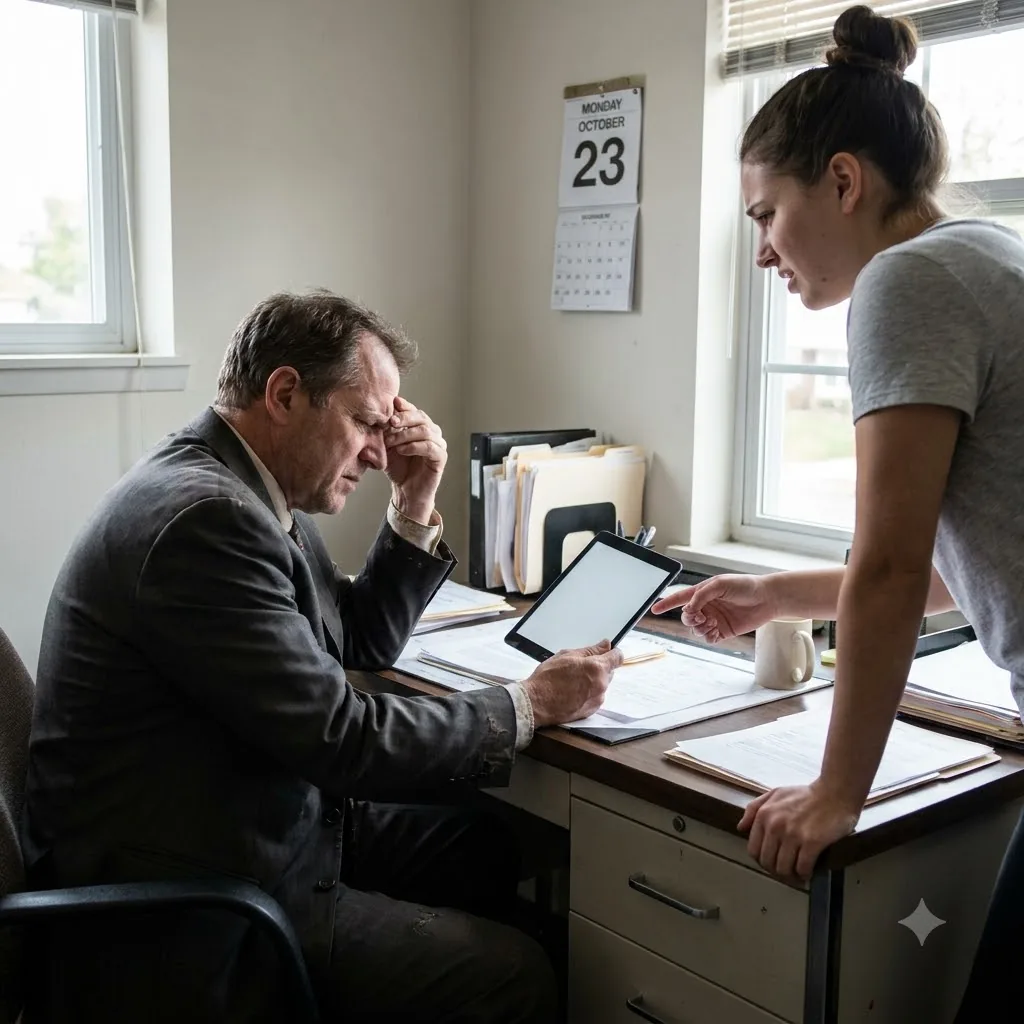
Every Monday morning in the main room of the Grace Meadow Church Administration Office, Harold, our impeccably dressed ministry treasurer, locked himself out of the digital ledger tablet, forcing our junior assistant, Sarah, to pull the velvet-lined offering baskets to her own desk and take over his entire reconciliation job. I sat at my filing cabinet nearby, sorting the weekly bulletins, and watched Harold slide the heavy woven baskets across the wooden table with a helpless, apologetic smile. “My fingers are just too clumsy for these touchscreens, Sarah,” he said, his voice dripping with gentle, self-deprecating piety. “In my day, a ledger was paper and ink. I would hate to delay the deposit because of my old-fashioned brain.”
Sarah, whose desk was already piled high with youth group permission slips and facility rental schedules, let out a tight breath and pulled the tablet toward herself. She tapped the screen, entering her own staff credentials to bypass Harold’s locked screen. “It’s fine, Harold,” she said, though her shoulders were visibly tense. “I’ll run the counts and match the envelopes.”
“You are a true servant of the church,” Harold murmured, clasping his hands together in a gesture of humble gratitude before retrieving his leather briefcase. “I will leave you to it. The board expects the total before noon.”
This was the third time this month Harold had ruined a simple ledger task, dumping the primary liability of the physical intake and deposit reconciliation onto Sarah’s shoulders. The church board’s dual-custody protocol required two signatures, but since Harold claimed he couldn’t navigate the digital interface, he simply signed the paper cover sheet after Sarah did all the electronic counting and logging under her own login.
Later that afternoon, after Sarah had stepped out to drop off the daily mail at the post office, I walked toward the counting room at the back of the office to return the master keys to the wall hook. The door was slightly ajar, casting a thin sliver of light across the carpet.
Inside, Harold stood by the safe. The velvet-lined baskets lay empty on the counter, and beside them sat a remaining stack of fifty-dollar bills. Harold did not see me. I stopped, my hand hovering near the door frame.
The man who claimed he could not swipe a touchscreen or navigate a dropdown menu was moving with terrifying speed. His hands did not fumble. He peeled, stacked, and squared the currency with the swift, rhythmic snap of a professional auditor. His fingers flew through the bills, flicking them into neat piles of ten, his thumbs counting by touch alone in a fraction of a second.
He took a small stack from the center of the pile, slid it smoothly into the inside pocket of his tailored suit jacket, and then resumed his counting without missing a single beat. He did not look confused. He looked like an expert who had spent decades handling cash in the dark.
I stepped back quietly into the shadow of the hallway, the sound of the crisp paper bills snapping in his fingers still echoing in the quiet office. If Harold was this fast with the physical money, why did he need Sarah to log it?
Every Monday morning in the main room of the Grace Meadow Church Administration Office, Harold, our impeccably dressed ministry treasurer, locked himself out of the digital ledger tablet, forcing our junior assistant, Sarah, to pull the velvet-lined offering baskets to her own desk and take over his entire reconciliation job. I sat at my filing cabinet nearby, sorting the weekly bulletins, and watched Harold slide the heavy woven baskets across the wooden table with a helpless, apologetic smile. “My fingers are just too clumsy for these touchscreens, Sarah,” he said, his voice dripping with gentle, self-deprecating piety. “In my day, a ledger was paper and ink. I would hate to delay the deposit because of my old-fashioned brain.”
Sarah, whose desk was already piled high with youth group permission slips and facility rental schedules, let out a tight breath and pulled the tablet toward herself. She tapped the screen, entering her own staff credentials to bypass Harold’s locked screen. “It’s fine, Harold,” she said, though her shoulders were visibly tense. “I’ll run the counts and match the envelopes.”
“You are a true servant of the church,” Harold murmured, clasping his hands together in a gesture of humble gratitude before retrieving his leather briefcase. “I will leave you to it. The board expects the total before noon.”
This was the third time this month Harold had ruined a simple ledger task, dumping the primary liability of the physical intake and deposit reconciliation onto Sarah’s shoulders. The church board’s dual-custody protocol required two signatures, but since Harold claimed he couldn’t navigate the digital interface, he simply signed the paper cover sheet after Sarah did all the electronic counting and logging under her own login.
Later that afternoon, after Sarah had stepped out to drop off the daily mail at the post office, I walked toward the counting room at the back of the office to return the master keys to the wall hook. The door was slightly ajar, casting a thin sliver of light across the carpet.
Inside, Harold stood by the safe. The velvet-lined baskets lay empty on the counter, and beside them sat a remaining stack of fifty-dollar bills. Harold did not see me. I stopped, my hand hovering near the door frame.
The man who claimed he could not swipe a touchscreen or navigate a dropdown menu was moving with terrifying speed. His hands did not fumble. He peeled, stacked, and squared the currency with the swift, rhythmic snap of a professional auditor. His fingers flew through the bills, flicking them into neat piles of ten, his thumbs counting by touch alone in a fraction of a second.
He took a small stack from the center of the pile, slid it smoothly into the inside pocket of his tailored suit jacket, and then resumed his counting without missing a single beat. He did not look confused. He looked like an expert who had spent decades handling cash in the dark.
I stepped back quietly into the shadow of the hallway, the sound of the crisp paper bills snapping in his fingers still echoing in the quiet office. If Harold was this fast with the physical money, why did he need Sarah to log it?