Story code: ST-001930
Part 1: The Silent Update
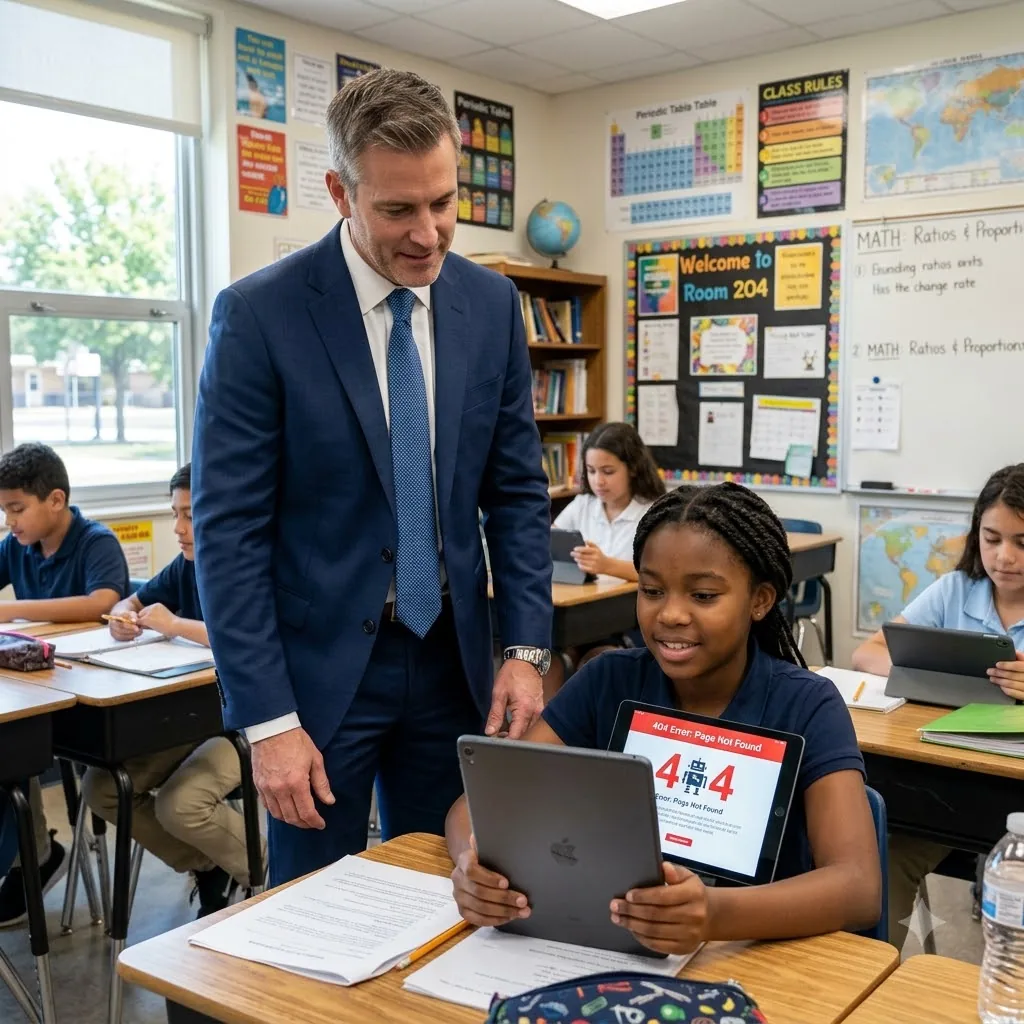
The fluorescent lights of Room 204 hummed an aggressive, sterile note above the rows of seventh-graders. Marcus stood at the back of the classroom, his arms crossed over his chest, watching the sea of glowing blue screens. This was the moment their ed-tech startup had spent two agonizing years building toward. The district-wide rollout of the Apex Scholar tablets was supposed to be a seamless integration into the history curriculum.
At a desk near the window, a boy named Leo dragged his finger across the glass. Marcus stepped closer, observing the student’s interaction with the custom user interface. Leo tapped the universal search bar at the top of the screen and painstakingly typed out the letters for Ida B. Wells. The loading animation spun for a fraction of a second. Instead of the rich, interactive biography module featuring archival photos and primary source documents, the screen went aggressively white. Bold black text appeared in the dead center of the display.
Error 404. Content Not Found.
Marcus frowned, stepping up to hover behind Leo’s shoulder. He assumed the school’s aging Wi-Fi router had finally choked under the massive bandwidth of thirty simultaneous video streams. He pulled out his own administrative tablet, bringing up the backend diagnostic tool. The network connection showed full bars, indicating a solid gigabit uplink. The hardware was functioning perfectly.
Before Marcus could tell the boy to manually refresh the page, Leo’s screen flashed. The 404 error vanished, replaced by an automatic script redirect. The animation slid sideways, revealing a glossy, high-definition splash page titled Pioneers of Industry. A grid of stern, sepia-toned portraits populated the screen. Andrew Carnegie, Henry Ford, John D. Rockefeller. It was a highly curated gallery of Gilded Age industrialists. There was no back button. The search bar was entirely disabled.
Marcus tapped Leo on the shoulder and pointed to the home icon. He told the boy to try the search one more time. Leo obeyed, his small finger jabbing the glass. I-D-A-B. The autocomplete failed to populate. He finished typing the name and hit the enter key. The exact same sequence occurred. A brief flicker of a 404 error, followed instantly by the locked redirect to the smiling face of Cornelius Vanderbilt.
A cold knot formed in Marcus’s stomach. This was not a localized caching issue or a network drop. The architecture of the platform relied on real-time server verification. If a page threw a 404 and triggered a hard-coded fallback sequence, it meant the root directory had been altered at the source.
He stepped back into the aisle and walked quickly toward the hallway. The heavy classroom door clicked shut behind him, cutting off the murmur of the students. The hallway was empty, smelling faintly of floor wax and stale tater tots. Marcus leaned against the painted concrete blocks and opened the secure messaging app on his phone.
He tapped out a rapid message to David, the lead systems engineer back at headquarters. He described the 404 on the Ida B. Wells module and the bizarre redirect to the industrialist fallback page. He instructed David to reboot the primary content delivery server and pull the overnight error logs.
Three gray dots appeared at the bottom of the screen. David was typing. The dots vanished. A full minute passed. The silence in the hallway felt incredibly heavy. Marcus checked his signal strength again.
The phone buzzed sharply in his palm.
David’s reply consisted of two sentences.
There is no server glitch. That content directory was deleted from the master branch at three in the morning.
Marcus stared at the glowing pixels. He reread the words four times. The master branch was locked behind a strict multi-factor authentication protocol that only three people in the entire company could bypass. David, Marcus, and the CEO.
He typed another furious message, demanding to know who authorized a major database purge hours before the biggest deployment in the company’s history. He told David to roll back the update to yesterday’s stable build immediately.
The three gray dots appeared again. This time, they lingered for a very long time. Marcus looked through the narrow rectangular window of the classroom door. He watched Leo raise his hand, pointing at his tablet screen, looking thoroughly confused as the teacher approached. The teacher stared at the tablet and then looked around the room, actively searching for Marcus.
The phone buzzed a second time.
I cannot do that. The override came directly from Richard’s terminal.
Richard. The CEO. Marcus felt a bead of sweat trace a cold line down his spine. Richard had spent the last three months aggressively courting a controversial private equity firm for a massive funding round. The firm was publicly known for its strict, ideological conditions on educational content, a detail Richard had dismissed as a manageable hurdle during board meetings.
Marcus opened the administrative override panel on his own tablet. He bypassed the frontend interface and accessed the raw index of the history module. He ran a diagnostic query for other entries. He typed in Harriet Tubman. Zero results. He typed in Frederick Douglass. Zero results. He typed in Cesar Chavez. Zero results.
Whole blocks of the curriculum had been meticulously excised. Every single search for a marginalized historical figure triggered the identical silent, forced redirect to the Gilded Age industrialists. It was a surgical, systematic erasure, executed entirely under the cover of darkness.
Footsteps echoed loudly at the far end of the hallway. Marcus looked up from his screen. A man in a sharp gray suit, who Marcus recognized immediately as Richard’s personal fixer and corporate attorney, Vance, was marching toward him. Vance was holding a thick manila folder.
Vance did not smile as he closed the remaining distance. He raised the folder and stepped directly into Marcus’s personal space, his voice dropping to a low, flat register.
Richard requires you to sign this before you speak to another student.
The fluorescent lights of Room 204 hummed an aggressive, sterile note above the rows of seventh-graders. Marcus stood at the back of the classroom, his arms crossed over his chest, watching the sea of glowing blue screens. This was the moment their ed-tech startup had spent two agonizing years building toward. The district-wide rollout of the Apex Scholar tablets was supposed to be a seamless integration into the history curriculum.
At a desk near the window, a boy named Leo dragged his finger across the glass. Marcus stepped closer, observing the student’s interaction with the custom user interface. Leo tapped the universal search bar at the top of the screen and painstakingly typed out the letters for Ida B. Wells. The loading animation spun for a fraction of a second. Instead of the rich, interactive biography module featuring archival photos and primary source documents, the screen went aggressively white. Bold black text appeared in the dead center of the display.
Error 404. Content Not Found.
Marcus frowned, stepping up to hover behind Leo’s shoulder. He assumed the school’s aging Wi-Fi router had finally choked under the massive bandwidth of thirty simultaneous video streams. He pulled out his own administrative tablet, bringing up the backend diagnostic tool. The network connection showed full bars, indicating a solid gigabit uplink. The hardware was functioning perfectly.
Before Marcus could tell the boy to manually refresh the page, Leo’s screen flashed. The 404 error vanished, replaced by an automatic script redirect. The animation slid sideways, revealing a glossy, high-definition splash page titled Pioneers of Industry. A grid of stern, sepia-toned portraits populated the screen. Andrew Carnegie, Henry Ford, John D. Rockefeller. It was a highly curated gallery of Gilded Age industrialists. There was no back button. The search bar was entirely disabled.
Marcus tapped Leo on the shoulder and pointed to the home icon. He told the boy to try the search one more time. Leo obeyed, his small finger jabbing the glass. I-D-A-B. The autocomplete failed to populate. He finished typing the name and hit the enter key. The exact same sequence occurred. A brief flicker of a 404 error, followed instantly by the locked redirect to the smiling face of Cornelius Vanderbilt.
A cold knot formed in Marcus’s stomach. This was not a localized caching issue or a network drop. The architecture of the platform relied on real-time server verification. If a page threw a 404 and triggered a hard-coded fallback sequence, it meant the root directory had been altered at the source.
He stepped back into the aisle and walked quickly toward the hallway. The heavy classroom door clicked shut behind him, cutting off the murmur of the students. The hallway was empty, smelling faintly of floor wax and stale tater tots. Marcus leaned against the painted concrete blocks and opened the secure messaging app on his phone.
He tapped out a rapid message to David, the lead systems engineer back at headquarters. He described the 404 on the Ida B. Wells module and the bizarre redirect to the industrialist fallback page. He instructed David to reboot the primary content delivery server and pull the overnight error logs.
Three gray dots appeared at the bottom of the screen. David was typing. The dots vanished. A full minute passed. The silence in the hallway felt incredibly heavy. Marcus checked his signal strength again.
The phone buzzed sharply in his palm.
David’s reply consisted of two sentences.
There is no server glitch. That content directory was deleted from the master branch at three in the morning.
Marcus stared at the glowing pixels. He reread the words four times. The master branch was locked behind a strict multi-factor authentication protocol that only three people in the entire company could bypass. David, Marcus, and the CEO.
He typed another furious message, demanding to know who authorized a major database purge hours before the biggest deployment in the company’s history. He told David to roll back the update to yesterday’s stable build immediately.
The three gray dots appeared again. This time, they lingered for a very long time. Marcus looked through the narrow rectangular window of the classroom door. He watched Leo raise his hand, pointing at his tablet screen, looking thoroughly confused as the teacher approached. The teacher stared at the tablet and then looked around the room, actively searching for Marcus.
The phone buzzed a second time.
I cannot do that. The override came directly from Richard’s terminal.
Richard. The CEO. Marcus felt a bead of sweat trace a cold line down his spine. Richard had spent the last three months aggressively courting a controversial private equity firm for a massive funding round. The firm was publicly known for its strict, ideological conditions on educational content, a detail Richard had dismissed as a manageable hurdle during board meetings.
Marcus opened the administrative override panel on his own tablet. He bypassed the frontend interface and accessed the raw index of the history module. He ran a diagnostic query for other entries. He typed in Harriet Tubman. Zero results. He typed in Frederick Douglass. Zero results. He typed in Cesar Chavez. Zero results.
Whole blocks of the curriculum had been meticulously excised. Every single search for a marginalized historical figure triggered the identical silent, forced redirect to the Gilded Age industrialists. It was a surgical, systematic erasure, executed entirely under the cover of darkness.
Footsteps echoed loudly at the far end of the hallway. Marcus looked up from his screen. A man in a sharp gray suit, who Marcus recognized immediately as Richard’s personal fixer and corporate attorney, Vance, was marching toward him. Vance was holding a thick manila folder.
Vance did not smile as he closed the remaining distance. He raised the folder and stepped directly into Marcus’s personal space, his voice dropping to a low, flat register.
Richard requires you to sign this before you speak to another student.