Story code: ST-000515
Part 3: The Exemption
The heavy glass doors of the boardroom had sealed shut, trapping a thick, suffocating silence inside the room. The faint, metallic scent of the camera’s flash still hung in the aggressively chilled air. Marcus stood by the massive mahogany table, his right hand throbbing slightly from the brutal force he had just used on the CEO’s arm.
Julian Vance stood ten feet away, his index finger hovering a fraction of an inch over the red emergency panic button on the wall console. The digital clock on the wall blinked, marking the countdown Vance had just initiated.
“Fifty-five seconds,” Vance said. His voice was flat and hollow, entirely devoid of the charismatic, visionary warmth he had projected for the magazine photographer. “You are having a severe psychological break, Marcus. Walk out that door, clear out your desk, and resign quietly by morning. Do that, and I will graciously forget this physical assault. Stay, and I press this button. The armed executive guards in the lobby will drag you out of this building in handcuffs.”
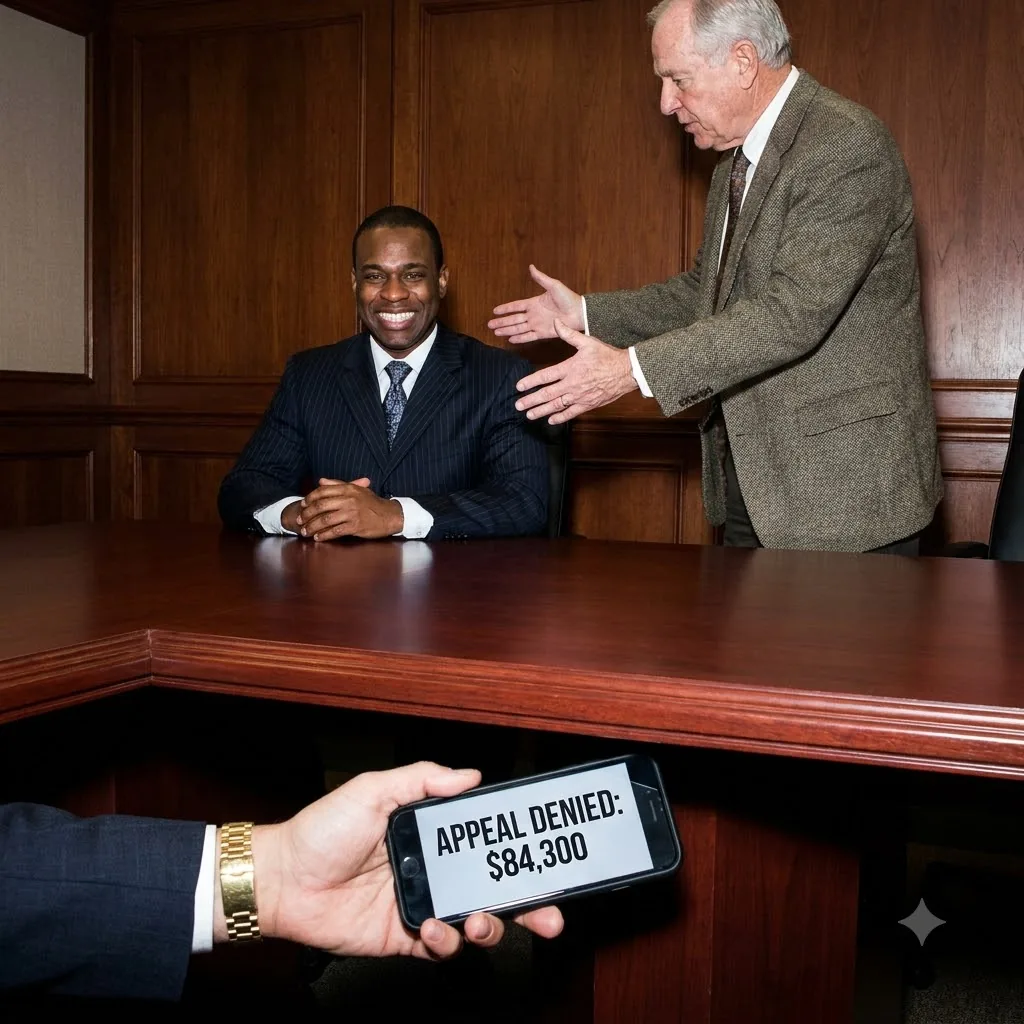
Marcus didn’t move toward the door. The crushing weight of the eighty-four-thousand-dollar demand anchored his feet to the plush corporate carpet. He took a slow, unsteady breath, forcing the frantic, roaring buzz in his ears to quiet down. He needed to play this exactly right. The extortion he had attempted under the blinding camera flashes had been fueled by pure, unadulterated panic. Now, he needed a surgical strike.
“I’m not leaving, Julian,” Marcus said, his voice trembling briefly before he locked it down into a steady, unyielding tone. “I am formally asking you, right now, as a sitting member of your executive team, for an executive medical exemption. You have the discretionary power to bypass the medical committee’s denial. You can override the system and authorize the hospital’s payment today.”
Vance let out a dry, incredulous scoff. He let his hand drop an inch from the red button, leaning his shoulder against the wall as if Marcus were a toddler throwing a tantrum over a toy.
“You actually think this is how the corporate world works?” Vance asked, shaking his head with a condescending pity. “You think you can physically strong-arm me into writing you a blank check? The health plan is self-funded, Marcus. The money comes directly out of the company’s operating capital. The medical committee is there for a reason. They determine what is standard care and what is experimental.”
“My doctor said without this procedure-”
“I don’t care what your doctor said!” Vance snapped, his pristine composure slipping before he smoothed it rapidly back into a mask of corporate paternalism. He sighed heavily, adjusting his imported silk cuffs. “Marcus, I am genuinely sorry about your medical diagnosis. I really am. It is a tragic hand to be dealt. But I cannot just wave a magic wand. I have a strict fiduciary duty to the shareholders of this company. If I bypass the committee for an unapproved, experimental procedure for you, I set a dangerous precedent. It opens the floodgates. The board of directors would have my head for violating fiduciary trust. It’s not about the money. My hands are completely tied.”
Marcus listened to the words perfectly enunciated by the man across the room. *Fiduciary duty. Tragic hand. Hands are tied.* The sanitized, corporate speak washed over him, completely divorced from the terrifying reality of his failing liver and the staggering bill sitting in his inbox.
The suffocating panic that had been drowning Marcus for the last hour suddenly evaporated. It was replaced instantly by a hollow, icy calm. He reached slowly into the inside breast pocket of his suit jacket.
Vance flinched, his hand shooting right back up to hover over the red button. “Hands where I can see them!”
“Relax, Julian,” Marcus said softly. He pulled out his phone. The glass screen was still warm against his palm. He unlocked it, swiping away the devastating email from the insurance provider. He opened the company’s secure intranet portal-a high-level executive access privilege he had been granted just three weeks ago with his promotion. He tapped through his saved files, pulling up a specific, encrypted PDF he had downloaded from the discretionary spending ledger late one night while trying to understand the limits of his new departmental budget.
Marcus walked to the end of the long mahogany conference table. He placed his phone face up on the polished wood and pushed it. The device slid smoothly across the expansive surface, coming to a stop just a few inches from Vance’s hip.
“What is this?” Vance demanded, his eyes darting suspiciously from Marcus to the phone and back again.
“Your fiduciary duty,” Marcus replied, stepping back. “Look at it.”
Vance kept his eyes locked on Marcus for a long, tense moment before finally glancing down at the illuminated screen.
“It’s a discretionary bypass authorization,” Marcus said, his voice echoing cleanly off the floor-to-ceiling glass. “Signed by you, Julian. Six months ago.”
Vance’s posture went rigidly stiff. The smug, paternal superiority vanished from his features in an instant, replaced by a sudden, chalky pallor that drained the color from his face.
“You went around the medical committee,” Marcus continued, taking a slow, deliberate step forward. “You used your executive authority to grant a tier-one experimental override. For Richard Sterling.”
Vance stared intensely at the screen, his mouth slightly open, but no sound came out.
“I saw Richard at the quarterly executive retreat in Aspen,” Marcus said, his tone conversational but dripping with absolute venom. “We all did. Everyone was complimenting the VP of Sales on how incredibly young he looked. A miraculous recovery of his receding hairline. We all assumed he went to a clinic in Turkey and paid out of pocket like a normal, wealthy person.”
Marcus pointed a rigid finger at the phone. “But he didn’t, did he? Procedure code 89-B. Advanced Follicular Cellular Regeneration. Highly experimental. Definitely not FDA approved.”
“Marcus, you don’t understand the complex context of-” Vance started, his voice suddenly thin and breathy.
“Oh, I understand the context perfectly,” Marcus interrupted, stepping directly into Vance’s personal space, entirely ignoring the red panic button on the wall. “My surgical procedure is required to stop my own immune system from destroying my internal organs. The committee denied it. You called it a tragedy and hid behind your fiduciary duty. But Richard Sterling, a white VP who plays golf with you on Sundays, felt a little insecure about going bald. And you quietly authorized a hundred-and-twenty-thousand-dollar experimental vanity treatment out of the company’s self-funded operating capital.”
Vance swallowed hard. His hand was still hovering near the security button, but his fingers were visibly trembling now. The confident CEO who had just threatened to ruin Marcus’s life was entirely gone, replaced by a man staring down the barrel of an unmitigated disaster.
“If you press that button,” Marcus whispered, leaning in so close he could smell the expensive peppermint on Vance’s breath, “security comes up here. They arrest me. And my one phone call is to the journalist who just walked out of that door. I will give her the downloaded file. I will let her write the national cover story on how the progressive CEO-who just paraded his token Black executive for the cameras-denied him life-saving care to protect the shareholders, right after buying his white VP a brand new head of experimental hair.”
The heavy silence returned to the boardroom, thick and inescapable. Vance looked from the phone, to Marcus’s unrelenting eyes, and back to the red button on the wall. The digital clock ticked, but Vance’s hand remained frozen in the air, completely paralyzed.