Story code: ST-000552
Part 1: The Glass Room
Leo straightened his borrowed collar and stepped past a slab of polished gray marble. It sat right where the old community kiln used to burn, back when this building was a haven for local artists. Now, it was a sterile luxury condo lobby, filled with the clinking of champagne flutes. Leo scanned the room, searching for a wallet thick enough to save Rosa. The countdown clock on her medical campaign glowed like a brand in his mind, stuck at a miserable fifteen percent. They had only two days left before the hospital discharged her. He gripped a stack of glossy flyers, forcing himself to walk deeper into the lion’s den.
Waiters in crisp black vests floated past with trays of miniature tartlets. Leo ignored his empty stomach and focused on the attendees. These were the developers buying up the block, the people who gutted historic family buildings and flipped them into minimalist penthouses. A single charitable donation from one of these executives could cover Rosa’s autoimmune treatments in a single keystroke.
He pitched two different groups by a glowing ice sculpture, receiving nothing but tight, polite smiles before the attendees turned their backs. Time was bleeding away. Rosa was lying in a sterile room three blocks from here, completely unaware that her best friend was currently begging the architects of their neighborhood’s destruction for a lifeline.
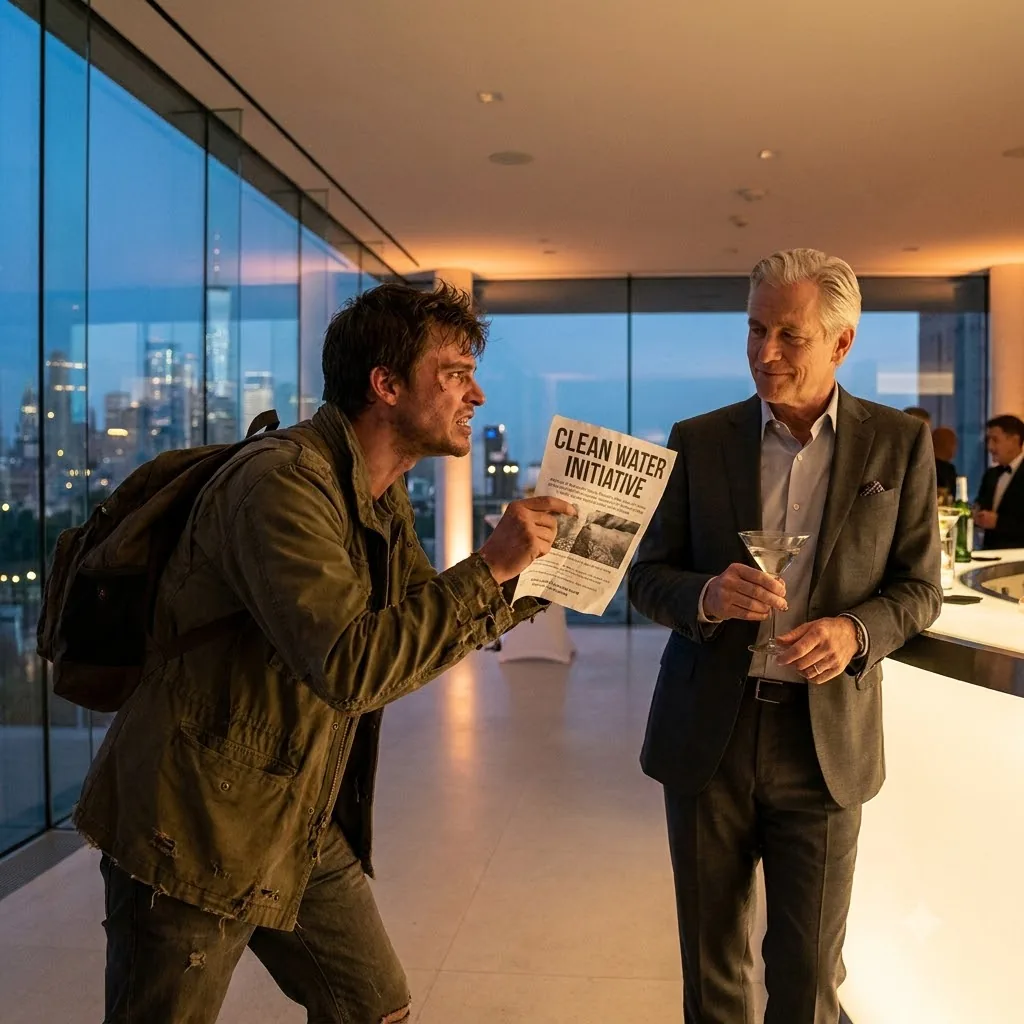
Then he spotted the man standing alone by the floor-to-ceiling windows. The stranger wore a navy suit that fit with surgical precision, a heavy silver watch catching the ambient light every time he moved. He stood in silence, observing the bustling room with a calculating stillness. This was a man who directed corporate boards and needed massive year-end charitable tax deductions.
Leo marched over, pasting on a desperate smile. He introduced himself loudly over the live jazz band, launching straight into his rehearsed speech.
He explained Rosa’s deteriorating condition, the sheer vertical cliff of her mounting medical debt, and the exact punishing timeline they were up against. The man turned toward him, his expression completely unreadable as he swirled the amber liquid in his heavy crystal glass.
Encouraged by the fact that he was not being waved away, Leo dug much deeper. He laid out their whole operational strategy, desperate to prove this was a viable cause. He told this wealthy stranger about their grassroots push and the specific local businesses relying on under-the-table matching funds. He explained the exact legal loopholes they were using to hold off the collection agencies. He even admitted they were keeping the gathered money in a vulnerable community trust that needed to hit a specific threshold by Friday afternoon, or the creditors would seize the existing assets.
Leo laid every single vulnerability of their campaign bare, hoping brutal honesty would pry open a cold corporate heart. He told the man about the sympathetic administrator at the municipal hospital secretly delaying Rosa’s discharge, practically bragging about the administrative blind spots they were exploiting.
The stranger listened in total silence. He did not blink. His pale eyes tracked Leo’s face with intense focus, absorbing every logistical detail, every dropped name, every admission of weakness.
Leo finished his pitch, his lungs burning, and thrust a flyer forward. The glossy paper bore Rosa’s tired face and a massive bold QR code linking straight to the campaign’s central routing account.
The man stared at the flyer for a long moment. He set his drink down on a glass table and took the paper from Leo’s hand, his fingers cool and steady.
“An ambitious strategy,” the man said in a smooth baritone. “You rely heavily on this clinic’s leniency and this unprotected trust account.”
Leo nodded eagerly, relieved that the man had understood the mechanics of their desperation. He urged the man to scan the code, explaining that a small corporate write-off would secure the funds against the aggressive debt collectors circling Rosa’s estate.
The man smiled. It was a slow, mechanical movement that did not reach his cold eyes. He folded the flyer with crisp creases and slipped it into the breast pocket of his tailored jacket.
“I will look into this,” the man said softly. “I am very interested in exactly how you are managing these funds.”
He reached into his inner pocket and produced a heavy, matte-black business card. He pressed it into Leo’s palm with firm, deliberate pressure.
Leo looked down at the embossed silver lettering, feeling a sudden, violent drop in his stomach. The name printed on the thick card was Julian Vance. It was the exact venture capitalist who had purchased Rosa’s medical debt to force her eviction. It was the very man whose firm was currently attempting to freeze the community trust.
Julian buttoned his jacket and stepped toward the exit, patting the pocket where he had just tucked Leo’s entire playbook, leaving Leo gripping the edge of the glass table to keep his legs from giving out.
Leo straightened his borrowed collar and stepped past a slab of polished gray marble. It sat right where the old community kiln used to burn, back when this building was a haven for local artists. Now, it was a sterile luxury condo lobby, filled with the clinking of champagne flutes. Leo scanned the room, searching for a wallet thick enough to save Rosa. The countdown clock on her medical campaign glowed like a brand in his mind, stuck at a miserable fifteen percent. They had only two days left before the hospital discharged her. He gripped a stack of glossy flyers, forcing himself to walk deeper into the lion’s den.
Waiters in crisp black vests floated past with trays of miniature tartlets. Leo ignored his empty stomach and focused on the attendees. These were the developers buying up the block, the people who gutted historic family buildings and flipped them into minimalist penthouses. A single charitable donation from one of these executives could cover Rosa’s autoimmune treatments in a single keystroke.
He pitched two different groups by a glowing ice sculpture, receiving nothing but tight, polite smiles before the attendees turned their backs. Time was bleeding away. Rosa was lying in a sterile room three blocks from here, completely unaware that her best friend was currently begging the architects of their neighborhood’s destruction for a lifeline.
Then he spotted the man standing alone by the floor-to-ceiling windows. The stranger wore a navy suit that fit with surgical precision, a heavy silver watch catching the ambient light every time he moved. He stood in silence, observing the bustling room with a calculating stillness. This was a man who directed corporate boards and needed massive year-end charitable tax deductions.
Leo marched over, pasting on a desperate smile. He introduced himself loudly over the live jazz band, launching straight into his rehearsed speech.
He explained Rosa’s deteriorating condition, the sheer vertical cliff of her mounting medical debt, and the exact punishing timeline they were up against. The man turned toward him, his expression completely unreadable as he swirled the amber liquid in his heavy crystal glass.
Encouraged by the fact that he was not being waved away, Leo dug much deeper. He laid out their whole operational strategy, desperate to prove this was a viable cause. He told this wealthy stranger about their grassroots push and the specific local businesses relying on under-the-table matching funds. He explained the exact legal loopholes they were using to hold off the collection agencies. He even admitted they were keeping the gathered money in a vulnerable community trust that needed to hit a specific threshold by Friday afternoon, or the creditors would seize the existing assets.
Leo laid every single vulnerability of their campaign bare, hoping brutal honesty would pry open a cold corporate heart. He told the man about the sympathetic administrator at the municipal hospital secretly delaying Rosa’s discharge, practically bragging about the administrative blind spots they were exploiting.
The stranger listened in total silence. He did not blink. His pale eyes tracked Leo’s face with intense focus, absorbing every logistical detail, every dropped name, every admission of weakness.
Leo finished his pitch, his lungs burning, and thrust a flyer forward. The glossy paper bore Rosa’s tired face and a massive bold QR code linking straight to the campaign’s central routing account.
The man stared at the flyer for a long moment. He set his drink down on a glass table and took the paper from Leo’s hand, his fingers cool and steady.
“An ambitious strategy,” the man said in a smooth baritone. “You rely heavily on this clinic’s leniency and this unprotected trust account.”
Leo nodded eagerly, relieved that the man had understood the mechanics of their desperation. He urged the man to scan the code, explaining that a small corporate write-off would secure the funds against the aggressive debt collectors circling Rosa’s estate.
The man smiled. It was a slow, mechanical movement that did not reach his cold eyes. He folded the flyer with crisp creases and slipped it into the breast pocket of his tailored jacket.
“I will look into this,” the man said softly. “I am very interested in exactly how you are managing these funds.”
He reached into his inner pocket and produced a heavy, matte-black business card. He pressed it into Leo’s palm with firm, deliberate pressure.
Leo looked down at the embossed silver lettering, feeling a sudden, violent drop in his stomach. The name printed on the thick card was Julian Vance. It was the exact venture capitalist who had purchased Rosa’s medical debt to force her eviction. It was the very man whose firm was currently attempting to freeze the community trust.
Julian buttoned his jacket and stepped toward the exit, patting the pocket where he had just tucked Leo’s entire playbook, leaving Leo gripping the edge of the glass table to keep his legs from giving out.