Story code: ST-000553
Part 1: Cold Steel and Cashmere
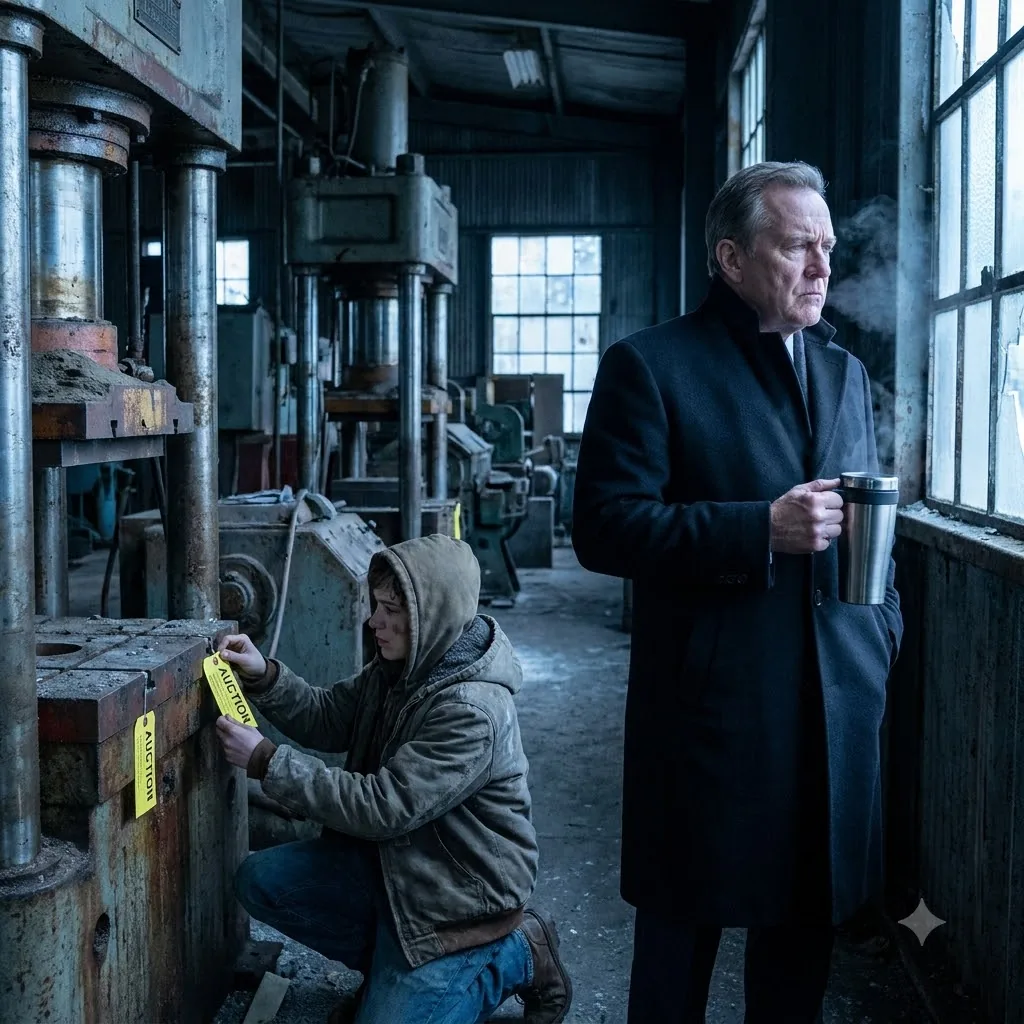
Riley’s knuckles bled sluggishly, the cold air freezing the blood before it could drip as they slapped another neon orange auction tag onto the flank of a massive hydraulic press. The dead stamping plant swallowed the sharp smack of the adhesive backing, leaving only a hollow, metallic echo in the cavernous room. The temperature inside the defunct auto factory hovered just below freezing, turning the lingering scent of decades-old machine grease into a bitter frost that settled deep in Riley’s lungs.
A few feet away, Marcus stepped over a coil of disconnected copper wiring, the hem of his pristine camel-hair cashmere coat brushing against the grime-caked concrete. He kept his hands buried deep in his pockets, completely insulated from the freezing environment he had purchased at a bankruptcy auction. He didn’t flinch at the dirt, likely because he was paying Riley twelve dollars an hour to be the one dealing with it.
“Tag number four-zero-two on the primary piston,” Marcus instructed, waving a gloved hand toward the towering machine without turning his head.
Riley peeled another neon sticker from the roll, pressing it against the icy steel. The temp agency had pitched this as a simple inventory job, failing to mention the out-of-state liquidator would treat the gig like a punitive expedition.
“You missed the edge,” Marcus said, his breath pluming in the frigid air as he finally looked over. “Smooth it down. Buyers do not want to see peeling tags on a half-million-dollar piece of salvage. It implies negligence on our part.”
Riley ran a numb thumb over the neon edge, pressing it completely flat against the unforgiving steel.
Marcus adjusted his silk scarf and sighed, a sound full of theatrical exhaustion that he had been deploying all morning. “This is the problem with your generation, Riley. You do the absolute bare minimum and expect a ticker-tape parade. When men actually worked in this building, they had pride. They did not need to be told to smooth down a sticker. They understood the value of hard work.”
Riley kept their eyes on the press, moving to the next component. The lecture was a continuous loop, running since Marcus had unlocked the padlocked chain-link gates at six in the morning.
“You people want remote work, four-day weeks, mental health days,” Marcus continued, his polished leather shoes clicking rhythmically against the concrete as he paced the length of the assembly line. “The men who stood where you are standing right now gave their blood to this line. They worked double shifts. They built this country. And now I have to hire temps to put stickers on the remains because nobody wants to get their hands dirty anymore.”
Riley’s phone buzzed in the front pocket of their heavy canvas jacket. It was a long, frantic vibration, followed immediately by two short bursts. Someone was calling, hanging up, and calling right back. Riley ignored it, reaching for the next tag on the roll.
“Leave the rest of the line for the afternoon crew,” Marcus said, checking a gold watch that cost more than the average plant worker’s severance package. “We need to clear the personal effects from the employee locker room before the scrap buyers arrive for the walkthrough. I want those lockers emptied, bagged, and tagged.”
Riley nodded in silence, shoving the roll of neon stickers into a pocket alongside the vibrating phone. The buzzing stopped for a brief moment, then started again. A steady, urgent rhythm pressed aggressively against Riley’s thigh.
They followed Marcus away from the silent assembly line, navigating the maze of lifeless machinery. The main factory floor gave way to a narrow cinderblock hallway, the air growing even staler and colder the further they walked from the loading dock doors. Fluorescent lights flickered weakly overhead, casting long, jaundiced shadows across the peeling industrial green paint on the walls.
“It is unbelievable they left all this junk behind,” Marcus muttered as he pushed open the heavy double doors to the men’s locker room.
The room was massive, lined with hundreds of dented, gray metal lockers. Some hung wide open, revealing discarded steel-toe work boots and scratched safety glasses. Others were shut tight, locked away since the day the plant abruptly closed its doors and locked out the union.
The phone in Riley’s pocket vibrated again, an angry, sustained tremor.
“Start on row G,” Marcus ordered, pointing to a rusted bank of lockers against the far wall. “Pry open the locked ones. Bag whatever is inside, tag the door, and move on. I want row G done in exactly ten minutes.”
Riley pulled a heavy steel crowbar from their tool belt and walked down the narrow aisle. The metal grates on the locker doors stared back like blank eyes. Row G was at the very end of the room, bathed in the dim light of a failing overhead fixture.
The buzzing against Riley’s leg grew more insistent, matching the heavy thud of their work boots on the cracked tiled floor. They reached into the pocket, fingers brushing the vibrating screen, but pulled their hand away before looking at the caller ID. Marcus was standing right at the end of the aisle.
“Hurry it up,” Marcus called out, his voice echoing sharply off the metal walls. “We do not have all day to coddle people’s forgotten trash.”
Riley stopped in front of a specific metal door. The painted numbers were chipped and faded, but the sequence was unmistakable.
G-414.
Riley stared directly at the numbers. The phone vibrated violently in the canvas pocket, demanding attention. The rhythm was frantic now, a desperate sequence of texts and missed calls bleeding into one continuous tremor against Riley’s skin.
“I said move,” Marcus shouted from the doorway, his tone sharpening into a bark. “Use the crowbar. That is what it is for.”
Riley gripped the freezing iron of the pry bar. The metal door of G-414 was secured with a heavy Master padlock, dull with age and coated in a thin layer of grime. Riley wedged the flat edge of the tool beneath the lock hasp, doing everything possible to ignore the violent shaking in their pocket.
With a sharp intake of the freezing air, Riley leaned their entire body weight into the bar. The rusted metal groaned, resisting for a split second before the steel rivets snapped with a loud, violent crack. The heavy padlock clattered loudly to the tile floor.
The door of G-414 swung outward on screeching hinges.
Inside the narrow, dark compartment, the stagnant air smelled fiercely of Old Spice and cutting fluid. Riley stood perfectly still, the crowbar slipping slightly in their grip as their eyes adjusted to the shadows. Sitting on the top shelf, right next to a worn pair of leather work gloves, was a tarnished silver pocket watch with a cracked glass face and a braided leather lanyard.
Riley’s knuckles bled sluggishly, the cold air freezing the blood before it could drip as they slapped another neon orange auction tag onto the flank of a massive hydraulic press. The dead stamping plant swallowed the sharp smack of the adhesive backing, leaving only a hollow, metallic echo in the cavernous room. The temperature inside the defunct auto factory hovered just below freezing, turning the lingering scent of decades-old machine grease into a bitter frost that settled deep in Riley’s lungs.
A few feet away, Marcus stepped over a coil of disconnected copper wiring, the hem of his pristine camel-hair cashmere coat brushing against the grime-caked concrete. He kept his hands buried deep in his pockets, completely insulated from the freezing environment he had purchased at a bankruptcy auction. He didn’t flinch at the dirt, likely because he was paying Riley twelve dollars an hour to be the one dealing with it.
“Tag number four-zero-two on the primary piston,” Marcus instructed, waving a gloved hand toward the towering machine without turning his head.
Riley peeled another neon sticker from the roll, pressing it against the icy steel. The temp agency had pitched this as a simple inventory job, failing to mention the out-of-state liquidator would treat the gig like a punitive expedition.
“You missed the edge,” Marcus said, his breath pluming in the frigid air as he finally looked over. “Smooth it down. Buyers do not want to see peeling tags on a half-million-dollar piece of salvage. It implies negligence on our part.”
Riley ran a numb thumb over the neon edge, pressing it completely flat against the unforgiving steel.
Marcus adjusted his silk scarf and sighed, a sound full of theatrical exhaustion that he had been deploying all morning. “This is the problem with your generation, Riley. You do the absolute bare minimum and expect a ticker-tape parade. When men actually worked in this building, they had pride. They did not need to be told to smooth down a sticker. They understood the value of hard work.”
Riley kept their eyes on the press, moving to the next component. The lecture was a continuous loop, running since Marcus had unlocked the padlocked chain-link gates at six in the morning.
“You people want remote work, four-day weeks, mental health days,” Marcus continued, his polished leather shoes clicking rhythmically against the concrete as he paced the length of the assembly line. “The men who stood where you are standing right now gave their blood to this line. They worked double shifts. They built this country. And now I have to hire temps to put stickers on the remains because nobody wants to get their hands dirty anymore.”
Riley’s phone buzzed in the front pocket of their heavy canvas jacket. It was a long, frantic vibration, followed immediately by two short bursts. Someone was calling, hanging up, and calling right back. Riley ignored it, reaching for the next tag on the roll.
“Leave the rest of the line for the afternoon crew,” Marcus said, checking a gold watch that cost more than the average plant worker’s severance package. “We need to clear the personal effects from the employee locker room before the scrap buyers arrive for the walkthrough. I want those lockers emptied, bagged, and tagged.”
Riley nodded in silence, shoving the roll of neon stickers into a pocket alongside the vibrating phone. The buzzing stopped for a brief moment, then started again. A steady, urgent rhythm pressed aggressively against Riley’s thigh.
They followed Marcus away from the silent assembly line, navigating the maze of lifeless machinery. The main factory floor gave way to a narrow cinderblock hallway, the air growing even staler and colder the further they walked from the loading dock doors. Fluorescent lights flickered weakly overhead, casting long, jaundiced shadows across the peeling industrial green paint on the walls.
“It is unbelievable they left all this junk behind,” Marcus muttered as he pushed open the heavy double doors to the men’s locker room.
The room was massive, lined with hundreds of dented, gray metal lockers. Some hung wide open, revealing discarded steel-toe work boots and scratched safety glasses. Others were shut tight, locked away since the day the plant abruptly closed its doors and locked out the union.
The phone in Riley’s pocket vibrated again, an angry, sustained tremor.
“Start on row G,” Marcus ordered, pointing to a rusted bank of lockers against the far wall. “Pry open the locked ones. Bag whatever is inside, tag the door, and move on. I want row G done in exactly ten minutes.”
Riley pulled a heavy steel crowbar from their tool belt and walked down the narrow aisle. The metal grates on the locker doors stared back like blank eyes. Row G was at the very end of the room, bathed in the dim light of a failing overhead fixture.
The buzzing against Riley’s leg grew more insistent, matching the heavy thud of their work boots on the cracked tiled floor. They reached into the pocket, fingers brushing the vibrating screen, but pulled their hand away before looking at the caller ID. Marcus was standing right at the end of the aisle.
“Hurry it up,” Marcus called out, his voice echoing sharply off the metal walls. “We do not have all day to coddle people’s forgotten trash.”
Riley stopped in front of a specific metal door. The painted numbers were chipped and faded, but the sequence was unmistakable.
G-414.
Riley stared directly at the numbers. The phone vibrated violently in the canvas pocket, demanding attention. The rhythm was frantic now, a desperate sequence of texts and missed calls bleeding into one continuous tremor against Riley’s skin.
“I said move,” Marcus shouted from the doorway, his tone sharpening into a bark. “Use the crowbar. That is what it is for.”
Riley gripped the freezing iron of the pry bar. The metal door of G-414 was secured with a heavy Master padlock, dull with age and coated in a thin layer of grime. Riley wedged the flat edge of the tool beneath the lock hasp, doing everything possible to ignore the violent shaking in their pocket.
With a sharp intake of the freezing air, Riley leaned their entire body weight into the bar. The rusted metal groaned, resisting for a split second before the steel rivets snapped with a loud, violent crack. The heavy padlock clattered loudly to the tile floor.
The door of G-414 swung outward on screeching hinges.
Inside the narrow, dark compartment, the stagnant air smelled fiercely of Old Spice and cutting fluid. Riley stood perfectly still, the crowbar slipping slightly in their grip as their eyes adjusted to the shadows. Sitting on the top shelf, right next to a worn pair of leather work gloves, was a tarnished silver pocket watch with a cracked glass face and a braided leather lanyard.