Story code: ST-000554
Part 1: The Blockade
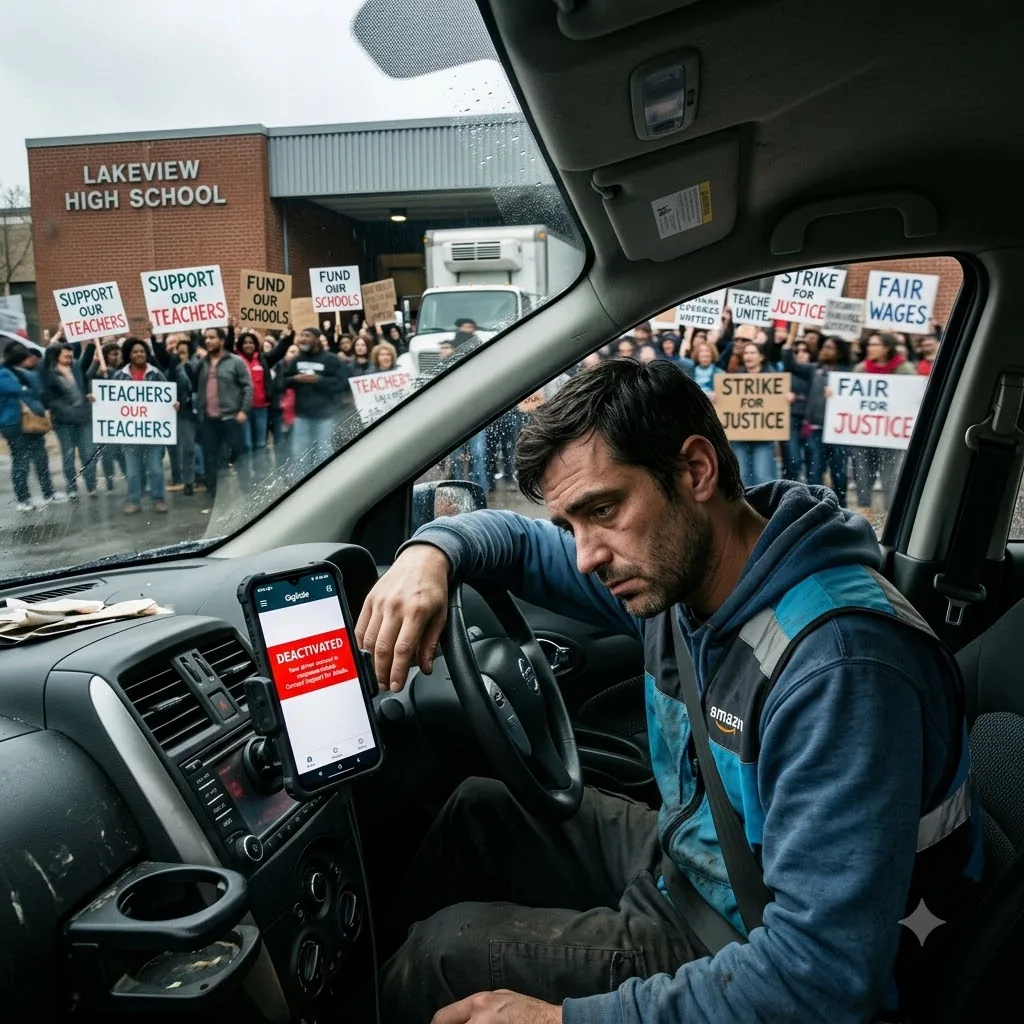
The screen of Mateo’s phone flashed a bright, sterile red before fading to black, leaving the words ACCOUNT DEACTIVATED burned into his vision. He tapped the shattered glass with a trembling thumb, but the driver application refused to load past the login screen. Outside the cracked window of his idling Corolla, a chaotic swarm of shouting parents pressed against his bumpers, physically trapping him in the high school loading dock.
The automated delivery timer had hit zero exactly three minutes ago. Mateo had watched the digital numbers tick down from forty-five minutes in agonizing slow motion, unable to move his car a single inch forward or backward. The back seat was still loaded with four industrial-sized catering boxes of hot food meant for the teachers’ lounge. A sea of bodies carrying neon poster boards blocked the narrow service road. A white minivan was parked horizontally across the only exit behind him, its driver sitting on the roof holding a massive handwritten banner. Mateo was permanently locked out of his livelihood, effectively fired by lines of code that possessed no capacity to understand a suburban school protest.
He shifted the car into park and turned off the ignition to save his dwindling gas tank. The sudden silence inside the cabin felt heavy compared to the rhythmic chanting echoing off the brick walls of the gymnasium. He opened his email app, praying for a warning or an appeal link. Only a generic, do-not-reply message sat at the top of his inbox. The text cited a severe breach of delivery time protocols and an unacceptable delay in transit. Four and a half years of perfect ratings, thousands of completed runs, all wiped out in the span of a single afternoon traffic blockade he could not control.
Mateo rubbed the bridge of his nose and looked up at the crowd. The mob was tightly packed around the loading dock gates, effectively barricading the entire service entrance of Crestview High. They held signs demanding better security and protesting upcoming district budget cuts. He needed to know how long they planned to stay, or if the police were coming to clear the lane. He opened a local news application on his browser and tapped the live video feed at the top of the page.
The news anchor’s polished voice played through his phone speakers, describing the intense standoff at the school. The broadcast immediately cut to a live, on-the-ground reporter standing just a few yards from the front bumper of Mateo’s car. The cameraman zoomed in on the primary organizer of the protest. The man stood elevated on a large concrete planter, rallying the crowd with a silver megaphone. He wore a tailored navy quarter-zip sweater and crisp khaki trousers, looking remarkably wealthy for a grassroots neighborhood leader.
Mateo looked through his windshield at the real man standing thirty feet away, then looked down at the crisp broadcast footage on his screen. The news channel flashed a graphic across the bottom third of the video. It displayed the organizer’s name and primary corporate occupation to establish his community standing and influence. The text read Marcus Thorne, VP of Engineering, TaskSprint.
Mateo stared at the glowing white text. TaskSprint was the exact app currently displaying a dull, locked-out red error message in the background of his phone. Marcus Thorne was the executive in charge of the automated dispatch systems, the routing algorithms, and the unyielding timers. The man whipping the crowd into a frenzy, ensuring the service road remained completely impassable, was the same man whose software had just fired Mateo for being unable to pass.
Thorne was holding the megaphone, shouting about community standards and protecting the neighborhood, while the code he supervised systematically destroyed Mateo’s income over a delay Thorne himself was currently manufacturing.
Mateo rolled his window down all the way. The cold afternoon air poured into the cabin, carrying Thorne’s amplified voice with perfect clarity. Thorne paced back and forth on the planter, directing the parents to link arms and form a solid human wall across the asphalt. The wall tightened, pressing right up against the grille of Mateo’s Corolla, making sure no vehicles could possibly squeeze through to the loading dock. The algorithmic firing wasn’t just a stroke of bad luck. It was a direct consequence of the executive’s physical actions perfectly overlapping with his digital policies.
Mateo unbuckled his seatbelt and grabbed his deactivated phone from the dashboard mount. He shoved his driver’s side door open, forcing a narrow gap in the line of chanting parents. The smell of the cooling catering boxes wafted out into the freezing air as he stepped onto the pavement. He locked his eyes on the man in the navy sweater and walked directly toward the concrete planter. Thorne lowered the megaphone to take a breath and turned his head, his gaze landing squarely on the gig driver shoving his way through the front line of the barricade.
The screen of Mateo’s phone flashed a bright, sterile red before fading to black, leaving the words ACCOUNT DEACTIVATED burned into his vision. He tapped the shattered glass with a trembling thumb, but the driver application refused to load past the login screen. Outside the cracked window of his idling Corolla, a chaotic swarm of shouting parents pressed against his bumpers, physically trapping him in the high school loading dock.
The automated delivery timer had hit zero exactly three minutes ago. Mateo had watched the digital numbers tick down from forty-five minutes in agonizing slow motion, unable to move his car a single inch forward or backward. The back seat was still loaded with four industrial-sized catering boxes of hot food meant for the teachers’ lounge. A sea of bodies carrying neon poster boards blocked the narrow service road. A white minivan was parked horizontally across the only exit behind him, its driver sitting on the roof holding a massive handwritten banner. Mateo was permanently locked out of his livelihood, effectively fired by lines of code that possessed no capacity to understand a suburban school protest.
He shifted the car into park and turned off the ignition to save his dwindling gas tank. The sudden silence inside the cabin felt heavy compared to the rhythmic chanting echoing off the brick walls of the gymnasium. He opened his email app, praying for a warning or an appeal link. Only a generic, do-not-reply message sat at the top of his inbox. The text cited a severe breach of delivery time protocols and an unacceptable delay in transit. Four and a half years of perfect ratings, thousands of completed runs, all wiped out in the span of a single afternoon traffic blockade he could not control.
Mateo rubbed the bridge of his nose and looked up at the crowd. The mob was tightly packed around the loading dock gates, effectively barricading the entire service entrance of Crestview High. They held signs demanding better security and protesting upcoming district budget cuts. He needed to know how long they planned to stay, or if the police were coming to clear the lane. He opened a local news application on his browser and tapped the live video feed at the top of the page.
The news anchor’s polished voice played through his phone speakers, describing the intense standoff at the school. The broadcast immediately cut to a live, on-the-ground reporter standing just a few yards from the front bumper of Mateo’s car. The cameraman zoomed in on the primary organizer of the protest. The man stood elevated on a large concrete planter, rallying the crowd with a silver megaphone. He wore a tailored navy quarter-zip sweater and crisp khaki trousers, looking remarkably wealthy for a grassroots neighborhood leader.
Mateo looked through his windshield at the real man standing thirty feet away, then looked down at the crisp broadcast footage on his screen. The news channel flashed a graphic across the bottom third of the video. It displayed the organizer’s name and primary corporate occupation to establish his community standing and influence. The text read Marcus Thorne, VP of Engineering, TaskSprint.
Mateo stared at the glowing white text. TaskSprint was the exact app currently displaying a dull, locked-out red error message in the background of his phone. Marcus Thorne was the executive in charge of the automated dispatch systems, the routing algorithms, and the unyielding timers. The man whipping the crowd into a frenzy, ensuring the service road remained completely impassable, was the same man whose software had just fired Mateo for being unable to pass.
Thorne was holding the megaphone, shouting about community standards and protecting the neighborhood, while the code he supervised systematically destroyed Mateo’s income over a delay Thorne himself was currently manufacturing.
Mateo rolled his window down all the way. The cold afternoon air poured into the cabin, carrying Thorne’s amplified voice with perfect clarity. Thorne paced back and forth on the planter, directing the parents to link arms and form a solid human wall across the asphalt. The wall tightened, pressing right up against the grille of Mateo’s Corolla, making sure no vehicles could possibly squeeze through to the loading dock. The algorithmic firing wasn’t just a stroke of bad luck. It was a direct consequence of the executive’s physical actions perfectly overlapping with his digital policies.
Mateo unbuckled his seatbelt and grabbed his deactivated phone from the dashboard mount. He shoved his driver’s side door open, forcing a narrow gap in the line of chanting parents. The smell of the cooling catering boxes wafted out into the freezing air as he stepped onto the pavement. He locked his eyes on the man in the navy sweater and walked directly toward the concrete planter. Thorne lowered the megaphone to take a breath and turned his head, his gaze landing squarely on the gig driver shoving his way through the front line of the barricade.