Story code: ST-000562
Part 2: The Orange Line
The wooden stake splintered slightly at the top as Elaine’s husband pressed it deep into the soil. He didn’t even look at me. He just reached into the deep pocket of his perfectly pressed khaki shorts and pulled out a can of upside-down marking paint. He shook it once, twice. The metal ball rattling inside was a sharp, rhythmic clatter that echoed loudly in the dead-quiet cul-de-sac.
“What exactly are you doing?” I asked, my voice tight, trying to keep the tremor of pure panic out of my throat.
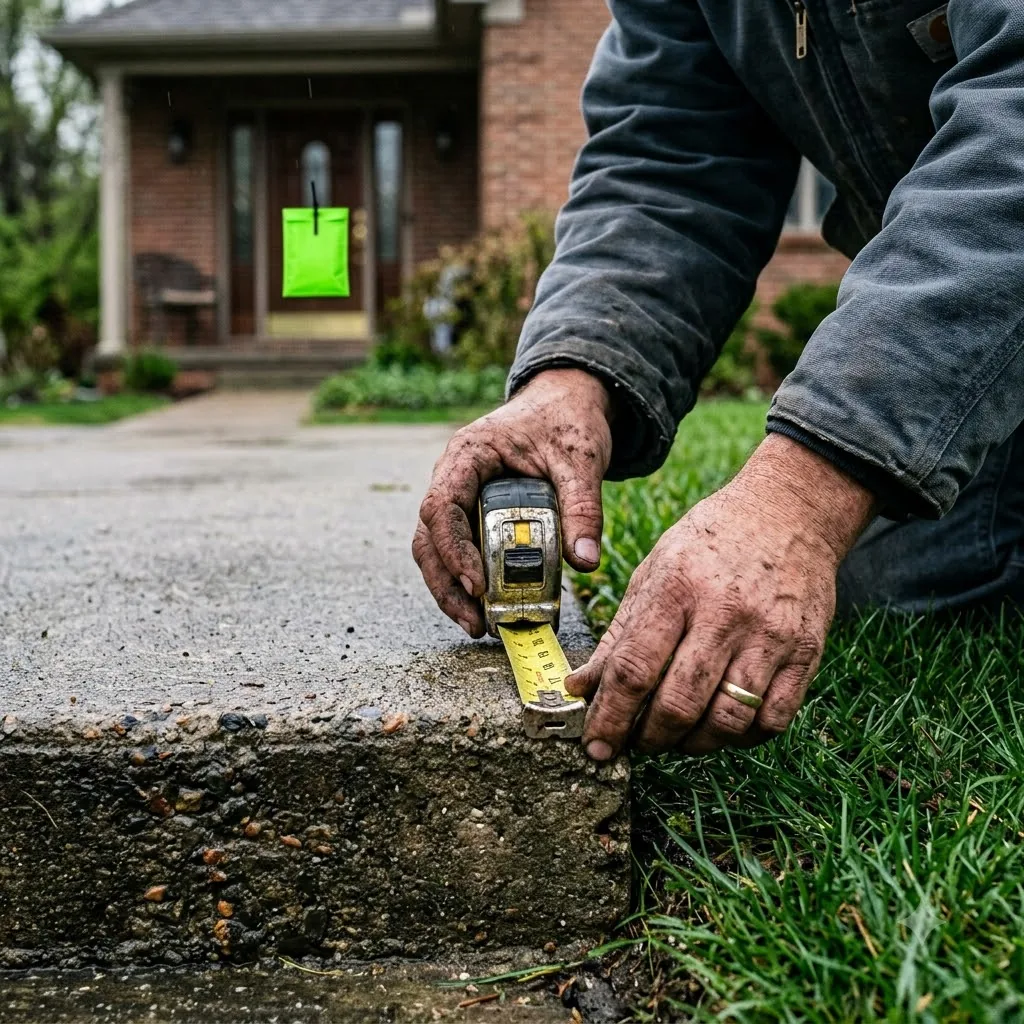
Richard ignored the question. He pointed the nozzle at the grass and pressed the trigger. A thick, toxic-smelling stream of neon orange paint shot out. He walked backward in a slow, deliberate line, dragging a blindingly bright stripe across the grass, over the decorative brick border, and straight onto the edge of my poured concrete driveway. The paint hissed against the hot pavement. He was drawing a new boundary line, exactly two inches inside my property.
“You can’t just paint my driveway, Richard,” I said, standing up. I stepped toward the line, but he held up a hand, his face a mask of bored bureaucratic authority.
“The board commissioned an independent survey yesterday,” Richard said, his tone flat and practiced. “The original developer’s plat map was digitally re-indexed. Your driveway encroaches on association-controlled buffer space by two inches. Read the citation. You have forty-eight hours to remediate the unapproved structure, or the board will authorize forced compliance.”
He didn’t wait for a reply. He simply capped the paint, turned on his heel, and walked back up the immaculate emerald slope of his lawn, disappearing into his air-conditioned house.
I stood there in the sweltering afternoon heat, staring at the thick orange stripe glaring against my faded gray concrete. It wasn’t just a fine anymore. To “remediate” a two-inch encroachment meant I couldn’t just move some dirt or shift a flowerbed. I would have to hire a crew to saw-cut the entire right side of my driveway, demolish the concrete, and haul away the debris. A job like that would cost thousands of dollars. Money I absolutely did not have.
My chest tightened as I stumbled back into the house, locking the door behind me. The air inside was stifling-I kept the thermostat set to eighty degrees during the day to shave a few dollars off the electric bill-but I felt cold all over. I dropped onto the sofa, yanked my laptop open, and furiously typed in the web address for the Oakridge HOA resident portal. I needed to see this “new survey.” I needed to file an immediate appeal.
The portal was a clunky, outdated website that took agonizing seconds to load. I navigated to the community bylaws, downloading the eighty-page PDF of our Covenants, Conditions, and Restrictions. I bypassed the landscaping rules and frantically searched for the dispute resolution section. I knew my rights. I had read up on state laws when a friend went through a boundary dispute. State law dictates that property boundary lines can only be altered by a county judge in civil court after a formal hearing. The HOA couldn’t just unilaterally seize two inches of my land.
But as I read the dense legal text of Section 14, my stomach plummeted. The HOA wasn’t trying to change the deed. They were bypassing state law entirely through the binding contract I had signed when I bought the house.
*”All contested fines and remediation mandates must be paid in full to the Association’s Fiduciary Holding Account prior to the scheduling of any grievance hearing. Failure to submit escrow funds within 48 hours constitutes a waiver of the homeowner’s right to appeal, triggering immediate compounding penalties.”*
It was a perfectly engineered trap. To fight the five-hundred-dollar fine, I had to pay the five hundred dollars first. If I couldn’t afford the deposit, I couldn’t get a hearing. If I couldn’t get a hearing, the fines would compound daily until they placed a lien on my home. They were using financial extortion to strip me of my legal right to defend myself. They knew my wife had lost her job. They knew I was vulnerable.
My phone vibrated on the coffee table. The screen lit up with a text message from my wife, Sarah.
*Hey, the city just sent an automated text. Did the water bill payment go through? They said shut-off is tomorrow if it isn’t processed.*
I stared at the screen, my eyes burning. I logged into my banking app. Available balance: $532.14. The water bill was $114. If I paid the water bill so my wife could shower before her job interviews, I would only have $418 left. I would miss the HOA escrow requirement. I would forfeit my right to fight the fake survey, and the daily penalties would start bankrupting us immediately. But if I paid the HOA to secure a hearing, we would have no running water by tomorrow afternoon.
I pressed my palms against my eyes, trying to force air into my lungs. I needed evidence. I needed to take detailed photographs of the original boundary marker and the wet paint before they tried to claim I had altered it.
I grabbed my phone and walked back out the front door. The heat hit me like a physical wall, but a low, rumbling vibration in the pavement made me stop on the porch. A massive white dually truck with an attached flatbed trailer was backing slowly into the cul-de-sac. The reverse alarm beeped loudly, bouncing off the brick facades of the surrounding houses. The truck angled its trailer directly toward my driveway and shifted into park with a loud hiss of air brakes.
Two men in neon yellow safety vests jumped out of the cab. Without a word to me, they walked to the back of the trailer and began unchaining a heavy, gas-powered walk-behind concrete saw.
Across the property line, Elaine’s front door opened. She stepped out onto her shaded porch holding a glass of iced tea. She took a slow sip, resting her hand on the railing, watching the men unload the diamond-blade saw onto my concrete with a serene, terrifyingly satisfied smile.