Story code: ST-000577
Part 1: The Pre-Printed Ruin
Plaster dust coated the back of Mateo’s throat before the deafening crash even faded. He fell hard against the deli counter, throwing his hands over his head as the ceiling of his family’s bodega tore itself apart. Cans of crushed tomatoes and heavy glass bottles of malt soda rained down in a violent, chaotic percussion. The floor pitched under his heavy work boots. Next door, the relentless roar of the luxury high-rise excavation raged on, vibrating straight up through the seventy-year-old foundation of his store.
He stayed huddled beneath the counter overhang until the falling debris reduced to a steady, terrifying trickle of sand and shattered drywall. The air hung thick and white. He dragged a sleeve across his mouth, coughing up a mouthful of grit. When he forced his eyes open, the sheer scale of the devastation paralyzed him. The entire back half of the ceiling had caved in, crushing the aisles his grandfather had built by hand. Fluorescent light fixtures dangled by sparking wires, casting a sickly, flickering glow over the pulverized merchandise.
Mateo pushed himself up on trembling legs. He stepped over a jagged chunk of plaster the size of a car hood. The main structural beam that had held up the roof for three generations was snapped in two, exposing the gray sky and the towering yellow cranes of the neighboring construction site. He assumed the heavy machinery had finally shaken a brittle support column loose. The vibrations had been rattling his display windows for weeks. He reached for his phone with shaking fingers, ready to dial emergency services. He figured the excavation crew next door had to have realized their catastrophic mistake by now.
The bells above the front door jingled.
The sound was absurdly normal against the backdrop of absolute ruin. Mateo turned toward the entrance, the dust still swirling too thickly to see clearly. A silhouette stepped through the haze. Mateo lowered his phone, letting out a sharp, ragged breath of relief. Help was already here. Someone must have heard the collapse and flagged down the authorities.
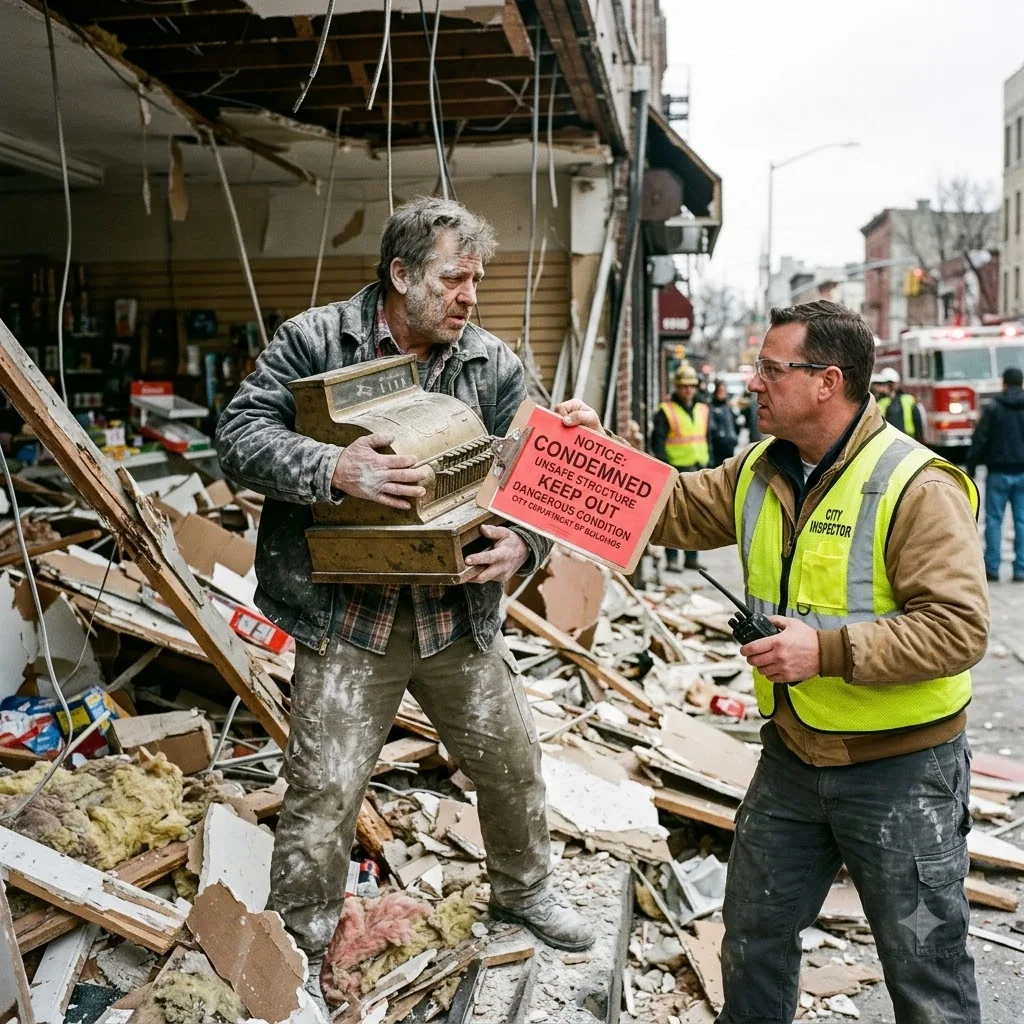
The man stepping over the scattered bags of rice wore a pristine yellow hard hat and a bright orange vest over a crisp, tailored dress shirt. He held a metal clipboard. He did not look rushed, nor did he check the corners of the room for injured customers. He simply stood in the center of the wreckage, waving a hand lazily to clear the air in front of his face.
Mateo stumbled forward, waving his arms to make sure the man saw him in the gloom. He pointed up at the exposed sky, trying to find the words to explain the sudden, violent cave-in.
The man in the vest held up a flat, commanding palm. He did not ask if Mateo was hurt. He did not ask if anyone else was trapped under the drywall. He pulled a thick silver pen from his breast pocket and made a single, decisive checkmark on the paper clamped to his board.
“Mateo Vargas,” the man said. It was a statement of fact, dead and bureaucratic. “Department of Buildings. Step away from the structural perimeter.”
Mateo stopped walking. He gestured heavily at the massive slab of concrete resting on the shattered refrigeration unit, trying to emphasize the destruction that had just fallen from the sky. The inspector ignored the frantic gesture completely. He ripped the top sheet off his clipboard and thrust it out. Mateo grabbed the heavy cardstock instinctively.
The bold red letters at the top burned through the coating of dust on the page. Notice of Immediate Condemnation.
Mateo stared at the date printed at the bottom. It was typed in crisp black ink, along with his full name, the exact address of the bodega, and a detailed list of structural code violations. The ink was completely dry. There were no handwritten notes, no hurried scrawls made in the seconds since the roof fell. It was a meticulously formatted legal document, entirely finished and printed before the ceiling had even cracked.
The inspector tapped the paper with the tip of his silver pen. “Gross negligence of load-bearing supports. Failure to maintain commercial safety standards. This structure is officially condemned by the city.”
Mateo tried to speak, pointing frantically at the deafening excavation site visible through the newly formed crater in the roof. The heavy earthmovers were still slamming into the shared retaining wall, shaking the ground beneath their feet. The inspector did not even glance at the heavy machinery.
“You are liable for the public endangerment this collapse caused,” the inspector said, pulling a heavy black two-way radio from his belt. “I was dispatched to deliver the condemnation, but the severity of this negligence requires immediate custody.”
Mateo looked from the pre-printed paper to the unblinking inspector. The document in his hand was a physical impossibility. The timeline made no sense unless the city had known the ceiling was going to fall. The inspector pressed the transmit button on the side of his radio.
“Unit four, clear to move in,” the inspector said into the mic. “Bring the cuffs.”
Heavy boots slammed against the pavement outside the shattered front windows. Flashing blue and red lights painted the lingering dust clouds as two uniformed officers kicked through the debris toward him.
Plaster dust coated the back of Mateo’s throat before the deafening crash even faded. He fell hard against the deli counter, throwing his hands over his head as the ceiling of his family’s bodega tore itself apart. Cans of crushed tomatoes and heavy glass bottles of malt soda rained down in a violent, chaotic percussion. The floor pitched under his heavy work boots. Next door, the relentless roar of the luxury high-rise excavation raged on, vibrating straight up through the seventy-year-old foundation of his store.
He stayed huddled beneath the counter overhang until the falling debris reduced to a steady, terrifying trickle of sand and shattered drywall. The air hung thick and white. He dragged a sleeve across his mouth, coughing up a mouthful of grit. When he forced his eyes open, the sheer scale of the devastation paralyzed him. The entire back half of the ceiling had caved in, crushing the aisles his grandfather had built by hand. Fluorescent light fixtures dangled by sparking wires, casting a sickly, flickering glow over the pulverized merchandise.
Mateo pushed himself up on trembling legs. He stepped over a jagged chunk of plaster the size of a car hood. The main structural beam that had held up the roof for three generations was snapped in two, exposing the gray sky and the towering yellow cranes of the neighboring construction site. He assumed the heavy machinery had finally shaken a brittle support column loose. The vibrations had been rattling his display windows for weeks. He reached for his phone with shaking fingers, ready to dial emergency services. He figured the excavation crew next door had to have realized their catastrophic mistake by now.
The bells above the front door jingled.
The sound was absurdly normal against the backdrop of absolute ruin. Mateo turned toward the entrance, the dust still swirling too thickly to see clearly. A silhouette stepped through the haze. Mateo lowered his phone, letting out a sharp, ragged breath of relief. Help was already here. Someone must have heard the collapse and flagged down the authorities.
The man stepping over the scattered bags of rice wore a pristine yellow hard hat and a bright orange vest over a crisp, tailored dress shirt. He held a metal clipboard. He did not look rushed, nor did he check the corners of the room for injured customers. He simply stood in the center of the wreckage, waving a hand lazily to clear the air in front of his face.
Mateo stumbled forward, waving his arms to make sure the man saw him in the gloom. He pointed up at the exposed sky, trying to find the words to explain the sudden, violent cave-in.
The man in the vest held up a flat, commanding palm. He did not ask if Mateo was hurt. He did not ask if anyone else was trapped under the drywall. He pulled a thick silver pen from his breast pocket and made a single, decisive checkmark on the paper clamped to his board.
“Mateo Vargas,” the man said. It was a statement of fact, dead and bureaucratic. “Department of Buildings. Step away from the structural perimeter.”
Mateo stopped walking. He gestured heavily at the massive slab of concrete resting on the shattered refrigeration unit, trying to emphasize the destruction that had just fallen from the sky. The inspector ignored the frantic gesture completely. He ripped the top sheet off his clipboard and thrust it out. Mateo grabbed the heavy cardstock instinctively.
The bold red letters at the top burned through the coating of dust on the page. Notice of Immediate Condemnation.
Mateo stared at the date printed at the bottom. It was typed in crisp black ink, along with his full name, the exact address of the bodega, and a detailed list of structural code violations. The ink was completely dry. There were no handwritten notes, no hurried scrawls made in the seconds since the roof fell. It was a meticulously formatted legal document, entirely finished and printed before the ceiling had even cracked.
The inspector tapped the paper with the tip of his silver pen. “Gross negligence of load-bearing supports. Failure to maintain commercial safety standards. This structure is officially condemned by the city.”
Mateo tried to speak, pointing frantically at the deafening excavation site visible through the newly formed crater in the roof. The heavy earthmovers were still slamming into the shared retaining wall, shaking the ground beneath their feet. The inspector did not even glance at the heavy machinery.
“You are liable for the public endangerment this collapse caused,” the inspector said, pulling a heavy black two-way radio from his belt. “I was dispatched to deliver the condemnation, but the severity of this negligence requires immediate custody.”
Mateo looked from the pre-printed paper to the unblinking inspector. The document in his hand was a physical impossibility. The timeline made no sense unless the city had known the ceiling was going to fall. The inspector pressed the transmit button on the side of his radio.
“Unit four, clear to move in,” the inspector said into the mic. “Bring the cuffs.”
Heavy boots slammed against the pavement outside the shattered front windows. Flashing blue and red lights painted the lingering dust clouds as two uniformed officers kicked through the debris toward him.